
Advocate

1 product

Showing 1 - 1 of 1 product

Advocate Blood Glucose Monitoring Supplies

The Advocate collection at Cart Health brings together blood glucose testing supplies from a brand focused on making daily monitoring straightforward and reliable. Whether someone is managing their testing routine at home or on the go, Advocate products are designed with everyday usability in mind.
Showing 1 - 1 of 1 product
View
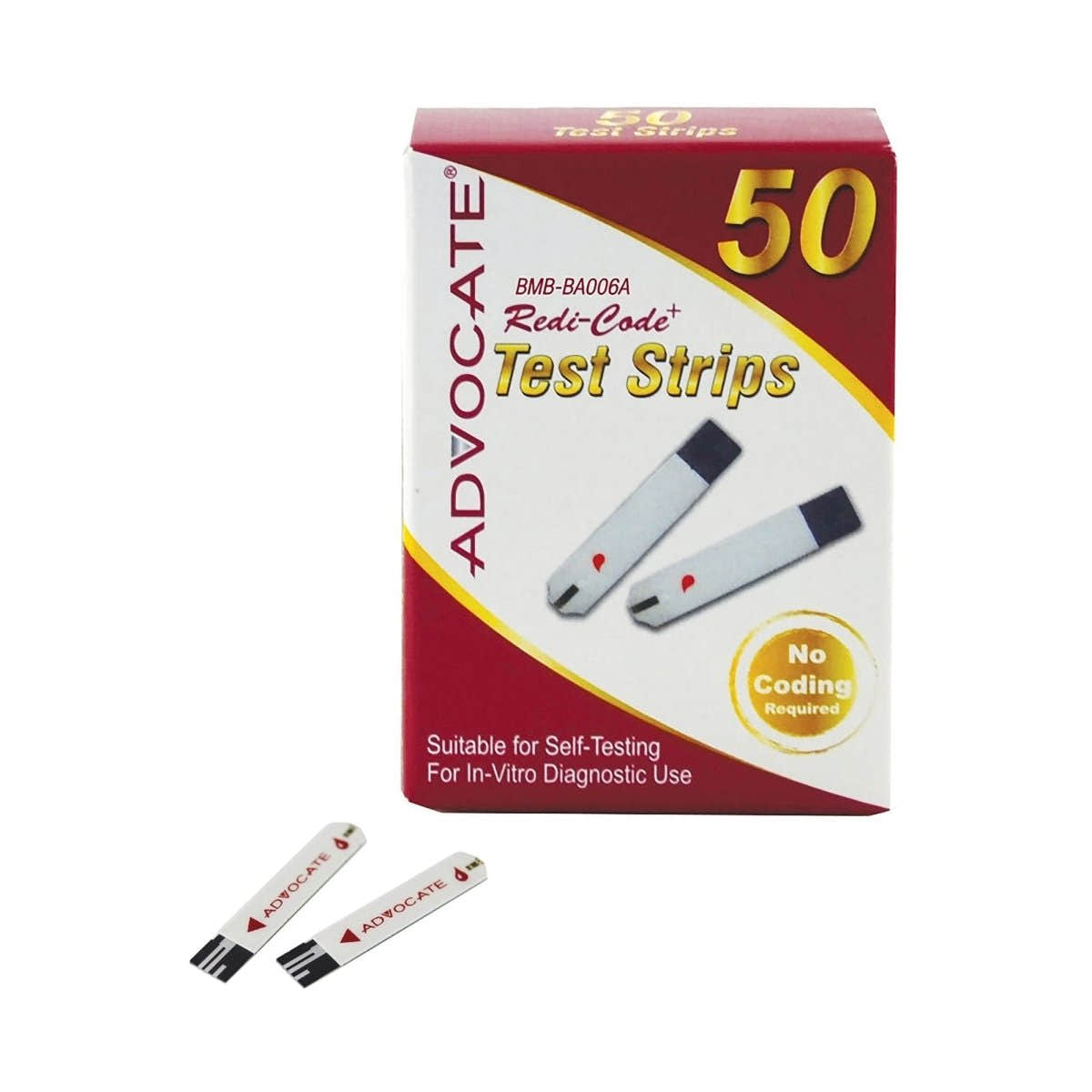
Advocate Redi-Code Plus Blood Glucose Test Strips - 847114_BX - 1

Frequently Asked Questions about Advocate

Blood glucose test strips are small disposable strips that measure the amount of sugar in a drop of blood, helping people with diabetes monitor their blood sugar levels at home. Most strips work by inserting into a compatible glucose meter, which reads the result within seconds.

Blood glucose test strips are designed for people with type 1 or type 2 diabetes who need to regularly monitor their blood sugar levels. They are also useful for people with prediabetes or gestational diabetes who have been advised by a healthcare provider to track glucose at home.

Start by washing your hands, then insert a blood glucose test strip into a compatible meter before pricking your fingertip with a lancet. Touch the edge of the strip to the small blood drop and wait for the meter to display your reading, which typically takes just a few seconds.

No, blood glucose test strips are not universal — each brand or product line is designed to work only with specific compatible meters. Always check the packaging or manufacturer guidelines to confirm that the strips you purchase match your particular glucose meter model.

Blood glucose test strips should be stored in a cool, dry place away from direct sunlight, heat, and humidity, which can degrade the chemical coating and affect accuracy. Always keep test strips in their original sealed container and replace the cap tightly after each use.

Yes, blood glucose test strips do expire, and using expired strips can produce inaccurate readings that may affect diabetes management decisions. The expiration date is printed on the vial or box, and strips should be discarded after that date even if the container appears sealed.

Because factors like improper storage, an insufficient blood sample, or using strips past their expiration date can all affect the accuracy of blood glucose test strip results. Technique also plays a role — making sure hands are clean and dry before testing helps reduce variability between readings.

When choosing blood glucose test strips, the most important factor is compatibility with your existing glucose meter, since strips are not interchangeable between brands. You should also consider the required blood sample size, coding requirements, and whether the strips are covered by your insurance plan.

Blood glucose test strips provide a single point-in-time reading each time you manually test, while continuous glucose monitors track blood sugar levels automatically throughout the day. Test strips are generally more affordable and require no sensor insertion, making them a practical option for people who test a few times daily.

No, blood glucose test strips are single-use only and should never be reused, as doing so can lead to inaccurate readings and potential infection risk. Each strip is designed to be used once and then safely disposed of according to local sharps and medical waste guidelines.

Recently viewed