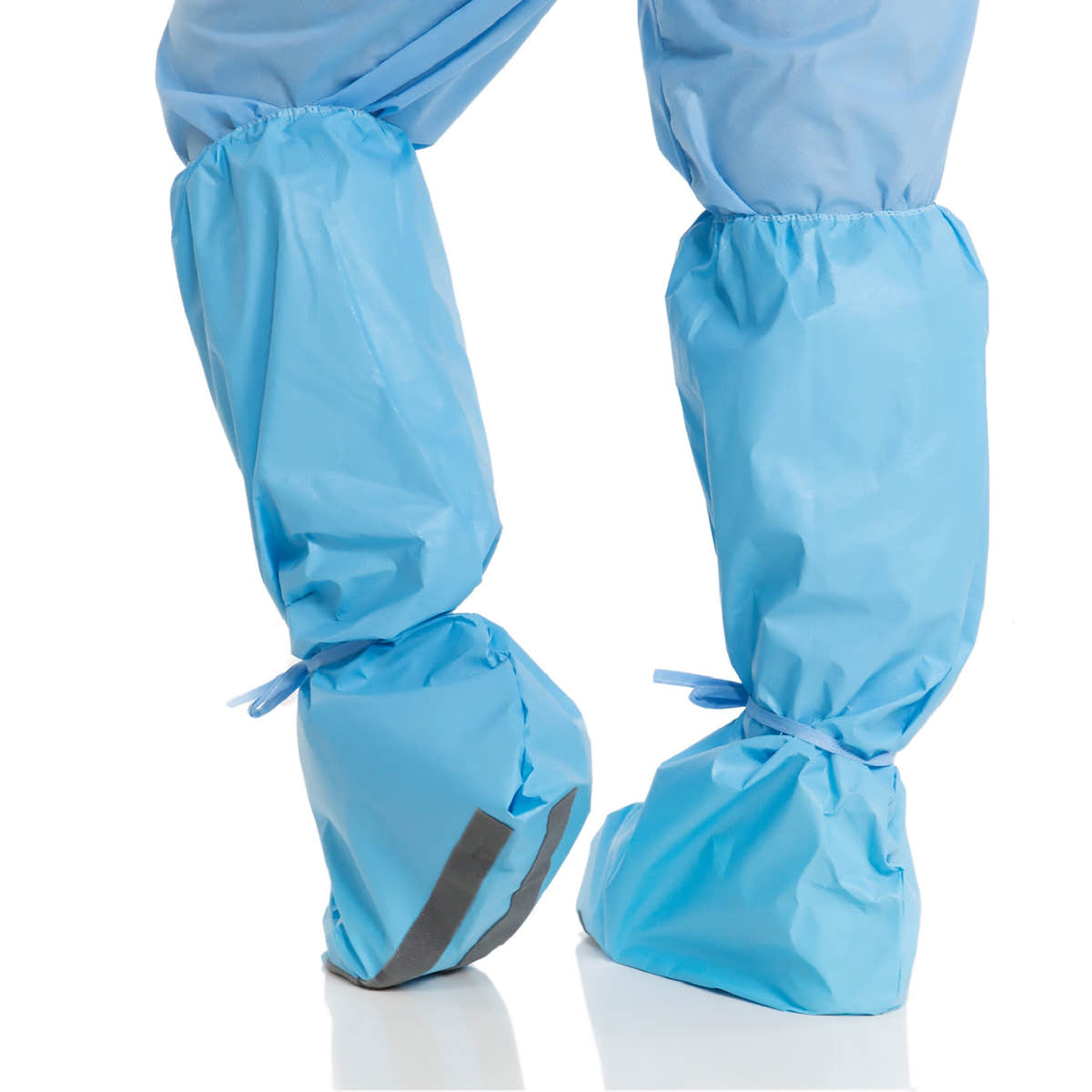
Shoe Covers

12 products

Showing 1 - 12 of 12 products

Protection and hygiene are paramount in medical settings. For professionals seeking top-tier safety, Cart Health presents its exclusive "Medical Shoe Covers" category, ensuring cleanliness with every step.

Showing 1 - 12 of 12 products
View
Hi Guard Shoe Cover - 387444_CS - 1
Hi Guard Shoe Cover
Sale priceFrom $108.99
Choose options
Hi Guard Ultra Shoe Cover, X-Large -Case of 4
Hi Guard Ultra Shoe Cover
Sale priceFrom $102.99
Choose options
Hi Guard Full Coverage Boot, Universal -Case of 150
Hi Guard Full Coverage Boot
Sale priceFrom $110.99
Choose options
dynarex Shoe Cover -Case of 150
dynarex Shoe Cover
Sale price$73.99
Halyard Shoe Cover -Box of 100
Halyard Shoe Cover
Sale priceFrom $8.99
Choose options
Hi Guard Boot Cover -Case of 120
Hi Guard Boot Cover
Sale priceFrom $3.99
Choose options
Health Care Logistics Shoe Cover High Nonskid Sole, Blue -Box of 10
McKesson Blue Shoe Covers
Sale priceFrom $9.99
Sta-Dri Knee-High Boot Cover -Case of 50
Sta-Dri Knee-High Boot Cover
Sale priceFrom $19.99
Choose options
X-tra Traction Shoe Cover, One Size Fits Most -Case of 3
X-tra Traction Shoe Cover
Sale priceFrom $31.99
Choose options

Frequently Asked Questions about Shoe Covers

Medical shoe covers are disposable protective barriers worn over footwear to prevent the spread of contaminants in sterile or clinical environments. Shoe covers help keep operating rooms, patient care areas, and clean rooms free from dirt, pathogens, and debris tracked in from outside.

Shoe covers are designed for surgeons, nurses, lab technicians, and other healthcare professionals who work in sterile zones, operating rooms, or any clinical area where contamination control is critical. Visitors entering sensitive medical areas may also be required to wear them.

Start by sitting down, then stretch the opening of the shoe cover wide and slide it over the toe of your shoe first, pulling the cover back toward your heel until it sits snugly. Make sure the cover fully encases the sole and that the elastic band grips securely around the ankle to prevent slipping.

Shoe covers are designed to protect standard footwear up to the ankle, while boot covers extend higher up the leg, often reaching the knee, to provide additional protection against fluid splashes and contamination. Boot covers are typically chosen for procedures with higher exposure risk or when wearing tall footwear.

No, shoe covers are not universally one size fits all. Many shoe covers come in multiple sizes, including options like extra-large or 2X-large, to accommodate a range of footwear sizes and ensure a secure, non-slip fit during use.

Yes, many medical shoe covers feature nonskid soles designed to reduce the risk of slipping on smooth clinical floors. Nonskid shoe covers are especially recommended for environments like hospitals and surgical centers where floor surfaces can become wet or slippery.

Because disposable shoe covers eliminate the need for laundering or sanitizing between uses, reducing the risk of cross-contamination in medical environments. Single-use shoe covers are discarded after each use, which saves time and ensures a consistently clean barrier every time they are worn.

Choosing the right shoe covers depends on the level of protection needed, the environment, and footwear size. Consider whether you need standard ankle-height covers or knee-high boot covers, and look for features like nonskid soles, fluid resistance, and the appropriate size range for your staff.

Yes, shoe covers can generally be worn over surgical clogs and other specialty footwear, especially when selecting larger size options designed to accommodate bulkier shoes. Choosing a shoe cover with a flexible, elastic opening helps ensure a secure fit over non-standard footwear styles.

Unused shoe covers should be stored in a cool, dry location away from direct sunlight, moisture, and sharp objects that could compromise the material. Keeping shoe covers in their original packaging until use helps protect them from dust, contamination, and physical damage that could reduce their effectiveness.

Recently viewed