Your privacy matters to us! By using our site, you agree to the collection and use of your Personal Information as described in our Privacy Policy.
Surgical Sponges
2 products
Showing 1 - 2 of 2 products
Surgical Sponges for Professional Clinical Use
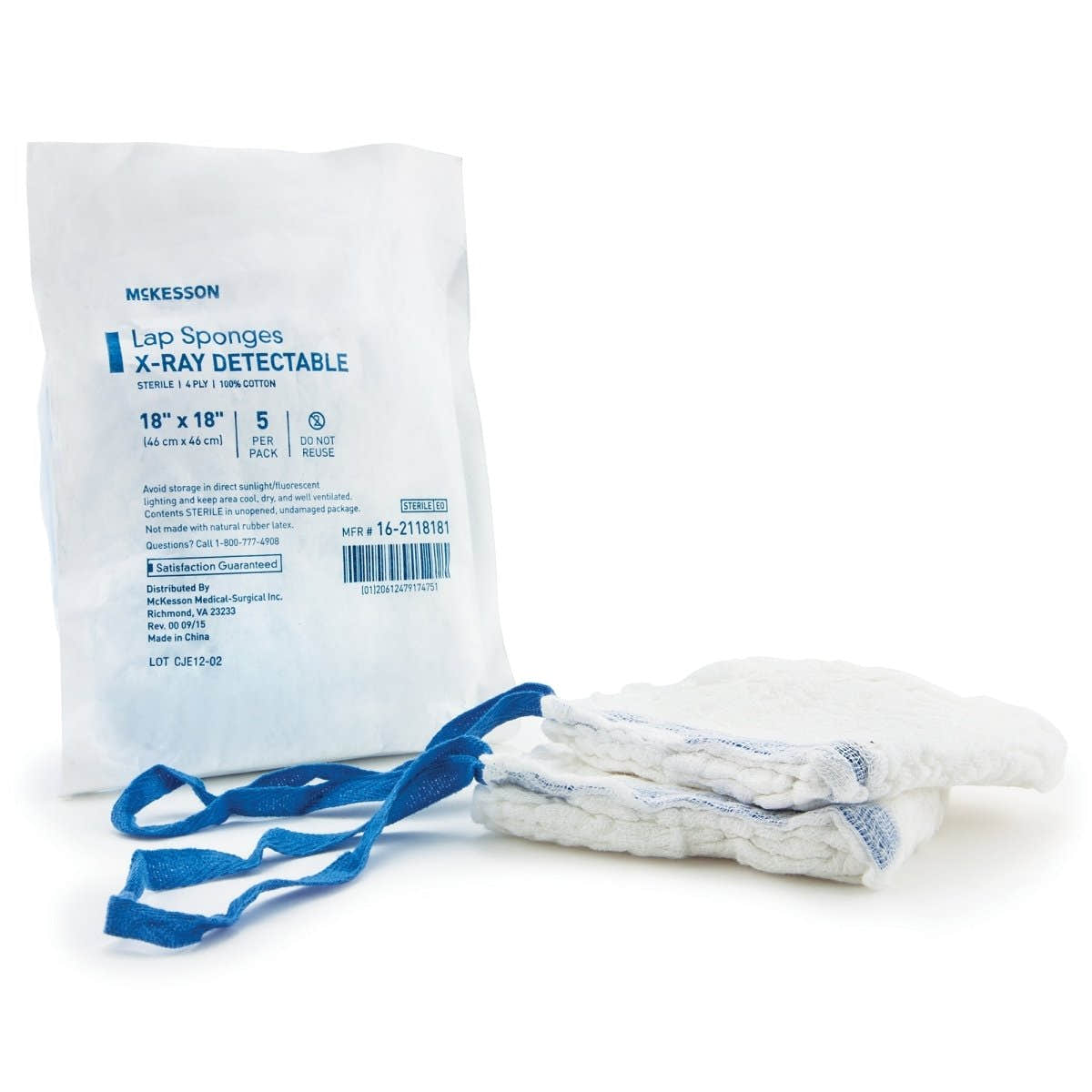
Surgical sponges are essential supplies in operating rooms, procedure suites, and clinical settings where reliable absorbency and controlled handling matter. This collection brings together trusted formats — including laparotomy sponges and peanut sponges — from established healthcare brands like Teleflex Medical, Cardinal Health, and McKesson. Whether you're stocking a surgical suite or sourcing for a specific procedure type, you'll find purpose-built options here.
Reputable brands: Products sourced from Teleflex Medical, Cardinal Health, and McKesson — names familiar to surgical and clinical procurement teams.
Multiple size and format options: Different procedures call for different sponge types; this collection supports that range without requiring you to shop across multiple suppliers.
How to Choose the Right Surgical Sponge
The right sponge depends on the procedure type and the clinical role it needs to fill. Laparotomy sponges are generally chosen for larger operative fields where absorbency and coverage are the priority. Peanut sponges are selected for delicate or confined areas where a small, firm sponge is needed for controlled tissue manipulation.
When in doubt, defer to your facility's surgical protocols or consult with a clinical supply specialist to confirm the appropriate sponge type, size, and quantity for your specific use case. Procurement decisions in surgical settings should always align with established clinical guidelines.
Sourcing for Facilities and Clinical Teams
This collection is intended for healthcare professionals, surgical teams, and medical facility procurement staff. All products are supplied by established manufacturers with recognized presence in the surgical supply space, making it straightforward to identify familiar brands your team may already rely on.
Frequently Asked Questions about Surgical Sponges
Surgical sponges are absorbent medical devices used during surgical procedures to control bleeding, absorb fluids, and keep the operative field clear. Surgical sponges come in several forms, including laparotomy sponges for open abdominal procedures and small peanut sponges for delicate dissection work.
Surgical laparotomy sponges are large, flat gauze pads designed for open abdominal and thoracic surgeries where significant fluid absorption is needed, while surgical peanut sponges are small, oval-shaped sponges used for blunt dissection and absorbing fluid in tight or delicate tissue areas. The right choice depends on the procedure type and surgical site.
Surgical sponges are designed for use by licensed surgical teams, including surgeons, surgical technologists, and scrub nurses, in sterile operating room environments. Surgical sponges are not intended for general wound care or home use and should only be handled by trained medical professionals following facility protocols.
Load a surgical peanut sponge onto a curved clamp or hemostat before introducing it into the surgical field, then use it to blunt-dissect tissue planes or absorb small amounts of fluid. Surgical peanut sponges should always be counted before and after use to prevent retained surgical body incidents.
Surgical teams prevent retained surgical sponges by performing strict manual counts before, during, and after every procedure, following AORN guidelines. Many surgical sponges are also manufactured with radiopaque markers that show up on X-ray, allowing imaging to confirm all sponges have been removed before closing.
Surgical laparotomy sponges are available in several sizes to accommodate different procedure types and patient anatomies, with common dimensions ranging from approximately 18 x 18 inches for large open surgeries. Facilities should confirm sponge sizing with their supply vendor to match the specific requirements of their surgical procedures.
Yes, surgical sponges sold for operative use are manufactured to meet sterility standards and are intended for use in sterile surgical fields. Most surgical sponges are gamma-irradiated or steam-sterilized and individually packaged or packaged in counted quantities to support sterile technique and accurate intraoperative counts.
Because surgical procedures require multiple sponges and strict count protocols, surgical sponges are sold in bulk quantities to give facilities a consistent, cost-effective supply and to support accurate pre- and post-operative counting. Buying surgical sponges in volume also reduces the risk of running short during high-volume surgical schedules.
Store surgical sponges in a clean, dry environment away from moisture, direct sunlight, and temperature extremes to preserve their sterility and packaging integrity. Surgical sponge packages should be inspected before each use for any signs of damage, puncture, or compromised seals that could indicate loss of sterility.
No, surgical sponges are not a substitute for standard wound care dressings intended for home use. Surgical sponges are specifically designed for intraoperative use in sterile operating room settings, and using them outside of that context does not meet the clinical or safety standards required for proper wound management.
Do you still have questions about Surgical Sponges?
If we still haven't answered your question, you can contact us by live chat or email and we will get back to you as soon as possible.