
DMS Holdings

1 product

Showing 1 - 1 of 1 product

DMS Holdings Transfer Boards at Cart Health

DMS Holdings brings focused craftsmanship to mobility and transfer aids, offering products designed to support safe, comfortable movement between surfaces. Whether for home use, clinical settings, or on-the-go needs, this collection brings together reliable transfer solutions built with practical, everyday function in mind.
Showing 1 - 1 of 1 product
View
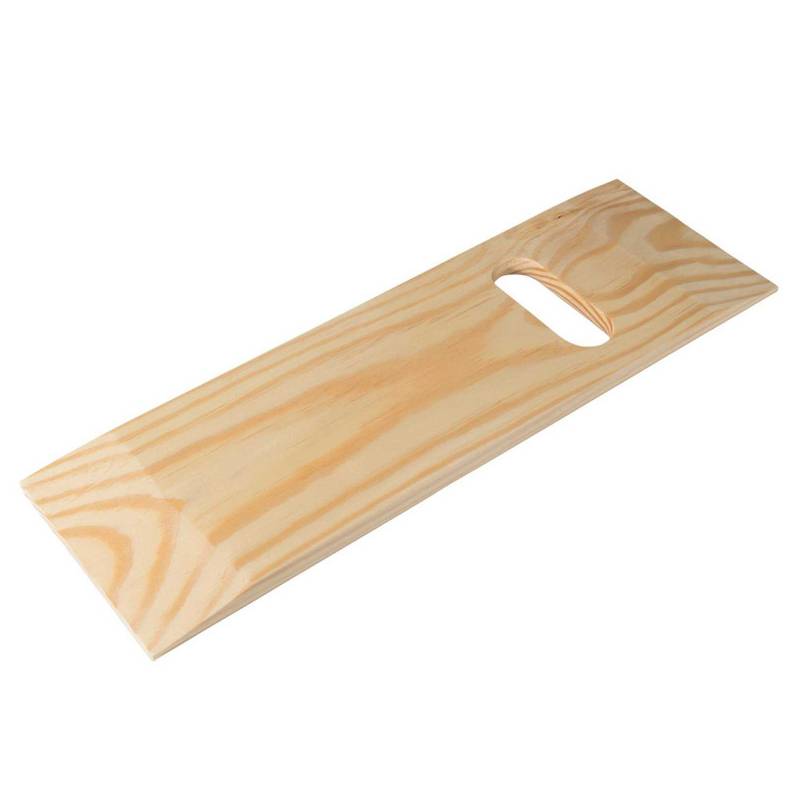
DMS Holdings Maple Plywood Transfer Board - 972402_EA - 1

Frequently Asked Questions about DMS Holdings

A transfer board is a flat, rigid assistive device used to bridge the gap between two surfaces — such as a wheelchair and a bed — allowing a person to slide across without being lifted. Transfer boards reduce strain on both the user and caregiver during repositioning.

Transfer boards are designed for individuals who have limited mobility but retain some upper body strength, such as those recovering from surgery, living with a disability, or managing a chronic condition affecting leg function. Caregivers and physical therapists also use transfer boards during assisted patient transfers.

Place the transfer board firmly under the user's thigh on the seated surface, then angle the opposite end onto the destination surface such as a bed or wheelchair seat. The user or caregiver guides the person in a controlled sliding motion across the board, keeping the board flat and stable throughout.

Transfer boards are commonly used between wheelchairs, car seats, shower benches, beds, and exam tables, provided both surfaces are at a similar height. Checking that the board spans the gap fully and that both surfaces are stable before transferring is essential for safe use.

Yes, transfer boards are safe for daily use when applied correctly on stable, level surfaces with appropriate supervision or assistance. Users should inspect the board regularly for cracks, splinters, or warping that could compromise safety before each transfer.

Transfer boards are commonly constructed from hardwood, plywood, or plastic composites chosen for their strength and smooth surface finish. The material affects the board's weight capacity, durability, and how easily a user can slide across during a transfer.

Because transfer boards allow individuals to move between surfaces with minimal lifting, they significantly reduce the risk of injury to both the user and the caregiver compared to manual lifting techniques. Transfer boards also promote greater user independence during daily repositioning tasks.

Start by considering the user's weight capacity requirements, the gap between the two transfer surfaces, and whether the user needs a straight or curved board design. Individuals transferring to and from a wheelchair may benefit from a contoured board that fits the chair's armrest cutout.

Wipe down transfer boards after each use with a damp cloth and a mild disinfectant appropriate for the board's material to prevent buildup of bacteria or moisture. Wooden transfer boards should be kept dry and stored flat to prevent warping, while plastic boards can tolerate more frequent wet cleaning.

Yes, many individuals with adequate upper body strength use transfer boards independently without caregiver assistance. However, first-time users or those with significant weakness should practice with a trained caregiver or physical therapist present until the technique is mastered safely.

Recently viewed