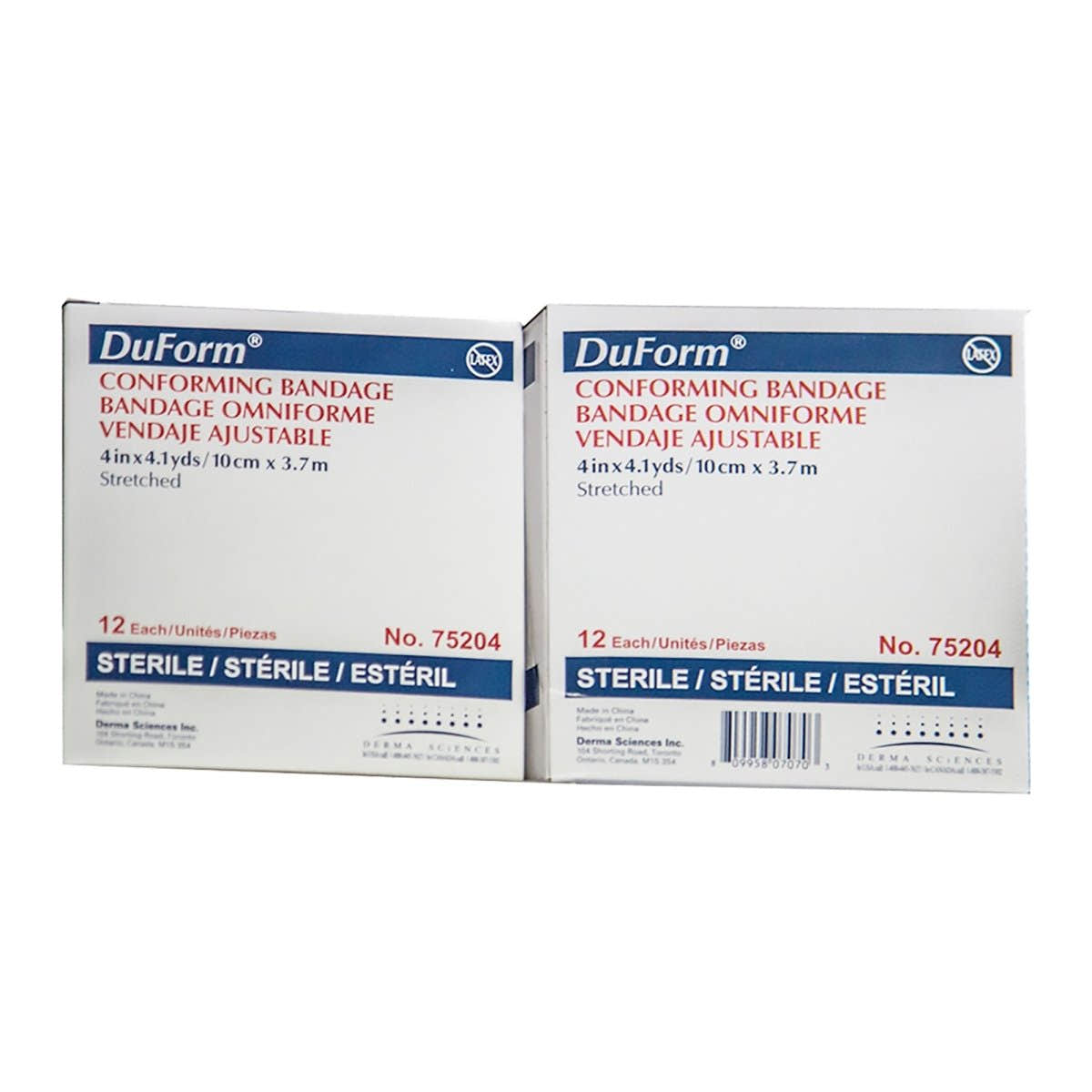
Duform Conforming Bandages for Reliable Wound Support
The Duform collection at Cart Health brings together conforming bandages designed to wrap securely and comfortably around the body's natural contours. Whether used in a clinical setting or a well-stocked home first-aid kit, Duform bandages are a trusted choice for anyone who needs dependable wound dressing support.
Sterile options for cleaner application: Products like the Duform Sterile Conforming Bandage are individually prepared to support hygienic wound care.
Flexible, conforming design: These bandages are made to move with the body, providing consistent coverage on limbs, joints, and other areas that require a secure but adaptable fit.
Focused on a single trusted brand: Every product in this collection comes from Duform, so you can shop with confidence knowing the quality standard stays consistent.
Suitable for a range of settings: From professional medical environments to everyday household use, Duform bandages are practical across many situations.
How to Choose the Right Duform Bandage
The most important factor when selecting a conforming bandage is the size and location of the area you need to cover. Wider bandages generally suit larger areas such as thighs or torsos, while narrower options work well for wrists, hands, or feet. If sterility is a priority — for instance, when covering a fresh wound — look specifically for sterile-packaged options such as the sterile Duform conforming bandage.
A Note on Proper Use
Conforming bandages are designed to secure dressings and provide light support, but they are not a substitute for professional medical evaluation. If you are managing a wound or injury that requires ongoing care, consulting a qualified healthcare provider is always a good step to ensure the right approach for the situation.
Frequently Asked Questions about Duform
A conforming bandage is a flexible, stretch-woven dressing used to secure wound pads, support injured limbs, and hold medical devices in place on the body. Conforming bandages mold to body contours, making them useful for awkward areas like knees, elbows, and ankles where flat bandages tend to slip.
Sterile conforming bandages are designed for patients, caregivers, and healthcare professionals who need a clean, contamination-free dressing to cover wounds, post-surgical sites, or injuries at higher risk of infection. The sterile packaging makes conforming bandages especially appropriate for acute wounds, burns, or any situation where infection control is a priority.
Start by placing the primary wound dressing over the injury, then unroll the conforming bandage in overlapping spiral turns around the limb, keeping consistent tension throughout. Avoid wrapping too tightly, as conforming bandages should feel snug but never restrict circulation or cause numbness below the wrap site.
Choose a conforming bandage width that matches the body part being wrapped — narrower widths suit fingers and wrists, while wider widths work better for thighs, torsos, or large limbs. When in doubt, a slightly wider conforming bandage is easier to control and provides more even compression across the wound area.
No, a conforming bandage and an elastic bandage are not the same, though both stretch. Conforming bandages are lightweight, open-weave dressings designed primarily to hold wound pads in place, while elastic bandages provide firmer compression and are more often used for sprains, swelling, or joint support.
Yes, sterile conforming bandages do have an expiration date, which is printed on the individual packaging. After the expiration date, the sterility of the conforming bandage can no longer be guaranteed, so expired units should be replaced and not used on open wounds or post-surgical sites.
Because conforming bandages stretch and flex with the body, they stay in place far better than traditional gauze rolls, especially over joints and curved surfaces. Traditional gauze rolls tend to bunch, loosen, or unravel with movement, while conforming bandages maintain consistent coverage without requiring frequent rewrapping.
Yes, conforming bandages can be used on children, provided the correct width is selected for the child's smaller limb size. Caregivers should apply conforming bandages with lighter tension on pediatric patients and check frequently to ensure the wrap is not restricting circulation as the child moves.
Store conforming bandages in a cool, dry location away from direct sunlight, moisture, and extreme temperatures to preserve the integrity of the sterile packaging. Damaged or compromised packaging means the conforming bandage inside should no longer be considered sterile and should be discarded before use.
Conforming bandages are a practical and cost-effective addition to home first aid kits because they handle a wide range of wound care needs, from securing dressings to providing light support after minor sprains. Keeping several sizes of conforming bandages on hand means households are prepared for both minor everyday injuries and more significant wound care situations.
Do you still have questions about Duform?
If we still haven't answered your question, you can contact us by live chat or email and we will get back to you as soon as possible.