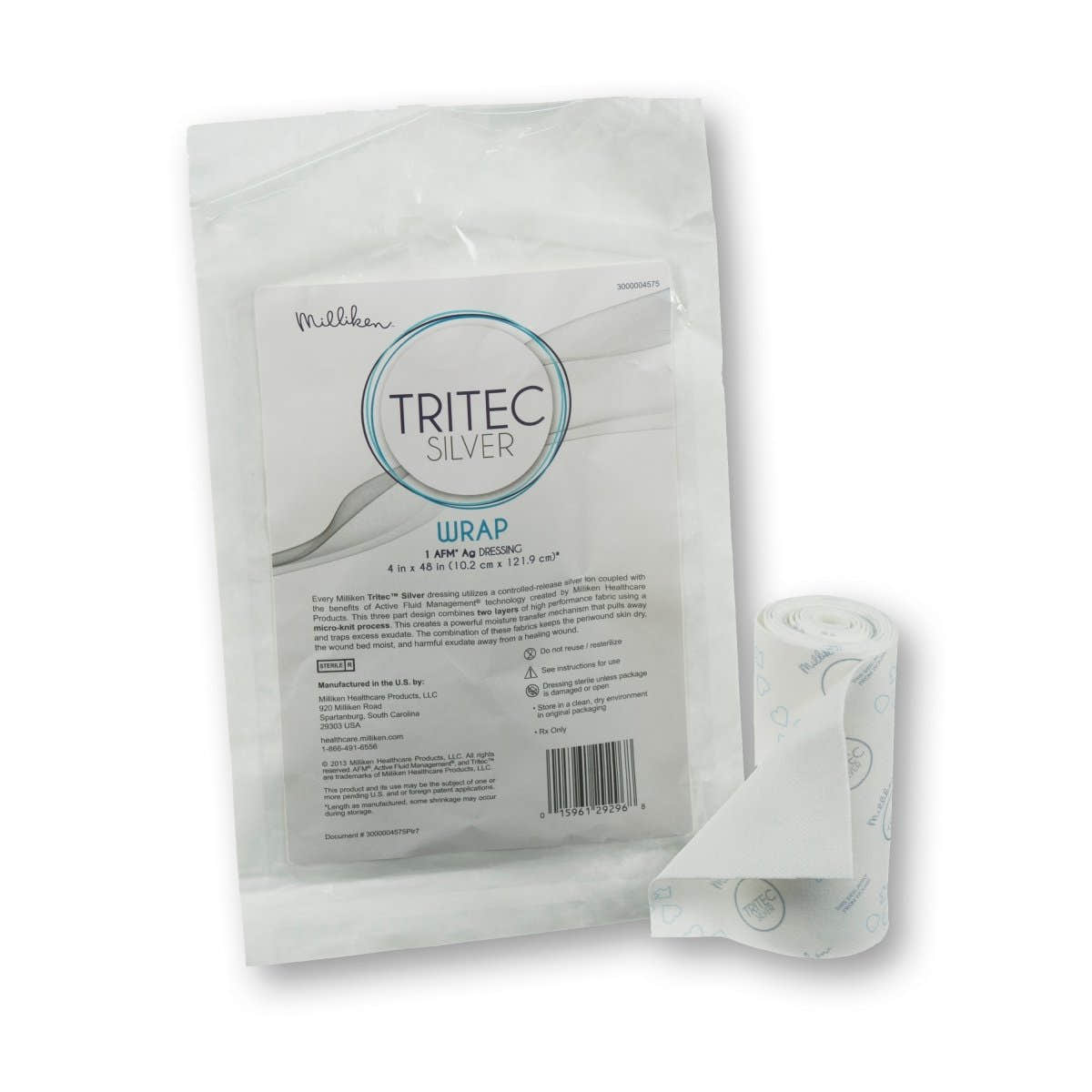
Milliken & Company Wound Care Products at Cart Health
Milliken & Company brings decades of material science expertise to the wound care space, producing dressings designed with both clinicians and caregivers in mind. This collection brings together their specialized wound contact products, offering reliable options for those managing wound care at home or in a professional setting.
Silver-based wound contact dressings: Milliken's silver wound contact layer dressings are engineered to work directly at the wound surface, combining the antimicrobial properties of silver with a low-adherence design intended to minimize disruption during dressing changes.
Thoughtful sizing options: Products like the Tritec Silver Dressing, 4 x 48 Inch reflect Milliken's attention to versatile formats that can be adapted to different wound shapes and sizes.
Professional-grade materials: Milliken & Company is known for applying advanced textile and material science to healthcare, resulting in dressings built with consistency and quality in mind.
Products suited to multiple care settings: Whether used in a clinical environment or under the guidance of a healthcare provider at home, these dressings are designed to meet a professional standard of care.
How to Choose the Right Milliken Dressing
Selecting the right wound contact dressing depends on the specific wound type, size, and the care plan recommended by a qualified healthcare professional. As a general guide:
Consider wound dimensions: Match the dressing size to the wound area. A longer format like the Tritec Silver Dressing, 4 x 48 Inch offers flexibility for packing or covering elongated or irregular wounds.
Follow professional guidance: Silver-containing dressings are typically recommended within a specific wound care protocol. Always consult a clinician or wound care specialist before selecting or changing a dressing type.
Assess frequency of changes: Low-adherence wound contact layers are generally designed to reduce trauma at dressing changes, which may be a factor when evaluating comfort and ease of care.
About Milliken & Company
Milliken & Company is a diversified, research-driven company with a long-standing presence in both industrial and healthcare markets. Their wound care line reflects their broader commitment to applying material innovation to real-world needs — producing products that healthcare professionals can rely on for consistent performance. If you have questions about which product is right for a specific situation, reaching out to a licensed healthcare provider is always the recommended first step.
Frequently Asked Questions about Milliken & Company
A silver wound contact layer dressing is a thin, antimicrobial layer placed directly on a wound to reduce bacterial burden and support healing. Silver ions in the dressing work continuously against a broad spectrum of microorganisms. These dressings are typically used under a secondary dressing to manage infection risk in chronic or complex wounds.
Silver wound contact layer dressings are designed for patients with infected wounds, wounds at high risk of infection, or chronic wounds that have stalled in the healing process. Clinicians commonly recommend them for managing partial- and full-thickness wounds. A healthcare provider should assess whether antimicrobial dressing therapy is appropriate for each individual patient.
Apply a silver wound contact layer dressing by first cleaning the wound thoroughly, then cutting the dressing to fit the wound bed before placing it directly against the tissue. Secure the contact layer with an appropriate secondary dressing. Always follow your clinician's instructions for dressing change frequency based on wound condition and drainage levels.
Silver wound contact layer dressings are typically changed every few days, though the exact frequency depends on wound drainage, infection status, and the clinician's care plan. Some formulations are designed to remain in place longer to minimize disruption to the healing tissue. Always follow the guidance of a qualified wound care professional.
Silver wound contact layer dressings are used for a range of wound types including surgical wounds, diabetic foot ulcers, venous leg ulcers, pressure injuries, and burns where infection is a concern. The antimicrobial properties help reduce bacterial load across both acute and chronic wound categories. Suitability depends on wound depth, drainage, and overall patient condition.
Yes, silver wound contact layer dressings are generally considered safe for use on wound tissue, though patients with known silver sensitivity should avoid them. The contact layer is designed to minimize trauma to the wound bed and surrounding skin during removal. Consult a healthcare provider if you have concerns about skin reactions or allergies.
Yes, a silver wound contact layer dressing requires a secondary dressing placed on top to absorb exudate, protect the wound, and hold the contact layer in place. The contact layer itself is not designed to manage fluid on its own. Choosing the right secondary dressing depends on wound drainage levels and the surrounding skin condition.
Because silver wound contact layer dressings provide continuous antimicrobial action that standard non-antimicrobial dressings do not offer, making them a better choice when infection risk is elevated. The silver ions actively work against bacteria in the wound environment. For clean wounds with low infection risk, a standard dressing may be sufficient and more cost-effective.
Silver wound contact layer dressings should be stored in a cool, dry location away from direct sunlight and moisture, and kept in their original sealed packaging until use. Exposure to humidity or extreme temperatures can compromise the integrity of the dressing and reduce its effectiveness. Always check the expiration date on the packaging before applying any wound dressing.
A silver wound contact layer dressing is a thin, low-profile material placed directly on the wound bed, while a silver foam dressing combines antimicrobial silver with an absorbent foam layer designed to manage moderate to heavy exudate. Contact layers are typically used with a separate secondary dressing. The right choice depends on wound drainage volume and the clinician's wound care protocol.
Do you still have questions about Milliken & Company?
If we still haven't answered your question, you can contact us by live chat or email and we will get back to you as soon as possible.