Your privacy matters to us! By using our site, you agree to the collection and use of your Personal Information as described in our Privacy Policy.
Power Wheelchairs
1 product
Showing 1 - 1 of 1 product
Power Wheelchairs: Independent, Comfortable Mobility on Your Terms
Power wheelchairs offer motorized mobility for people who want reliable, hands-free movement at home, at work, or out in the community. Cart Health's power wheelchair collection brings together chairs built for real-world use — designed to handle a range of environments while keeping the rider comfortable and in control. Whether someone is exploring their first power chair or looking to upgrade to a more capable model, this collection is a practical starting point.
Motorized drive systems that reduce the physical effort of self-propulsion, making longer distances more manageable throughout the day.
Supportive seating designed to keep users comfortable during extended periods of use.
Durable construction suited to everyday indoor and outdoor navigation.
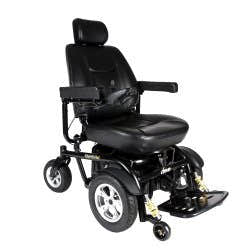
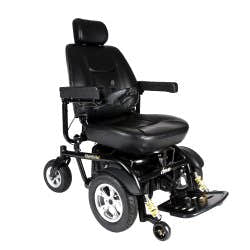
Higher weight-capacity options, such as the Trident HD Power Wheelchair, which is built to accommodate users who need a sturdier, heavy-duty frame.
Intuitive controls that allow riders to direct movement with minimal physical strain.
How to Choose the Right Power Wheelchair
Selecting a power wheelchair is a personal decision that often benefits from input from a healthcare or mobility specialist. That said, a few practical factors can help narrow the options:
Weight capacity: Make sure the chair's rated capacity comfortably exceeds the user's weight. Models like the Trident HD are specifically engineered for heavier-duty support.
Primary environment: Consider where the chair will be used most — tighter indoor spaces call for a compact turning radius, while outdoor or mixed-terrain use may require a more robust frame and wheels.
Seating comfort: Look at seat dimensions and cushioning, especially for users who spend many hours in their chair each day.
Portability needs: Think about whether the chair needs to be transported regularly, which may affect the preferred size and weight of the unit.
A Note on Getting the Right Fit
Power wheelchairs are meaningful long-term investments in daily independence. If you're purchasing on behalf of someone else or are new to power mobility, consulting with an occupational therapist or certified assistive technology professional can help ensure the chosen model aligns well with the user's specific needs and lifestyle.
Frequently Asked Questions about Power Wheelchairs
A power wheelchair is a motorized mobility device that allows people with limited strength or mobility to move independently without manually propelling themselves. Power wheelchairs are controlled using a joystick or alternative input device and are designed for both indoor and outdoor use.
Power wheelchairs are designed for individuals who lack the upper body strength or endurance to self-propel a manual wheelchair. People living with conditions such as ALS, muscular dystrophy, spinal cord injuries, or advanced arthritis often benefit most from a power wheelchair.
Start by reading the manufacturer's instructions and practicing in an open, flat area before navigating ramps, thresholds, or tight spaces. Power wheelchairs are controlled primarily through a joystick, and new users should take time to adjust speed settings and understand the braking system before using the chair in crowded environments.
Power wheelchairs vary in weight capacity depending on the model, with standard options typically supporting users up to around 300 pounds and heavy-duty models accommodating significantly more. Always check the specific weight limit listed for each power wheelchair before purchasing to ensure a safe fit.
Charge a power wheelchair battery by connecting the provided charger to the chair's charging port and plugging it into a standard wall outlet, typically overnight or according to the manufacturer's recommended charge time. Most power wheelchairs use sealed lead-acid or lithium batteries and should be charged regularly to maintain battery health and range.
Yes, many power wheelchairs are designed to handle outdoor terrain including sidewalks, grass, and slight inclines, though performance varies by model. When shopping for a power wheelchair intended for outdoor use, look for features like larger rear wheels, higher ground clearance, and a longer battery range.
Choose a power wheelchair by first considering the user's weight, seat width requirements, primary environment, and any specific postural support needs. Other important factors include battery range, turning radius for indoor maneuverability, and whether the chair needs to be transport-friendly or disassembled for vehicle travel.
Yes, power wheelchairs may be covered by Medicare Part B and many private insurance plans when a physician documents medical necessity and the patient meets qualifying criteria. Coverage typically requires a face-to-face evaluation, a written prescription, and purchase through a Medicare-enrolled supplier.
Maintain a power wheelchair by regularly inspecting the tires, cleaning the frame with a damp cloth, checking all electrical connections, and keeping the battery properly charged. Avoid exposing the chair to excessive moisture, and schedule periodic professional servicing to check the motor, joystick, and seating components for wear.
A power wheelchair differs from a motorized scooter in that power wheelchairs offer more customizable seating support, tighter turning radii, and greater postural positioning options, making them better suited for users with significant physical limitations. Scooters generally require more upper body control and are better for users who can walk short distances but need assistance over longer ones.
Do you still have questions about Power Wheelchairs?
If we still haven't answered your question, you can contact us by live chat or email and we will get back to you as soon as possible.