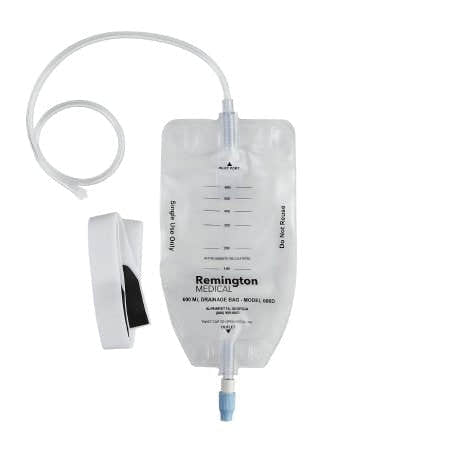
Cart Health carries a focused selection of drainage bags from Remington Medical, a brand recognized for producing reliable medical supply products designed for clinical and home care use. Whether products are being sourced for a healthcare facility or for personal care at home, this collection offers purpose-built drainage solutions worth exploring.
Specialized drainage bags: Products like the Remington Nephrostomy Drainage Bag are designed to meet specific drainage care needs with attention to practical, everyday usability.
A single trusted vendor: Every item in this collection comes from Remington Medical, so shoppers can expect a consistent standard of product design and construction across the range.
Home and clinical compatibility: Remington Medical drainage bags are suited for use in a variety of care settings, from hospital environments to at-home care routines.
How to Choose the Right Drainage Bag
Selecting the appropriate drainage bag depends on the specific type of care required, the recommended capacity, and any guidance provided by a healthcare professional. It is always a good idea to consult with a doctor, nurse, or other qualified care provider before purchasing drainage supplies to ensure the product is the right fit for the intended use.
If you are looking for a nephrostomy-specific option, the Remington Nephrostomy Drainage Bag is a straightforward starting point within this collection. Review individual product pages for detailed specifications to match the right product to the care plan in question.
About Remington Medical
Remington Medical focuses on producing medical supplies that support caregivers and patients in managing ongoing care needs. Their drainage bag products reflect a practical approach to medical supply design, prioritizing function and ease of use in real-world care situations.
Frequently Asked Questions about Remington Medical
A nephrostomy drainage bag collects urine directly from the kidney through a catheter placed in the renal pelvis, bypassing the bladder entirely. Nephrostomy drainage bags are used when normal urine flow is blocked due to injury, surgery, or obstruction. They allow the kidney to drain safely while the underlying condition is treated.
Nephrostomy drainage bags are designed for patients who have undergone percutaneous nephrostomy procedures or who have a ureteral obstruction that prevents normal urine flow to the bladder. These bags are typically used under the guidance of a urologist or nephrologist and are common in both home care and clinical settings.
Empty a nephrostomy drainage bag by washing your hands first, then opening the drain valve at the bottom of the bag over a toilet or collection container. Nephrostomy drainage bags should be emptied when they reach about half to two-thirds full to prevent backflow and reduce infection risk. Always close the valve securely after draining.
Position a nephrostomy drainage bag below the level of the kidney at all times to allow gravity drainage, and use the bag's securing straps or a leg bag holder to keep tubing from bending or kinking. Nephrostomy drainage bags should never be placed higher than the insertion site, as this can cause urine to flow back toward the kidney.
When choosing a nephrostomy drainage bag, look for features like anti-reflux valves, graduated measurement markings, secure tubing connections, and a comfortable attachment system for the leg or bedside. Drainage bags designed for nephrostomy use typically have longer tubing to accommodate the flank catheter placement, which differs from standard urinary drainage bags.
No, a nephrostomy drainage bag is not the same as a standard urinary drainage bag, though both collect urine. Nephrostomy drainage bags are specifically designed to connect to a catheter exiting the back or flank and often feature longer tubing and specialized connectors suited to that insertion point. Using the wrong bag type can increase infection and disconnection risk.
Yes, a nephrostomy drainage bag can be used overnight, and many patients switch to a larger-capacity bedside drainage bag at night to reduce the need for emptying. During the day, a smaller leg-style nephrostomy drainage bag offers more mobility. Always confirm the appropriate bag type and capacity with your healthcare provider.
Nephrostomy drainage bags are typically obtained through a prescription or medical order because nephrostomy catheter placement is a clinical procedure performed by a specialist. Replacement drainage bags may be available through medical supply retailers, but the catheter system itself requires professional management. Always follow your care team's guidance on supplies and reordering.
Store an unused nephrostomy drainage bag in a clean, dry location away from direct sunlight and extreme temperatures to preserve the integrity of the materials and sterile packaging. Nephrostomy drainage bags should remain in their sealed packaging until ready for use. Check the expiration date on the packaging before use and discard any bag with damaged seals.
Keeping a nephrostomy drainage bag below kidney level is critical because gravity drives urine flow through the catheter and into the bag. If the drainage bag rises above the insertion site, urine can flow backward toward the kidney, increasing the risk of infection or hydronephrosis. Proper positioning is one of the most important aspects of nephrostomy drainage bag management.
Do you still have questions about Remington Medical?
If we still haven't answered your question, you can contact us by live chat or email and we will get back to you as soon as possible.