Your privacy matters to us! By using our site, you agree to the collection and use of your Personal Information as described in our Privacy Policy.
Traction Equipment
1 product
Showing 1 - 1 of 1 product
Traction Equipment for Neck and Cervical Support
Cart Health's traction equipment collection brings together devices designed to provide gentle, controlled stretching and decompression of the cervical spine. Whether recommended by a physical therapist or purchased for at-home use under professional guidance, these products are built with usability and consistency in mind. If you're exploring options for cervical traction, this is a straightforward place to start.
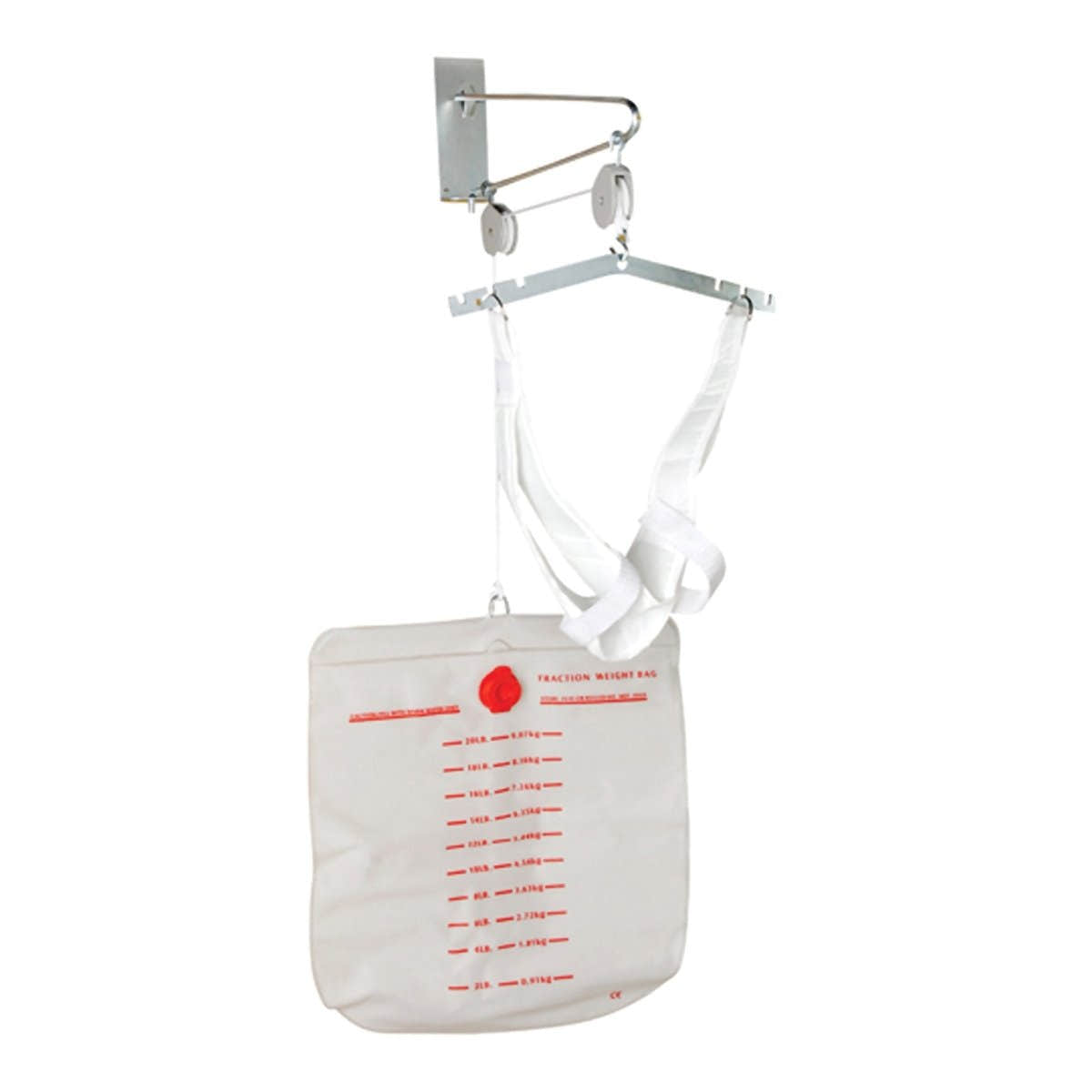
Overdoor cervical traction kits: Compact, setup-ready systems that attach to a standard door frame, allowing users to perform traction sessions at home without bulky equipment.
Trusted brands: Products from established manufacturers like DMI, known for producing durable home health and rehabilitation accessories.
Complete kit configurations: Many options include the hardware, positioning components, and instructions needed to get started — minimizing the need to source parts separately.
Home-friendly design: Traction devices in this collection are sized and designed for everyday home environments, making consistent use more practical.
Choosing the Right Traction Device
Before selecting a traction device, it's worth consulting a healthcare professional to confirm whether cervical traction is appropriate and to get guidance on proper setup and duration. Once you have that direction, focus on a few practical factors:
Setup simplicity: Look for kits that include clear assembly instructions and all necessary components. The DMI Cervical Traction Kit is a good example of an all-in-one overdoor option that minimizes guesswork.
Door compatibility: Overdoor systems work with most standard interior doors, but confirm your door type before purchasing.
Positioning comfort: Consider kits that include patient positioning components, which can make sessions more comfortable and easier to repeat consistently.
A Note on Safe Use
Traction equipment is most effective when used as directed — ideally with input from a physical therapist, chiropractor, or physician. Following recommended session lengths and weight settings is important for getting the most out of any device in this category. If you have questions about a specific product, the details page for items like the DMI Overdoor Cervical Traction Kit includes specifications to help you and your care provider make an informed decision.
Frequently Asked Questions about Traction Equipment
A cervical traction kit is used to gently stretch the neck and decompress the cervical spine, helping relieve pain caused by herniated discs, muscle spasms, pinched nerves, or arthritis. Cervical traction works by applying a controlled pulling force to the head and neck, reducing pressure on the vertebrae and surrounding soft tissue.
Overdoor cervical traction kits are designed for people experiencing chronic neck pain, cervical disc problems, or tension-related stiffness who have been advised by a doctor or physical therapist to try at-home traction therapy. These kits are not intended for self-diagnosis and should only be used under the guidance of a qualified healthcare provider.
Start by hanging the traction pulley assembly over the top of a closed, sturdy door, then attach the water bag or weight bag to one end of the rope and the head halter to the other. Sit in a chair facing the door, slip the head halter under your chin and around the back of your head, and allow the weight to gradually apply gentle traction to the cervical spine.
An overdoor cervical traction kit works by using a pulley system mounted over a door to apply a gentle, sustained pulling force to the neck and head. This traction force helps separate the cervical vertebrae, reduces disc compression, and can ease muscle tension and nerve irritation in the neck and upper back.
Yes, a cervical traction kit can be safe to use at home when used exactly as directed by a physician or physical therapist. Patients with certain conditions such as spinal instability, fractures, osteoporosis, or rheumatoid arthritis should not use cervical traction without explicit medical clearance, as improper use could worsen their condition.
A cervical traction kit typically includes a head halter, a pulley and spreader bar assembly, a water bag or weight bag, and a connecting rope or strap. Some kits also include a door bracket or hook and an instruction guide to help patients set up and use the equipment correctly at home.
Yes, most overdoor cervical traction kits are designed to work with standard interior doors that close securely and can bear the weight of the traction setup. The door must close fully and latch shut during use, since the resistance of the closed door is what anchors the pulley system and allows traction to be applied safely.
Because cervical traction equipment offers a non-invasive, drug-free way to reduce pressure on compressed spinal discs and irritated nerves in the neck. Physical therapists and physicians often recommend traction as part of a broader treatment plan for conditions like cervical radiculopathy, degenerative disc disease, and muscle-related neck stiffness.
Wipe down the head halter and straps of a cervical traction kit with a mild soap and damp cloth after each use, and allow all components to air dry completely before storing. Store the kit in a cool, dry location away from direct sunlight to prevent the straps and fabric components from degrading over time.
An overdoor cervical traction kit actively stretches and decompresses the cervical spine using a pulley and weighted system, while a cervical collar simply immobilizes or supports the neck without applying any traction force. Traction equipment is generally used for more active rehabilitation, whereas cervical collars are typically prescribed for rest, stabilization, or post-injury protection.
Do you still have questions about Traction Equipment?
If we still haven't answered your question, you can contact us by live chat or email and we will get back to you as soon as possible.