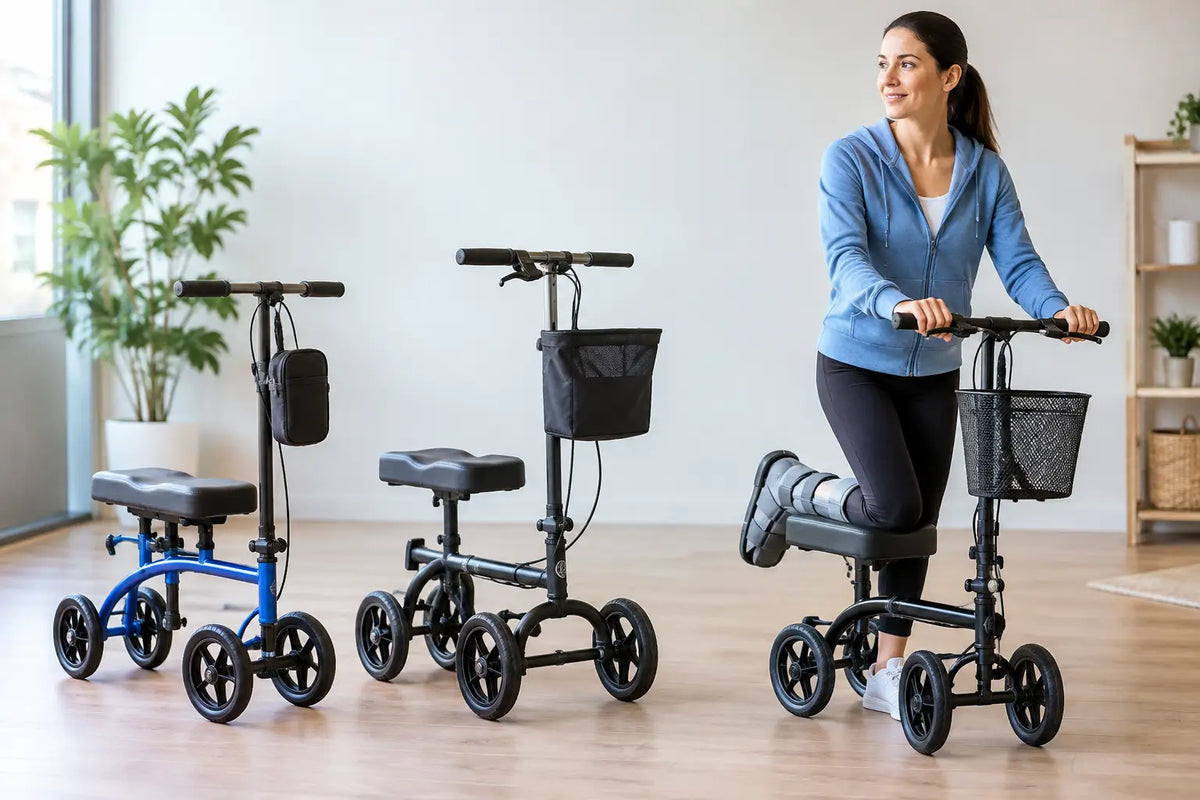
A knee scooter can make a non-weight-bearing recovery feel far more manageable than crutches alone. But a useful knee scooter comparison is about more than picking the lowest price or the model with the largest wheels. The right choice depends on where you will use it, how steady you feel while turning, your height and weight, and whether you need to transport or store it between appointments.
For a foot, ankle, or lower-leg injury, the goal is simple: keep pressure off the affected leg while helping you move through daily routines. A scooter should support that goal without creating new frustrations around balance, fit, or maneuvering in your home.
Start With Your Recovery Routine
Before comparing product features, think through a typical day. Someone recovering in a single-level home with smooth flooring may be well served by a compact, four-wheel indoor model. Someone who needs to travel over sidewalks, parking lots, or uneven pavement may need larger wheels, a more stable frame, and stronger braking performance.
Knee scooters are generally intended for use on level surfaces. They are not a safe substitute for careful planning around stairs, steep ramps, wet pavement, loose gravel, or rough terrain. If your home has steps, you may need a separate mobility plan for those areas. Your physician, physical therapist, or orthopedic care team can help confirm whether a knee scooter is appropriate for your injury and recovery instructions.
It also helps to consider who will be using the device. A person with limited hand strength may find certain brake levers difficult to operate. A caregiver may prioritize a folding frame that fits easily in a vehicle. The best option is the one that fits daily life as well as it fits the user.
Knee Scooter Comparison: The Features That Matter
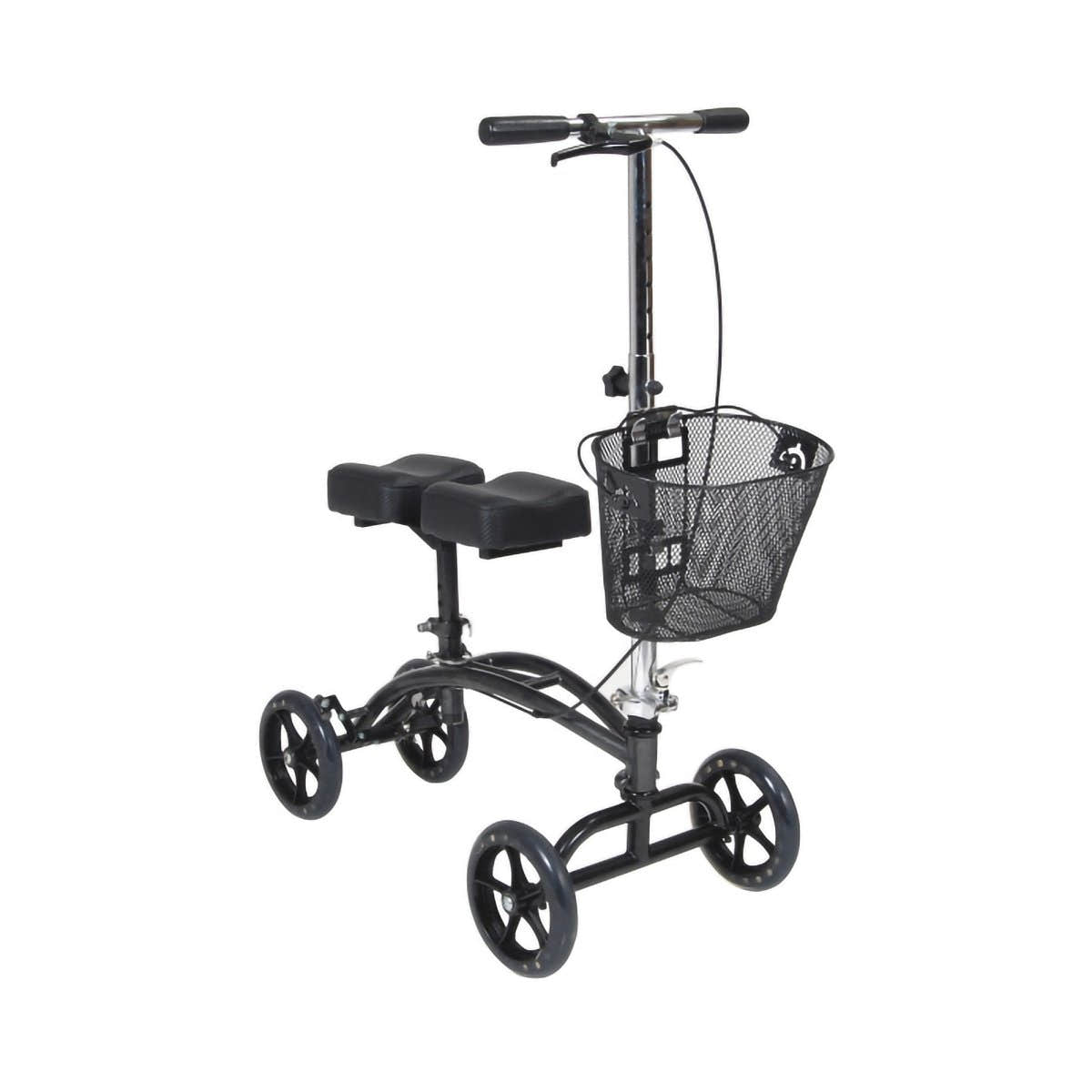
Most knee scooters have the same basic parts: a padded knee platform, a steering column with handlebars, wheels, hand brakes, and a frame. The differences in those parts can have a meaningful effect on comfort and control.
| Feature | Best for | What to check |
|---|---|---|
| Compact wheels | Smooth indoor floors and short errands | Turning radius, wheel material, brake response |
| Large wheels | Sidewalks and more varied outdoor surfaces | Stability, tire maintenance, overall scooter weight |
| Three-wheel design | Tight indoor spaces | Balance needs and manufacturer stability guidance |
| Four-wheel design | Everyday stability and predictable handling | Frame width and ability to move through doorways |
| Folding frame | Travel and limited storage | Folding mechanism, folded size, carry weight |
Three Wheels vs. Four Wheels
A three-wheel knee scooter often has two rear wheels and one front wheel. Its main advantage is maneuverability. The narrower turning profile can be helpful in apartments, hallways, kitchens, and bathrooms where space is limited. The trade-off is that three-wheel designs may feel less steady to users who are new to mobility equipment, make sharp turns, or spend time outdoors.
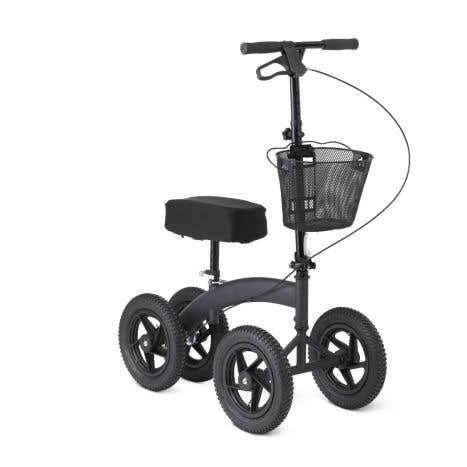
Four-wheel scooters are often the more reassuring choice for everyday use because they provide a wider, more stable base. They can feel more predictable when rolling in a straight line or moving slowly through a room. However, they may be wider or less agile in tight spaces. Measure narrow hallways, bathroom entrances, and commonly used doorways before deciding.
Wheel Size and Surface Type
Small solid wheels are practical for indoor use. They typically require less maintenance and roll well over hardwood, tile, vinyl, and low-pile carpet. They may not handle cracks, thresholds, uneven sidewalks, or debris as comfortably as a scooter with larger wheels.
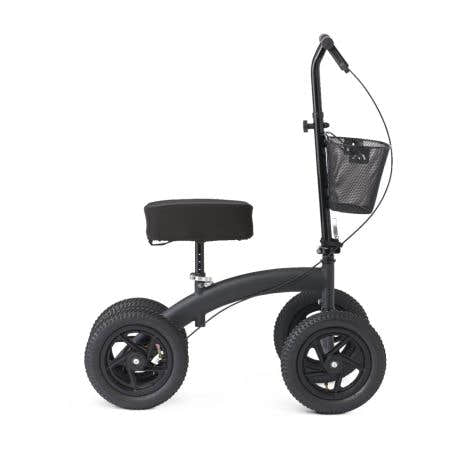
Larger wheels can improve performance outdoors, especially on pavement with minor imperfections. Some models use pneumatic tires, which can soften the ride but may need air pressure checks and occasional maintenance. Solid larger wheels avoid flats but can still transfer more vibration than air-filled tires. For many users, an all-purpose scooter with larger wheels is worthwhile only if outdoor use is a regular part of recovery.
Weight Capacity and Frame Fit
Always check the manufacturer’s stated weight capacity rather than estimating from the scooter’s appearance. Staying within that limit supports safe operation and helps protect the frame, wheels, and braking system from excessive stress.
Fit matters just as much. The knee platform should adjust to a height that lets your injured leg rest comfortably while your other foot reaches the floor naturally. Handlebars should be positioned so you can steer without hunching or stretching forward. If a model has a listed user-height range, use it as a starting point, not a guarantee. Body proportions vary, so adjustable components are especially valuable.
A properly fitted scooter should allow you to stand upright with your knee centered on the pad. If your hip feels twisted, your shoulders are strained, or you must lean heavily into the handlebars, the setup may need adjustment or a different model.
Comfort Is More Than a Thick Knee Pad
The knee pad is where many shoppers focus first, and for good reason. Recovery can involve days or weeks of repeated use. A generously padded platform can reduce pressure on the shin and knee, but shape and positioning matter too. A contoured pad may help keep the leg centered, while a flat pad can offer more room to adjust placement.
Look for a pad that is easy to clean, particularly if you will use the scooter outside or share caregiving duties. Some users benefit from an added cover or cushion, but extra padding should not make the leg unstable or interfere with the fit of the scooter.
Handlebar grip is another comfort detail that affects real-world use. Soft grips can be easier on the hands, while adjustable handlebars help reduce wrist and shoulder strain. Test the brakes before relying on the scooter for errands. You should be able to reach and squeeze both levers with confidence while maintaining a steady grip.
Storage, Transport, and Everyday Extras
A folding knee scooter can be convenient, but not every folding design is equally easy to use. Check whether the steering column folds, whether the frame locks securely when open, and how much the scooter weighs when lifted. A device that folds compactly may still be awkward for one person to place in a trunk.
Storage baskets, bags, cup holders, and phone holders can make daily movement easier, especially when you cannot carry items in your hands while steering. A basket is useful for medications, a water bottle, mail, or small personal items. It should be treated as a convenience feature, not a place for heavy loads that could affect steering or balance.
For shoppers ordering medical equipment for home use, it is also worth reviewing assembly needs. Some scooters arrive mostly assembled, while others require attaching handlebars, wheels, or baskets. Make sure you have a clear place to set up the unit and someone available to help if assembly is difficult during recovery.
How to Choose Without Overbuying
The most expensive knee scooter is not automatically the best choice. If your recovery is short, your floors are smooth, and you mainly need a way to get around the house, a stable basic model may be the practical answer. Paying extra for oversized tires and premium outdoor features may not add much value.
On the other hand, choosing a very basic model can be frustrating if you need to attend follow-up appointments, return to work, move through a large home, or navigate outdoor paths often. In that situation, larger wheels, a folding frame, and a dependable basket may justify the added cost.
Consider these four questions before you buy:
- Will the scooter be used mainly indoors, outdoors, or both?
- Can it fit through the doorways and around the furniture you use every day?
- Does its weight capacity and adjustment range match the user?
- Can the user comfortably operate the brakes and make controlled turns?
Safe Use Starts With a Good Setup
Once you have chosen a scooter, take time to adjust it correctly before your first long trip across the house. Set the knee pad and handlebar height on a level surface, engage the parking brake before mounting or dismounting, and keep your injured leg fully supported on the pad. Move slowly until steering and turning feel familiar.
Keep floors clear of cords, rugs that slide, pet toys, and clutter. Avoid carrying items by hand while moving. Use a basket or ask for help, and be especially cautious near door thresholds, wet floors, ramps, and crowded spaces. If you experience new pain, numbness, instability, or trouble controlling the scooter, stop using it and contact your care team.
A well-chosen knee scooter should make the small parts of recovery easier: getting a glass of water, moving between rooms, and keeping up with essential appointments. Choose for the places you truly need to go, then give yourself time to use it carefully and confidently.