A feeding tube can make nutrition and medication routines possible at home, but it also needs regular care to keep working as intended. Learning how to flush feeding tubes correctly helps clear formula and medication from the tubing, supports tube patency, and can reduce avoidable clogs. Your prescribing clinician or home health team should always provide the specific instructions for your tube type and care plan.
Why flushing a feeding tube matters
Formula, crushed medications, and supplements can leave residue inside a feeding tube. Over time, that buildup may slow the flow or block the tube completely. A regular flush sends the prescribed amount of water through the tube to help keep the internal pathway clear.
Flushing also helps make sure the full dose of medication or nutrition reaches the stomach or intestine rather than remaining in the tube. For caregivers managing several medicines each day, this simple step can make the routine more reliable and easier to track.
The right schedule depends on whether the person uses a gastrostomy tube, jejunostomy tube, nasogastric tube, or another enteral access device. It also depends on whether feedings are continuous, intermittent, or given by syringe. Follow the schedule supplied by the care team rather than relying on a general routine alone.
When to flush feeding tubes
Many home care plans call for flushing before and after feedings, before and after medications, and at regular intervals during continuous feedings. If more than one medication is given, the tube is commonly flushed between each medicine as well. This helps prevent medications from mixing in the tube and reduces residue.
A tube that is not actively being used may still need scheduled water flushes. The amount of water and timing can vary significantly, especially for infants, children, people with fluid restrictions, or people with kidney, heart, or electrolyte concerns. Never increase water flushes on your own if the patient has been told to limit fluids.
If a pump is being used, the feeding plan may include pump pauses for medication and flushes. Keep the written instructions nearby, particularly when more than one caregiver is involved. A simple medication and feeding log can prevent missed steps and duplicate doses.
Supplies to have ready
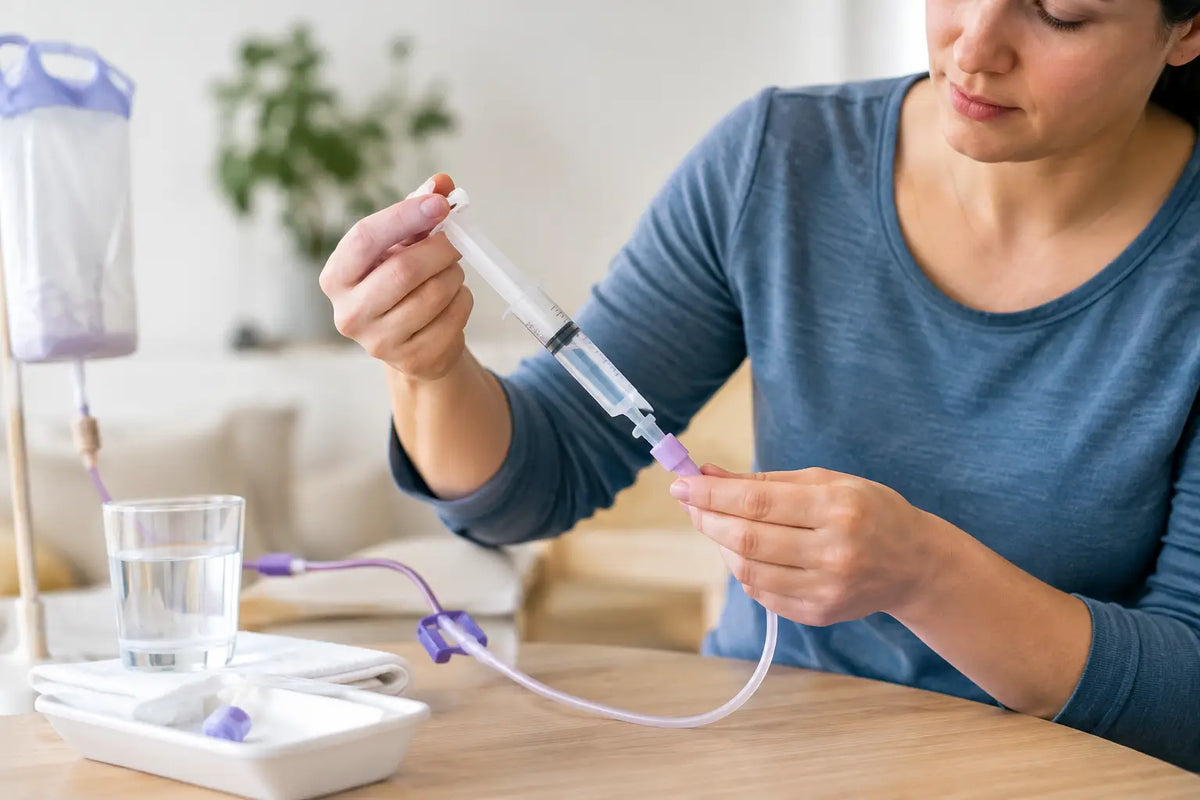
Set up supplies before beginning so the process is calm and efficient. Your clinician may recommend specific products and syringe sizes, but most routines use these basics:
- An enteral syringe in the size recommended for the tube
- The prescribed water, which may be tap, filtered, boiled and cooled, or sterile water depending on the care plan
- A clean cup or container for water
- Clean paper towels or a clean work surface
Wash your hands with soap and water before handling the tube, feeding set, syringe, or formula container. Keep medication preparation separate from formula preparation when possible, and use a clean area away from food crumbs, pets, and household clutter.
How to flush a feeding tube step by step
The steps below describe a general home routine. They do not replace instructions from the patient’s doctor, nurse, dietitian, pharmacist, or durable medical equipment provider.
1. Position the patient and check the tube
Unless the care team has given different instructions, position the patient upright or with the head elevated before feeding and flushing. Check the external tube and skin area for obvious changes, including leaking, cracks, loose connections, redness, swelling, drainage, or pain.
For a newly placed tube, a nasal tube, or a tube that appears to have shifted, stop and contact the clinical team for guidance. Do not use a tube if you are unsure of its placement or condition.
2. Pause the feeding if needed
For continuous pump feedings, pause the pump before disconnecting or accessing the tube. Close clamps as instructed for the specific feeding set. If the patient has a low-profile button, attach the extension set according to the manufacturer directions and the care plan.
3. Draw up the prescribed water amount
Fill the enteral syringe with the amount and type of water directed by the care team. Remove air from the syringe if instructed. Too much force or a large air push can cause discomfort, so a slow, controlled technique is best.
4. Flush slowly and gently
Connect the syringe securely to the feeding port. Open the clamp if applicable, then press the plunger slowly and steadily. The water should move without significant resistance.
Do not force the plunger. A tube may be partially blocked, kinked, clamped, or positioned in a way that prevents flow. Forcing water through can damage the tube or create pressure that is uncomfortable for the patient.
When the flush is complete, close the clamp if the tube has one, remove the syringe, and cap the port securely. Resume the feeding or proceed with medication only as directed in the care plan.
Flushing before and after medications
Medication administration is one of the most common times for tube clogs. Give medicines one at a time unless a pharmacist or clinician has specifically said they may be combined. Flush before the first medication, between each medication, and after the final medication using the prescribed water amount.
Do not crush enteric-coated, extended-release, delayed-release, sublingual, or certain capsule medications unless a pharmacist confirms it is safe. Some medicines are available in liquid form, while others need a specific preparation method. A pharmacist can also identify medications that interact with enteral formula or need to be timed separately from a feeding.
Avoid adding medication directly to formula. It can alter the formula, increase the risk of tube blockage, and make it difficult to know whether the full medication dose was received.
What to do if the tube will not flush
First, stay calm and stop applying pressure. Check that clamps are open and that the tube is not bent, pinched by clothing, or caught in bedding. If permitted by the care instructions, gently reposition the patient and try a slow flush with the prescribed water.
Do not use sharp objects, wire, or excessive pressure to clear a tube. Do not use carbonated beverages, juice, or home remedies unless the patient’s clinician has specifically instructed you to do so. These methods may not solve the clog and can create other problems.
Contact the prescribing clinician, home health nurse, or enteral supply provider if the tube remains blocked or you cannot complete a flush. Seek urgent medical advice for severe pain, vomiting, abdominal swelling, breathing difficulty, significant leaking, bleeding, fever, or a tube that has come out or appears to have moved.
Everyday habits that help prevent clogs
Consistency does more to prevent clogs than a last-minute fix. Flush on the prescribed schedule, give medications separately, and use only properly prepared medications. Keep feeding sets, syringes, and formula handled according to their product instructions, and do not reuse disposable supplies beyond their intended use.
It also helps to keep replacement enteral syringes, feeding bags or pump sets, extension sets, and the patient’s preferred formula on hand before supplies run low. For families balancing tube care with other daily needs, ordering routine home health supplies together can make recurring care easier to manage.
A feeding tube routine should feel repeatable, not stressful. Keep the care team’s instructions visible, use clean supplies, and treat any unexpected resistance or change in the tube as a reason to pause and ask for guidance.