
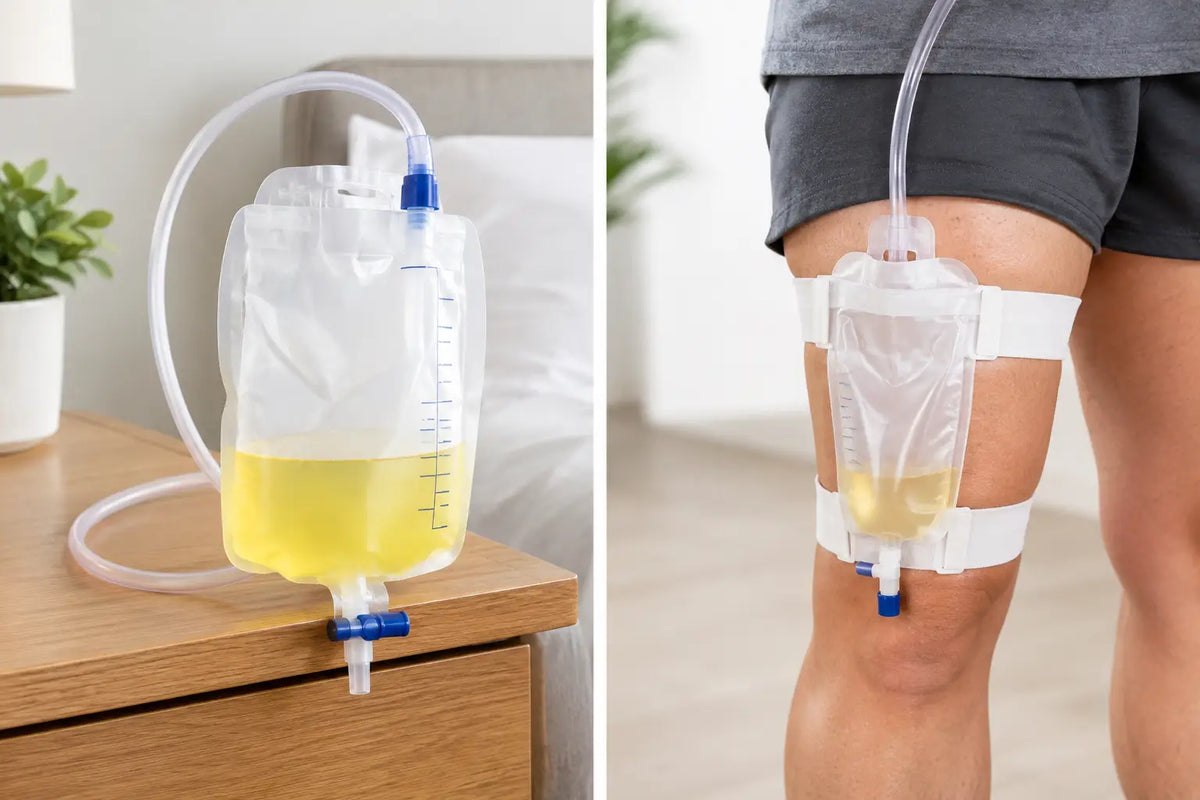
Choosing between a urine bag versus leg bag often comes down to one practical question: where and how will the catheter drainage bag be used? A larger bedside bag can make overnight drainage easier, while a smaller leg bag can offer more freedom during the day. The best setup depends on your mobility, daily routine, prescribed catheter system, and comfort level.
For many people, the answer is not one bag or the other. It is using a leg bag during daytime activities and switching to a larger drainage bag at night. Understanding the differences can help patients and caregivers order the right supplies and feel more prepared for daily catheter care.
Urine Bag Versus Leg Bag: The Main Difference
A urinary drainage bag collects urine from an indwelling or external catheter through flexible tubing. The term “urine bag” can describe several types of collection bags, but it often refers to a larger bedside or overnight drainage bag. A leg bag is a smaller collection bag designed to be worn on the thigh or calf under clothing.
The biggest difference is capacity. A standard leg bag commonly holds around 500 to 1,000 mL, although sizes vary. A bedside drainage bag is usually larger, often holding 2,000 mL. The larger capacity means fewer emptying trips overnight, while the smaller leg bag is lighter and less noticeable during daytime movement.
Both styles should stay below the level of the bladder so urine can flow properly. Neither bag should rest directly on the floor, and the tubing should not be kinked, pulled tight, or trapped under clothing or bedding.
When a Leg Bag May Be the Better Choice
A leg bag is made for mobility. It is generally secured with straps to the thigh or lower leg, allowing it to fit discreetly under loose pants, skirts, or longer clothing. For someone who walks around the home, attends appointments, runs errands, or participates in rehabilitation, a leg bag can be more convenient than carrying a larger drainage bag.
Because it is smaller, a leg bag needs to be emptied more frequently. Many users empty it when it is about half to two-thirds full rather than waiting until it feels heavy or overfilled. This can reduce pulling on the catheter and make the bag more comfortable to wear.
Leg bags are commonly selected for daytime use when a person wants to:
- Move around the home or community more comfortably
- Keep the collection bag less visible under clothing
- Use a lighter bag with less bulk
- Avoid managing a large bag while seated in a wheelchair, car, or recliner
When a Larger Urine Drainage Bag Makes More Sense
A larger urinary drainage bag is often used at night or when someone is spending extended time in bed. Its higher capacity can allow for uninterrupted sleep and reduce the chance that the bag will become full before morning.
A bedside bag is typically hung from a bed frame or placed in a clean holder that keeps it below bladder level. It should never be placed on the floor, where it can pick up germs or be accidentally stepped on. The drainage tube should have enough slack for normal repositioning in bed without tugging on the catheter.
For people with limited hand strength, reduced mobility, or caregiver support needs, a larger drainage bag may also be easier to manage during long periods at home. It can be a practical option during recovery from surgery, illness, or injury when getting up to empty a smaller leg bag may be difficult.
The trade-off is portability. A large drainage bag is not usually intended to be worn under everyday clothing or taken on errands. It is heavier as it fills, more visible, and less convenient for active daytime use.
Comparing Capacity, Mobility, and Everyday Use
| Feature | Leg Bag | Larger Urine Drainage Bag |
| --- | --- | --- |
| Typical use | Daytime, walking, appointments | Overnight, bedside, extended rest |
| Capacity | Usually smaller | Usually larger |
| Placement | Secured to thigh or calf | Hung from bed frame or bag holder |
| Main benefit | Discreet mobility | Fewer emptying needs |
| Main consideration | Requires more frequent emptying | Less practical outside the home |
The right choice may change from hour to hour. A person who is active during the day but sleeps through the night may benefit from both bag types. Someone who remains in bed for most of the day may find a larger drainage bag more practical. Always use the system recommended by the prescribing clinician, especially if the catheter, tubing, or bag connection has specific requirements.
How to Switch Between a Leg Bag and Night Bag
Some catheter systems are designed so users can disconnect a daytime leg bag and attach a larger nighttime bag. This should only be done if the healthcare team has advised it and the products are compatible with the catheter setup.
Before handling any drainage system, wash your hands well with soap and water. Keep the connection points clean, avoid touching exposed openings, and use the connection method provided with the bag. Secure the new bag below bladder level and make sure urine is flowing through the tubing after the change.
A common concern is whether switching bags increases infection risk. Any unnecessary opening of a closed drainage system can raise that concern, which is why it is essential to follow the instructions from the clinician or home health team. Some people may be instructed to use a single closed system for a set period, while others may have a routine that includes a day bag and night bag. Personal medical guidance takes priority over general product information.
Drainage Bag Care at Home
Consistent care helps protect skin, support drainage, and make the equipment easier to use. Empty the bag into a toilet or clean container without letting the drain spout touch the toilet, container, or floor. After emptying, close the spout securely and clean it as directed by the product instructions.
Check the tubing throughout the day. Loops, twists, and pressure from clothing can slow or stop urine flow. If a bag is filling unusually slowly, first look for a kinked tube or a bag positioned too high. Do not pull on the catheter or try to force drainage.
Pay attention to the skin where leg-bag straps rest and where the catheter enters the body. Redness, pressure marks, leaking, or persistent soreness should be addressed promptly. For people with fragile skin, sensitive skin, edema, or reduced sensation, the placement and type of securement device may need extra attention.
Replacement schedules vary by product and clinical instructions. Reusable bags may have cleaning directions, while disposable options may be intended for single use or scheduled replacement. Ordering enough compatible bags, straps, extension tubing, and related catheter care supplies can prevent last-minute shortages.
Questions to Ask Before Choosing a Collection Bag
Before purchasing a leg bag or larger urine drainage bag, confirm the catheter connector type, tubing length, capacity needed, and whether the bag includes straps or a hanger. It is also useful to consider who will empty the bag, whether the person can reach the drain valve comfortably, and whether the bag will be used with a wheelchair, walker, or bedside setup.
If you are buying for a loved one, choose products that fit the established care routine rather than changing supplies based on price or appearance alone. Compatible equipment and familiar handling can make day-to-day care feel more manageable.
When to Contact a Healthcare Professional
Contact a healthcare professional promptly for fever, chills, new confusion, worsening lower abdominal or back pain, blood in the urine, strong new urine odor with symptoms, urine leaking around the catheter, or little to no drainage when the tubing appears clear. Seek guidance as well if the catheter comes out, the bag connection breaks, or there is significant swelling or skin injury from straps.
The most comfortable catheter routine is usually the one that matches real life: a bag that supports movement when you need to be up, reliable nighttime capacity when you need rest, and supplies that are easy to keep on hand. CartHealth can help simplify the supply side, so you can focus on creating a routine that feels secure and workable at home.