Caring for a family member with limited mobility is a profound act of love, but it also comes with unique physical and emotional challenges. Whether your loved one is recovering from a major surgery, managing a chronic condition like Parkinson's disease, or navigating the natural changes that come with aging, helping them move safely is a top priority. This Caregiver guide: helping a loved one with mobility is designed to provide you with practical, evidence-based strategies to support your loved one's independence while protecting your own health. By understanding proper transfer techniques, using the right assistive devices, and prioritizing clear communication, you can create a safer, more comfortable environment at home.
Your Caregiver Guide: Helping a Loved One with Mobility Safely
According to the Centers for Disease Control and Prevention (CDC), falls are the leading cause of injury among older adults, with millions of seniors experiencing a fall each year. Many of these incidents occur during routine daily activities, such as getting out of bed, standing up from a favorite chair, or navigating the bathroom. For family caregivers, assisting with these movements without the proper training or equipment can lead to physical strain, particularly in the lower back, shoulders, and neck.
The National Institutes of Health (NIH) emphasizes that safe patient handling is crucial for preventing injuries to both caregivers and care recipients. When you help a loved one move, your goal is not to lift their entire weight, but rather to guide, support, and stabilize them. Understanding your loved one's specific physical limits—and your own—is the first step toward building a safer daily routine. Before attempting any new transfer techniques, always consult with your loved one's physical therapist or primary care physician to ensure the movements are safe for their specific medical condition.
Mastering the Basics of Body Mechanics
To assist your loved one effectively, you must first protect your own body. Professional physical therapists use specific body mechanics to prevent injury, and these same principles can protect you at home. The American Physical Therapy Association (APTA) recommends the following guidelines for safe lifting and transferring:
- Maintain a wide base of support: Keep your feet flat on the floor, shoulder-width apart. This gives you a stable foundation and helps you keep your balance.
- Bend at your knees, not your waist: Always use the strength in your legs—specifically your quadriceps and glutes—to power the movement. Never bend forward at the waist to pull your loved one up, as this places extreme pressure on your lower spine.
- Keep your loved one close: The further away the person is from your body, the more strain it places on your back. Keep your loved one as close to your center of gravity as possible during the transfer.
- Avoid twisting your spine: If you need to change directions during a transfer, pivot your feet instead of twisting your torso. Twisting while supporting weight is a primary cause of herniated discs and muscle strains.
- Keep your back aligned: Maintain the natural curves of your spine. Avoid hunching your shoulders or arching your back excessively.
The Essential Tool: Transfer Belts
One of the most valuable and underutilized tools in home care is the transfer belt, also commonly referred to as a gait belt. These are sturdy, adjustable bands made of heavy-duty canvas, nylon, or leather that secure around your loved one's waist. They feature strong metal or quick-release plastic buckles and often include heavy-duty handles for the caregiver to grip.
Using a transfer belt provides several critical safety benefits:
- Avoids pulling on limbs: Pulling on a loved one's arms, hands, or underarms can cause severe injuries, including shoulder dislocations, joint strain, and painful skin tears. A transfer belt gives you a secure, centralized point of contact.
- Improves balance and stability: If your loved one loses their balance during a walk or transfer, the belt allows you to guide them safely to a seat or cushion without exerting sudden, awkward force on your own spine.
- Boosts confidence: Knowing there is a secure hold can make your loved one feel much more secure, reducing the anxiety and hesitation that often lead to stiff, unsafe movements.
To use a transfer belt correctly, wrap it around your loved one's waist over their clothing (never directly on bare skin to avoid pinching or friction). Fasten the buckle securely. You should be able to slide two flat fingers comfortably between the belt and their body. This ensures the belt is tight enough not to slip upward during a transfer but loose enough to allow comfortable breathing. When assisting them, always use an underhand grip on the belt's handles or loop, which provides a stronger, more secure hold than an overhand grip.
Note: Transfer belts should not be used on individuals who have had recent abdominal surgery, have certain types of back injuries, or have medical devices like feeding tubes or ostomy bags near the waistline. Always consult a healthcare provider before introducing a transfer belt to your care routine.
Step-by-Step Guide for Common Transfers
Practicing structured transfer methods can make daily transitions smooth and stress-free. Here are step-by-step instructions for two of the most common home transfers.
1. Transferring from Bed to a Chair or Wheelchair
Before you begin, ensure you have the right setup. If using a wheelchair, make sure the brakes are locked and the footrests are swung out of the way.
- Position the chair at a 45-degree angle to the bed, placing it on your loved one's stronger side. This allows them to lead with their stronger leg, which increases safety and builds confidence.
- Help your loved one sit on the edge of the bed with their feet flat on the floor. Allow them a moment to sit quietly to ensure they do not feel dizzy or lightheaded upon sitting up.
- Apply the transfer belt securely around their waist.
- Stand directly in front of them, keeping your feet wide apart. Bend your knees slightly to align your center of gravity with theirs.
- Have your loved one place their hands on the bed next to them so they can push up. Instruct them not to place their arms around your neck, as this can pull you forward and cause injury.
- Grasp the transfer belt on both sides using an underhand grip.
- Count to three together. On three, straighten your legs to stand, guiding them upward. Encourage them to push down through their feet and hands.
- Once standing and stable, slowly pivot your feet together toward the chair. Do not twist your back.
- Gently lower them into the chair by bending your knees, encouraging them to reach back for the armrests of the chair before they sit.
2. Standing Up from a Sofa or Armchair
Deep, soft sofas can be incredibly difficult to stand up from because they offer very little support.
- Ask your loved one to scoot forward toward the edge of the seat. This positions their feet directly under their knees, making it much easier to generate upward momentum.
- Ensure their feet are flat on the floor, slightly apart.
- Apply the transfer belt.
- Position yourself in front of them, bracing your knees gently against theirs if they need extra stability to prevent their knees from buckling.
- Hold the transfer belt securely. On a coordinated count of three, guide them upward as they push off the armrests.
Preserving Dignity, Comfort, and Independence
While physical safety is paramount, emotional well-being is equally important. Needing assistance with basic movements can be frustrating, embarrassing, or frightening for your loved one. Preserving their dignity during transfers is essential for their mental health and your relationship.
First, always communicate clearly before and during any movement. Explain what you are going to do before you do it. For example, say, "I am going to place my hands on your belt now, and on the count of three, we will stand up together." This eliminates surprises, which can trigger muscle spasms or panic.
Second, encourage your loved one to do as much of the work as they safely can. If they can only push up slightly with one hand, encourage them to do so. Over-assisting can lead to muscle wasting (atrophy) and a loss of confidence. According to the National Institute on Aging (NIA), maintaining physical activity and personal autonomy, even in small ways, is vital for preserving cognitive function and overall quality of life in older adults.
Creating a Safe Home Environment
Even the best transfer techniques can be compromised by a cluttered or poorly lit home. To optimize mobility safety, conduct a thorough walk-through of your living spaces:
- Remove tripping hazards: Get rid of throw rugs, loose extension cords, and low coffee tables along common walking paths.
- Improve lighting: Install bright, motion-activated nightlights in hallways, bedrooms, and bathrooms to prevent falls during nighttime visits to the restroom.
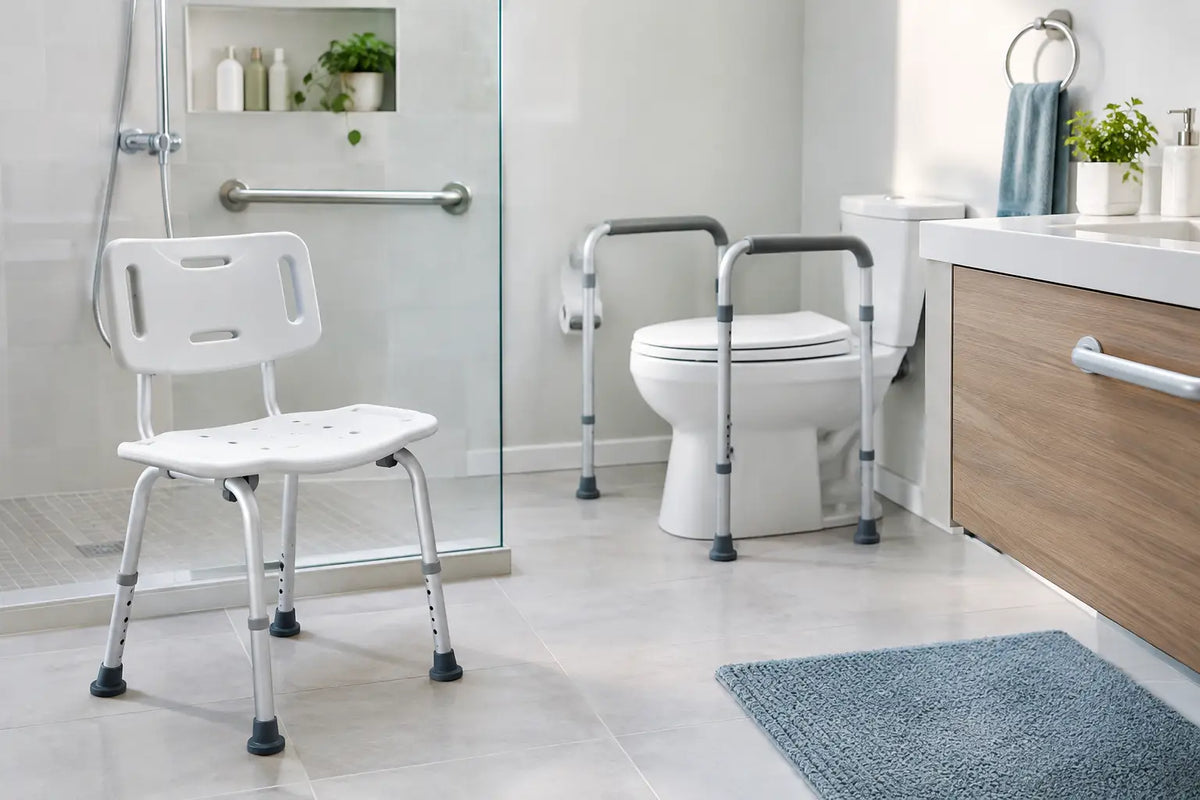
- Install grab bars: Securely mount professional-grade grab bars in the shower and next to the toilet. Never rely on towel racks or toilet paper holders for support, as they are not designed to hold a person's weight.
- Ensure proper footwear: Make sure your loved one wears supportive, non-slip shoes or socks with rubber grips on the bottom. Avoid loose slippers, backless shoes, or walking in slick, bare feet.
Prioritizing Caregiver Well-Being
You cannot provide excellent care for someone else if you are injured or exhausted. Caregiver burnout and physical strain are highly common. If a transfer ever feels too heavy, unsafe, or beyond your physical capability, do not force it. This is a clear sign that you need additional support.
Speak with your loved one's healthcare team about alternative options. They may recommend professional home health aides, occupational therapy home assessments, or advanced assistive technology such as mechanical sit-to-stand lifts or slide boards. Remember, seeking help is not a sign of failure; it is a vital step in ensuring both you and your loved one remain safe, healthy, and comfortable at home.
What is the difference between a transfer belt and a gait belt?
The terms "transfer belt" and "gait belt" are often used interchangeably. Both refer to a durable strap worn around a person's waist to help a caregiver assist with standing, sitting, or walking. However, a "gait belt" is specifically used to assist and stabilize someone while they are walking (gait training), whereas a "transfer belt" often features extra handles to assist with moving a person from one seated surface to another.
How tight should a transfer belt be?
A transfer belt should be snug but comfortable. It needs to be tight enough that it will not slide up toward the chest or slip off when you apply upward pressure. A good rule of thumb is the "two-finger rule": you should be able to slide two flat fingers comfortably between the belt and your loved one's clothing.
What should I do if my loved one starts to fall during a transfer?
If your loved one begins to fall, do not attempt to catch them or hold them upright, as this can cause severe spinal injuries to you and worsen their fall. Instead, use the transfer belt to gently guide them down your leg to the floor, protecting their head from hitting hard surfaces. Once they are safely on the floor, keep them calm, check for injuries, and call for medical assistance if needed.
Can I use a transfer belt to lift my loved one off the floor after a fall?
No, a transfer belt is not designed to lift a person's full body weight directly off the floor. Attempting to do so can cause severe back injuries to the caregiver and may injure the fallen individual. If your loved one falls and cannot assist in standing up, keep them comfortable and call non-emergency medical services or 911 for professional assistance.
This article is for general educational purposes and is not medical advice. Always consult your healthcare provider for guidance specific to your situation.