A small blister, a crack in the heel, or redness from a shoe can become a serious concern when diabetes affects circulation or sensation. This diabetic foot inspection guide is designed to make a daily check feel manageable, whether you are caring for your own feet or helping a parent, spouse, or family member at home.
A foot check takes only a few minutes, but it should be consistent. The goal is not to diagnose a problem at home. It is to notice changes early and contact a healthcare professional before a minor issue has time to worsen.
Why daily foot checks matter with diabetes
Diabetes can reduce feeling in the feet, especially when nerve damage is present. That means a person may not notice a cut, pressure spot, burn, or object inside a shoe. Diabetes can also affect blood flow, which may slow healing and make infection harder to fight.
Not everyone with diabetes has the same level of risk. Someone with numbness, a previous foot ulcer, poor circulation, foot deformities, kidney disease, or a history of amputation generally needs especially close attention and regular professional foot care. Even if your feet feel normal, however, a daily inspection is a practical routine worth keeping.
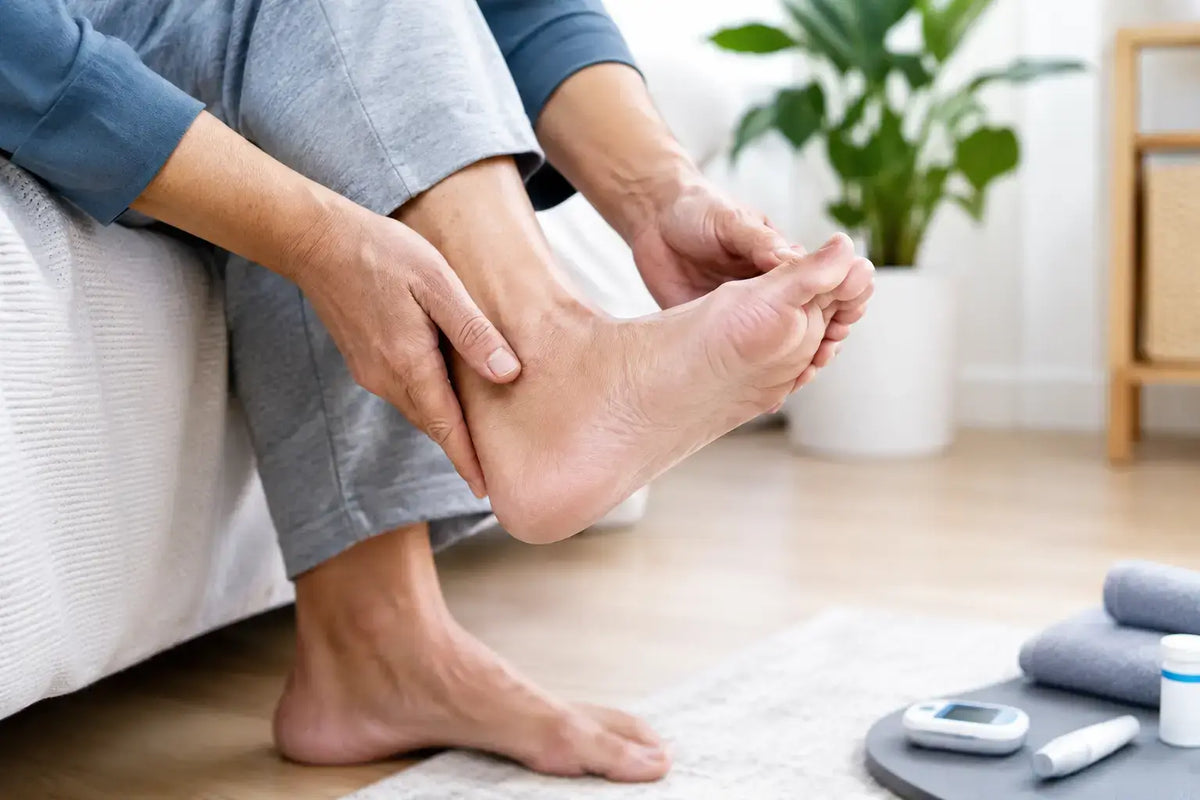
Choose a time that is easy to repeat, such as after a shower, while changing socks, or before bed. Good lighting is helpful. If bending, vision, or mobility makes it difficult to see the bottoms of the feet, use a handheld mirror, a long-handled inspection mirror, or ask a caregiver to help.
Diabetic foot inspection guide: what to check each day
Start by looking at both feet from the top, sides, soles, heels, and between every toe. Compare one foot with the other. A difference in color, swelling, or temperature can be as useful to notice as an obvious cut.
Look closely for changes in skin color, including redness, pale areas, bluish or purple discoloration, or darkened skin. Check for swelling around the toes, ankle, or top of the foot. Feel the skin gently with the back of your hand to see whether one area is noticeably warmer or cooler than the surrounding skin or the other foot.
Then look for breaks in the skin. These can include cuts, scratches, cracks, blisters, sores, drainage, bleeding, or areas that look rubbed raw. Pay special attention to the heels and the balls of the feet, where dry skin and pressure can create problems. Do not ignore a small spot simply because it does not hurt.
Check your toenails and the skin around them for redness, tenderness, swelling, drainage, or an ingrown edge. Between the toes, look for peeling skin, moisture, cracking, or a white, softened appearance. These areas can hold moisture and may be more prone to irritation or fungal infection.
Finally, notice calluses, corns, bunions, and other areas where shoes may be pressing or rubbing. Thickened skin can signal repeated pressure. Do not use over-the-counter corn removers or try to cut a callus yourself, as these products and tools can injure healthy skin. A podiatrist can recommend the safest way to manage these concerns.
A simple daily routine for clean, protected feet
Wash feet in warm, not hot, water using mild soap. If numbness is present, test the water with your hand or elbow first, or use a thermometer. A hot foot bath may feel comfortable, but it can cause a burn without being noticed.
Dry thoroughly, especially between the toes. Apply moisturizer to dry skin on the tops and bottoms of the feet, but keep lotion out from between the toes. Extra moisture in that area can soften the skin and raise the risk of breakdown.
Put on clean, dry socks each day. Seamless or low-seam diabetic socks may be a comfortable option for people who are prone to rubbing or pressure. Socks should fit smoothly without tight elastic bands, wrinkles, or bunching. Change them promptly if they become damp from sweat, rain, or drainage.
Before putting on shoes, run your hand inside each one. Check for pebbles, rough seams, curled insoles, or anything that could cause friction. Wear shoes and socks rather than walking barefoot, including indoors. Floors, patios, and hot pavement can cause injuries that are easy to miss when sensation is reduced.
Shoes should have enough room at the toe box, stable soles, and a secure fit. A shoe that feels fine while sitting may rub after several hours of walking. If new footwear is needed, have both feet measured and try shoes on later in the day, when feet may be slightly larger from normal swelling.
When to call a healthcare professional
Contact your doctor, podiatrist, or diabetes care team promptly if you notice a new blister, cut, crack, sore, drainage, redness, swelling, warmth, or unusual odor. Call as well for increasing pain, a nail problem that appears infected, or a callus that has changed in color or opened underneath.
Some changes need urgent medical attention. Seek prompt care for a foot that becomes very red, hot, swollen, or painful; a wound with pus or foul-smelling drainage; black or gray skin; red streaks; fever; or a sudden change in foot shape. If you have an open sore, follow the instructions from your healthcare provider rather than trying multiple home treatments.
It can be tempting to wait a few days to see whether a mark improves. With diabetes, early care is usually the safer choice. Taking a clear photo and noting when you first saw the change can help you describe it accurately to your care team, but a photo should not delay a call when there is a concern.
Supplies that can support foot care at home
A few basic supplies can make the routine easier to maintain. Keep them together in a clean, easy-to-reach place so a daily check does not become a scavenger hunt. Useful items may include a foot inspection mirror, mild soap, soft towels, fragrance-free moisturizer, clean socks, a thermometer for checking water temperature, and a small notebook for tracking changes.
For minor care needs, your healthcare provider may recommend specific dressings, gauze, cleansing products, or protective padding. The right product depends on the condition of the skin and whether a wound is present. Avoid placing adhesive products, medicated pads, or tight wraps on a diabetic foot without professional guidance, particularly if circulation is poor or skin is fragile.
CartHealth offers everyday diabetes care, wound care, and personal care supplies that can help households keep routine essentials on hand. For recurring items such as socks, skin care products, or approved dressing supplies, ordering ahead can prevent a gap when you need them.
Make the routine realistic
The best inspection routine is the one that actually happens every day. Keep a mirror near the chair where you put on shoes, place moisturizer beside your towel, or set a phone reminder until the habit becomes automatic. If you are a caregiver, build the check into another regular task rather than treating it as an occasional project.
A daily foot check is a quiet form of prevention. It gives you a chance to act on small changes while they are still small, protect comfort and mobility, and bring the right concerns to a healthcare professional without delay.