A fever check at 2 a.m. is not the time to sort through confusing temperature readings or instructions. A reliable thermometer belongs in every baby-care cabinet, along with the confidence to use it correctly. This baby thermometers buying guide explains which styles work best at different ages, what accuracy features matter, and how to choose an option that fits your family's routine.
Start With Your Baby's Age and the Reason for Checking
The best thermometer is not always the fastest one or the most feature-packed model. It is the one that provides a dependable reading for your child's age and is simple enough to use correctly when your baby is uncomfortable, sleepy, or fussy.
For newborns and young infants, a digital rectal thermometer is generally considered the most accurate option for measuring core body temperature. It is commonly recommended when an exact reading is needed, especially if a baby appears ill. Because fever can require prompt medical attention in very young babies, accuracy matters more than convenience.
For older babies and toddlers, many families keep a digital rectal thermometer as a backup while using a forehead or ear thermometer for routine checks. A quick screening reading can be useful, but a concerning result may need to be confirmed using the method recommended by your child's healthcare provider.
Age is only part of the decision. Consider why you are taking the temperature. If you are checking a baby who feels warm after a nap, speed and ease may be your priorities. If your infant is lethargic, feeding poorly, unusually irritable, or seems unwell, use the most dependable method available and contact a healthcare professional for guidance.
Baby Thermometers Buying Guide: Compare the Main Types
Each thermometer type has a practical role at home. Understanding the trade-offs can help you avoid buying a device that sounds convenient but does not suit your baby or your preferred way of monitoring symptoms.
Digital rectal thermometers
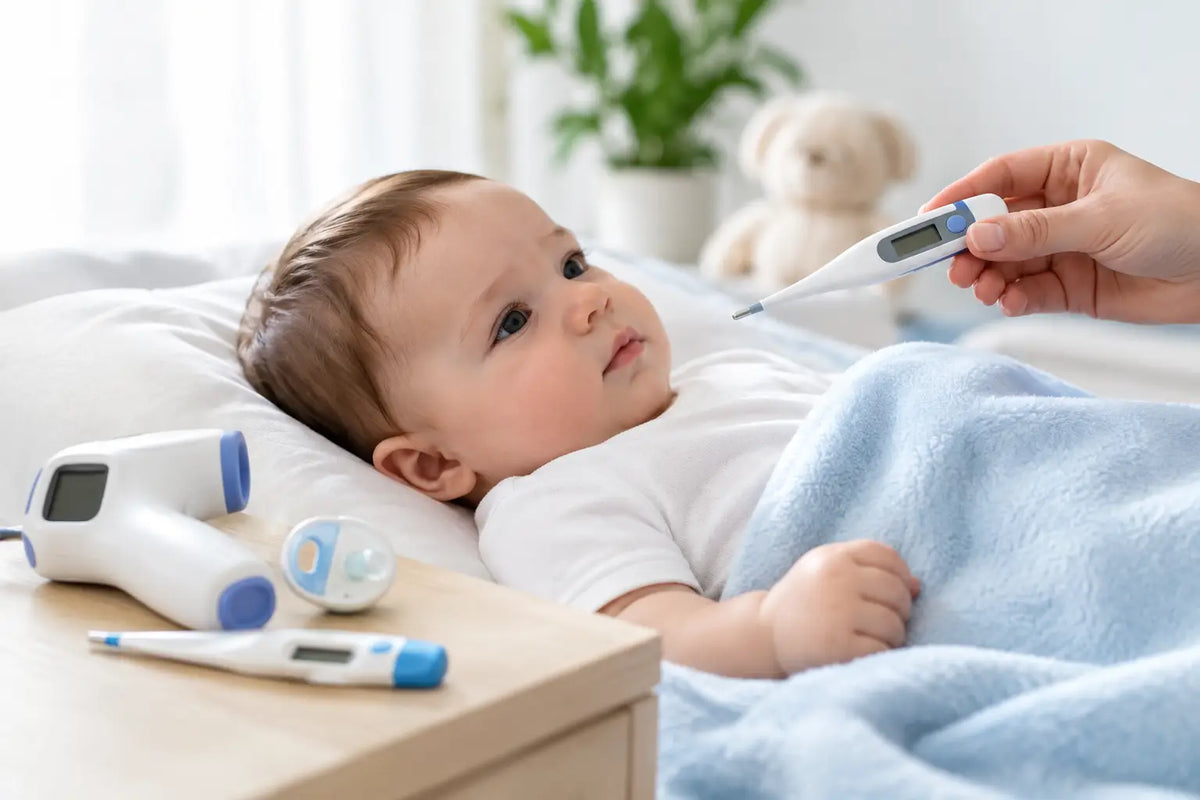
Digital rectal thermometers provide a direct temperature reading and are widely used for infants. Look for a flexible tip, a clear display, and a short reading time. Some models include a wide base or handle designed to prevent inserting the thermometer too far.
The trade-off is that this method requires more hands-on care. A baby may resist, and the thermometer should be cleaned carefully after every use. Many caregivers choose to label a rectal thermometer clearly and reserve it only for that purpose. Do not use the same thermometer orally after it has been used rectally.
Forehead and temporal artery thermometers
Forehead thermometers measure temperature at the temporal artery or across the forehead. They are popular because they are fast, noninvasive, and easier to use on a sleeping or squirming baby. Some models scan across the forehead, while others provide a reading from a short distance away.
A temporal thermometer can be an excellent convenience tool, particularly for repeat checks during an illness. However, technique and environmental conditions can affect results. Sweat, hair, a recent bath, direct sunlight, or moving between warm and cold rooms may influence a forehead reading. Follow the product instructions closely, and allow your baby time to adjust to room temperature before checking.
Ear thermometers
Ear thermometers, also called tympanic thermometers, measure infrared heat from inside the ear canal. They can deliver a fast result and are convenient for older babies and children. A model with disposable lens covers may make cleanup easier, especially when multiple family members are sick.
Ear thermometers are not always the best choice for very young infants because their ear canals are small, which can make positioning difficult. Wax buildup, an improper angle, and a poor seal can also affect a reading. Check the manufacturer's age recommendation before buying, since it varies by model.
Multi-use digital thermometers
A standard digital thermometer can often be used rectally, orally, or under the arm, depending on the instructions. This makes it a practical, budget-friendly backup for many households. Underarm readings are easy to take but may be less precise than rectal readings, so they are best treated as a screening method unless your healthcare provider advises otherwise.
For babies who are too young to hold a thermometer safely under the tongue, oral use is not appropriate. If you select a multi-use model, consider purchasing separate units for different uses to prevent mix-ups.
No-touch infrared thermometers
No-touch thermometers read temperature from a short distance, usually at the forehead. They can be helpful when a child is asleep or strongly resists contact. They are also convenient for checking several people in a household.
Their main limitation is consistency. Distance, aiming, room conditions, and skin moisture can all affect readings. A no-touch model may be useful for quick monitoring, but it is wise to keep a contact thermometer available when you need to confirm a result.
Features That Make a Difference at Home
When comparing baby thermometers, focus first on readability and dependable use. A large, backlit screen is especially useful for nighttime checks. A fever alert can help you notice a high reading quickly, but it should not replace looking at the actual temperature or paying attention to how your baby is acting.
Fast read times can reduce stress for both parent and child. Still, a claimed one-second reading only helps when the device is positioned correctly. Choose a design with instructions that are clear, easy to store, and realistic for your routine.
Memory recall is helpful when you are tracking a fever over several hours or sharing information with a pediatrician. Some thermometers store one prior reading, while others record several readings with dates and times. For a baby who is ill, writing down temperatures, medication times, feeding changes, and symptoms can be just as useful as the memory function itself.
Also check practical details: battery type, automatic shutoff, protective case, cleaning instructions, and whether the model needs lens covers or other replacement supplies. A thermometer that takes a common battery and can be cleaned easily is often more convenient than a device with extra features you may never use.
Accuracy Depends on Technique, Too
Even a quality thermometer can give an inconsistent result when used incorrectly. Read the included directions before the first fever, not during one. Practice using the device when your baby is well so you understand the buttons, placement, and alert sounds.
For forehead and no-touch devices, use clean, dry skin and follow the required distance or scanning path. For ear thermometers, gently position the ear as directed for your child's age and make sure the probe is seated properly. For digital contact thermometers, keep the sensor in place until the device signals that the reading is complete.
Avoid taking a temperature immediately after a bath, vigorous crying, heavy blankets, or time outdoors in hot or cold weather. Give your baby a few minutes to settle in a comfortable indoor setting. If a reading does not match how your baby looks or behaves, take another reading with the same device and consider confirming it with a more reliable method.
When a Thermometer Reading Needs Medical Guidance
A thermometer helps you gather useful information, but it does not diagnose the cause of a fever. Call your child's healthcare provider for advice about symptoms, age, and temperature. For infants younger than 3 months, a rectal temperature of 100.4 F or higher is generally a reason to seek prompt medical care.
Seek urgent care for warning signs such as trouble breathing, bluish lips or skin, a seizure, severe weakness, a stiff neck, signs of dehydration, repeated vomiting, a rash that concerns you, or difficulty waking your child. Trust your judgment. A baby who seems significantly unwell deserves attention even when a temperature reading is not especially high.
Do not rely on forehead strips, pacifier thermometers, or smart-device accessories as your only method for assessing a possible fever. They may be appealing for convenience, but they are generally not the best choice when you need a dependable measurement.
Build a Simple Baby Fever-Check Kit
Keeping your thermometer in one easy-to-find place saves time when your child is sick. Store it with spare batteries, the instructions, a small notepad or phone note for tracking readings, and any cleaning supplies the manufacturer recommends. If you use an ear thermometer, keep replacement lens covers nearby.
Many parents find that two thermometers provide the best balance: a fast forehead, ear, or no-touch model for routine checks and a digital rectal thermometer for confirming a reading when accuracy is especially important. CartHealth makes it easier to stock everyday baby-care essentials alongside the home health supplies your household uses most.
Choose the thermometer you can use calmly and correctly, then keep it ready before you need it. That small bit of preparation can make a long night feel more manageable and give your child's care team clearer information when it matters.