A gait belt can make a short walk to the bathroom or a transfer from bed to chair feel more controlled for both the person receiving care and the caregiver. But it is not a lifting strap, and using one incorrectly can increase the risk of a fall or injury. Knowing how to use a gait belt safely starts with choosing the right situation, getting a secure fit, and using your body position to guide rather than pull.
A gait belt is commonly used in home care to provide a firm handhold around a person's waist during assisted walking, standing, and transfers. If a doctor, physical therapist, occupational therapist, or nurse has given specific instructions, follow those instructions first. They understand the person's strength, balance, medical condition, and movement restrictions.
What a gait belt does and does not do
A gait belt is a wide strap, usually made of cotton, nylon, or similar durable material, that fastens around the waist. It gives a caregiver a more secure place to hold during mobility assistance than clothing, an arm, or a hand alone.
Used correctly, it can help steady someone who is weak, unsteady, recovering from surgery, or relearning safe movement after an illness or injury. It may be helpful when helping someone rise from a chair, move from a bed to a wheelchair, or walk a short distance with support.
A gait belt does not make an unsafe transfer safe. It should not be used to lift a person off the floor, hoist them under the arms, or catch their full weight during a sudden fall. If the person cannot bear enough weight through their legs, requires more than one person to assist, or frequently buckles at the knees, ask a clinician about safer equipment and assistance options. A transfer board, mechanical lift, wheelchair, or two-person transfer may be the better choice.
Before you use a gait belt
Set up the space before the person stands. Clear rugs, cords, pet toys, and other trip hazards from the walking path. Make sure the destination chair, wheelchair, or bed is ready. Lock wheelchair brakes, move footrests out of the way, and use supportive, nonslip footwear whenever possible.
Take a moment to explain what will happen. Let the person know where they are going, when they will stand, and how you will help. Simple, direct cues can reduce anxiety and make movement more coordinated: “Scoot forward, place your feet under your knees, and lean forward when you are ready.”
Check for warning signs before starting. New dizziness, chest pain, shortness of breath, sudden weakness, confusion, or severe pain are reasons to pause and seek appropriate medical guidance. Do not rush a transfer because the person seems embarrassed or because the task is usually easy. Mobility can change from one day to the next.
How to use a gait belt safely
Place the belt over clothing
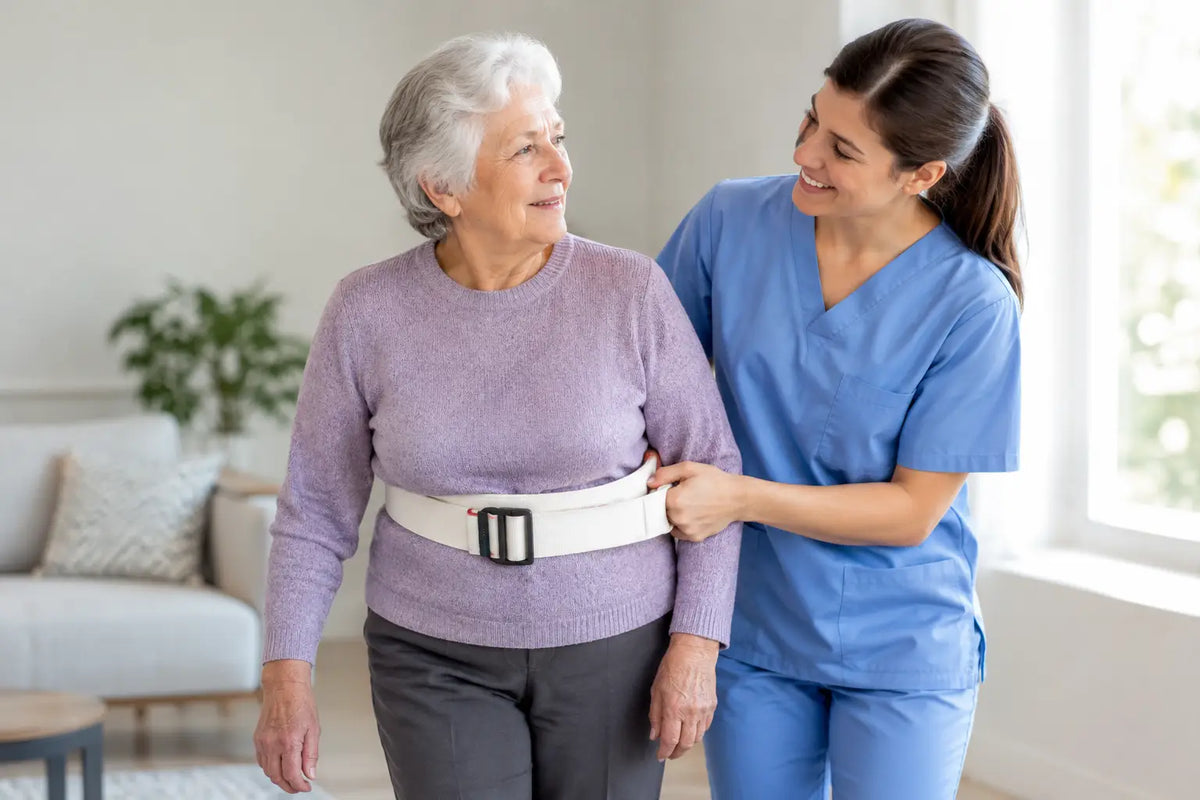
Position the gait belt around the person's waist over a shirt or other clothing. Avoid placing it directly against bare skin, where it may pinch, rub, or slip. The buckle should be in front or slightly to one side, where you can check it easily and where it will not press uncomfortably against the body.
Thread and fasten the belt according to its buckle style. Many traditional gait belts use a metal buckle that requires the strap to be threaded through the teeth, then back through the second slot to prevent slipping. Read the belt's instructions if you are unfamiliar with the closure.
The belt should be snug but not tight. You should generally be able to slide two fingers between the belt and the person's body. A loose belt can ride up or shift when you need it most. An overly tight belt can cause discomfort and make breathing harder.
Choose a safe starting position
For a sit-to-stand transfer, have the person sit near the edge of the chair or bed with both feet flat on the floor. Their stronger leg should be positioned to do as much of the work as possible. If they use a walker, it should be nearby but not used as a device to pull themselves up from sitting unless their clinician has instructed otherwise.
Stand close in front of and slightly to the side of the person, usually on their weaker side. Keep your feet apart for balance and bend at your hips and knees. Maintain a neutral back. Your goal is to block or guide movement with your legs and body position, not to pull with your back or arms.
Hold the belt with a secure grip
Reach around the person's waist and grasp the gait belt from underneath or at the sides. Avoid grabbing only the buckle or leaving excess strap loose. Keep your grip firm enough to guide and steady, but do not yank upward on the belt.
Ask the person to push up from the armrests, bed, or another stable surface as they stand. Count together if helpful. As they rise, shift your weight with them and stay close. Do not let them pull on your neck or shoulders for support, since that can throw both of you off balance.
Assist with walking and turning
Once standing, pause for a few seconds. Ask how the person feels before taking the first step. Dizziness can appear when someone stands after lying or sitting, especially after illness, dehydration, or medication changes.
Walk beside and slightly behind the person, keeping one hand on the gait belt. Move at their pace and use short, clear instructions. When turning, encourage small steps rather than a pivot. A wide turn is usually safer than twisting quickly, especially for someone with limited balance or joint pain.
If the person begins to lose balance, widen your stance and guide them toward the nearest stable surface, such as a chair or bed. Do not try to hold them upright with your arms alone. If a fall cannot be prevented, protect their head if possible and lower them as safely as you can while calling for help.
When not to use a gait belt
A gait belt may not be appropriate for everyone. Avoid using one over an abdominal incision, feeding tube, ostomy pouch, catheter tubing, painful wound, recent surgical site, rib injury, or area affected by severe skin breakdown. It can also be unsafe for someone with certain back, hip, or weight-bearing restrictions.
People with significant weakness, unpredictable movements, advanced dementia with agitation, or a history of sudden fainting may need a different transfer plan. This is where hands-on guidance from a physical therapist or occupational therapist is especially valuable. The right method depends on the person, not just the task.
If you are unsure whether a gait belt is suitable, ask the person's healthcare team. A brief demonstration can help you understand where to stand, how much support to provide, and whether another mobility aid is needed.
Common gait belt mistakes to avoid
The most common error is using the belt to lift instead of steady. A gait belt supports balance and controlled movement, but it is not designed to carry a person's full body weight. Pulling sharply can hurt the person and strain the caregiver's back, shoulders, and wrists.
Another mistake is moving before the area is prepared. An unlocked wheelchair, a cluttered floor, or a chair positioned too far away can turn a manageable transfer into a rushed one. Take the extra minute to set up the space.
Also avoid relying on the gait belt as the only safety measure. Proper footwear, a clear pathway, correct use of walkers or canes, and communication all matter. A belt works best as one part of a thoughtful home mobility routine.
Choosing a gait belt for home use
Look for a durable belt with a secure buckle, a width that feels comfortable around the waist, and enough length to fit without excessive loose strap. Cotton belts are often comfortable and easy to grip, while nylon styles may be easier to wipe clean. Some belts include hand loops, but those loops do not change the basic rule: guide and steady, never lift.
For caregivers managing several home health needs, keeping mobility supplies close to other daily care essentials can make routines easier. CartHealth offers a broad selection of home medical products that can support safer, more comfortable care at home.
A gait belt can build confidence during everyday movement when it is used with patience, good positioning, and the right level of help. If a transfer starts to feel like a struggle, stop and reassess rather than forcing the next step.