Ankles that feel tight by late afternoon, sock marks that linger, and legs that feel heavy after standing can make an ordinary day feel longer. For many people, compression socks daily use is a practical way to support comfort and help manage mild swelling. The right pair can be useful at home, at work, while traveling, or during recovery, but compression is not one-size-fits-all.
What compression socks do during daily use
Compression socks are designed to apply gentle, controlled pressure to the legs and ankles. Most styles use graduated compression, meaning the pressure is firmest at the ankle and gradually decreases higher up the leg. This design can help support circulation back toward the heart and reduce fluid buildup in the lower legs.
People often wear compression socks to help with tired, achy legs, mild ankle or foot swelling, varicose vein discomfort, or long periods of sitting or standing. They are also commonly used after certain procedures, during pregnancy, and as part of a clinician-directed care plan for vein-related conditions.
The goal is not to make your legs feel squeezed all day. A properly fitted sock should feel supportive and comfortable. It should not cause numbness, sharp pain, a cold foot, deep indentations, or changes in skin color.
Who may benefit from compression socks daily use
Daily compression can fit naturally into the routines of people whose legs work hard throughout the day. Retail workers, nurses, teachers, drivers, office workers, frequent flyers, and caregivers may spend many hours standing still or sitting with their feet down. Both situations can contribute to leg fatigue and swelling.
Older adults may also find that a comfortable compression sock helps with mild, day-to-day lower-leg swelling. For someone managing mobility limits, compression can be easier to use than frequent leg elevation alone, though elevating the legs when possible may still be helpful.
Compression may be recommended for people with varicose veins or chronic venous insufficiency, a condition in which leg veins have difficulty moving blood upward efficiently. In these cases, consistency matters, and the compression level should match the clinician's guidance.
It is also common to consider compression for travel. Sitting for a long flight or car ride can leave feet and ankles puffy. A properly chosen pair may provide comfort during travel, especially when paired with regular movement, hydration, and ankle exercises.
When to ask a clinician before wearing them
Compression socks are widely available, but they are still a health product. Talk with a clinician before starting daily compression if you have peripheral artery disease, poor circulation caused by narrowed arteries, heart failure, severe neuropathy, or uncontrolled diabetes. The same caution applies if you have a history of blood clots, significant leg swelling with no known cause, or a current skin infection.
Do not use a compression sock to self-treat sudden swelling in one leg, new redness or warmth, unexplained leg pain, chest pain, or shortness of breath. These symptoms need prompt medical attention. A sock is not a substitute for evaluating a possible clot or another urgent condition.
If you have fragile skin, open wounds, a leg ulcer, or an active wound dressing, ask your wound care clinician what type of compression is appropriate. Some people need a specific compression system or dressing plan rather than standard over-the-counter socks.
Choosing the right compression level and style
The best choice depends on why you are wearing compression, your mobility, and your clinician's recommendations. Compression levels are usually measured in mmHg, or millimeters of mercury.
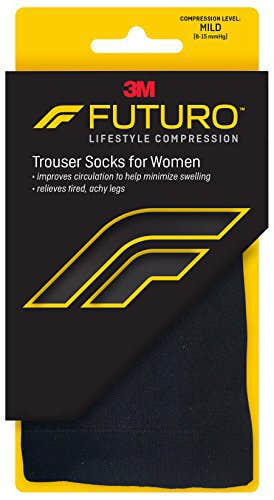
Mild compression, often around 8-15 mmHg, may be a comfortable starting point for everyday leg fatigue or occasional swelling. Moderate everyday options, commonly 15-20 mmHg, are frequently chosen for long workdays, travel, and mild varicose vein discomfort. Higher levels, such as 20-30 mmHg or above, may be recommended for more significant vein concerns, recovery, or medical conditions, but should generally be selected with clinical guidance.
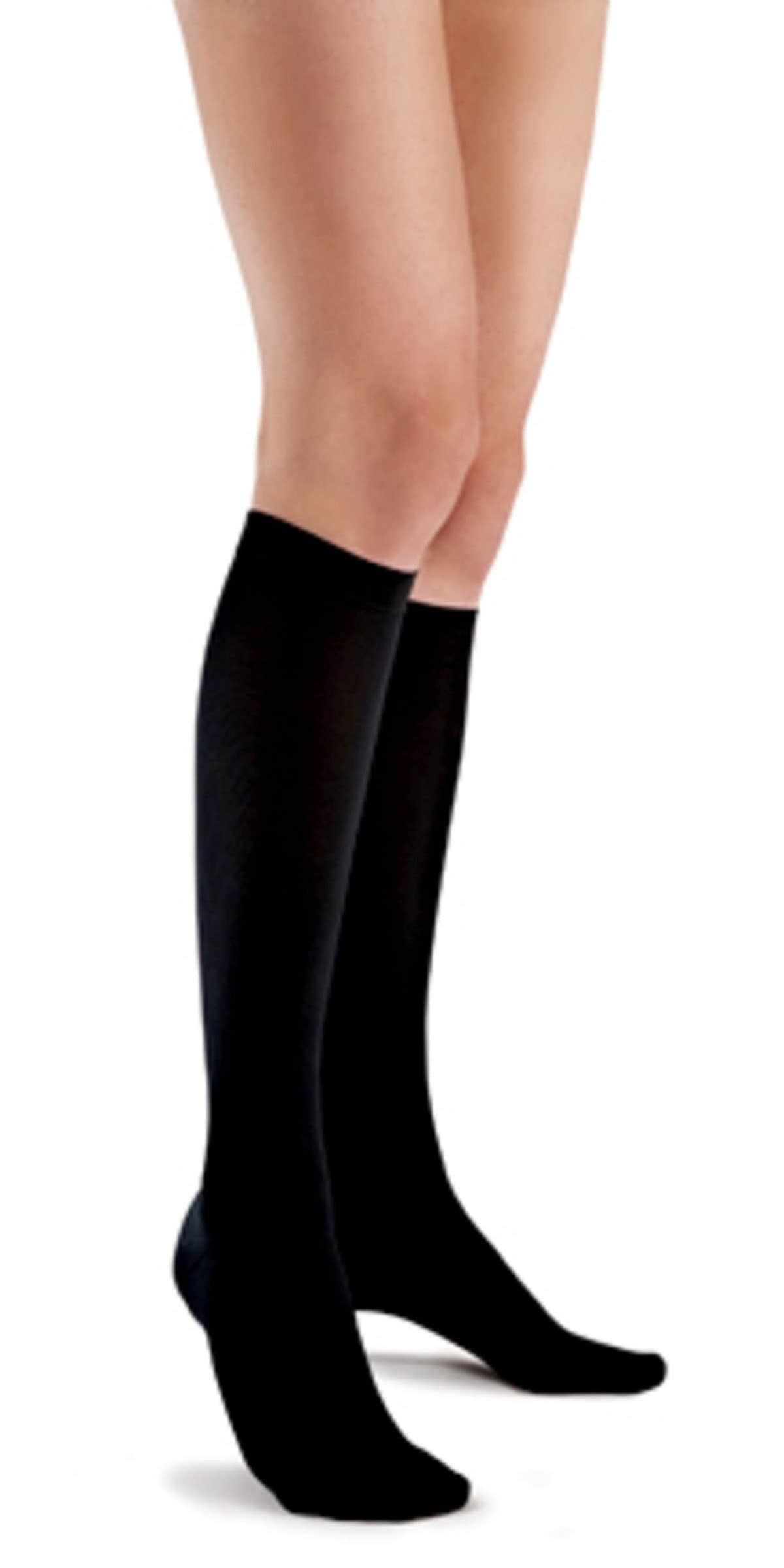
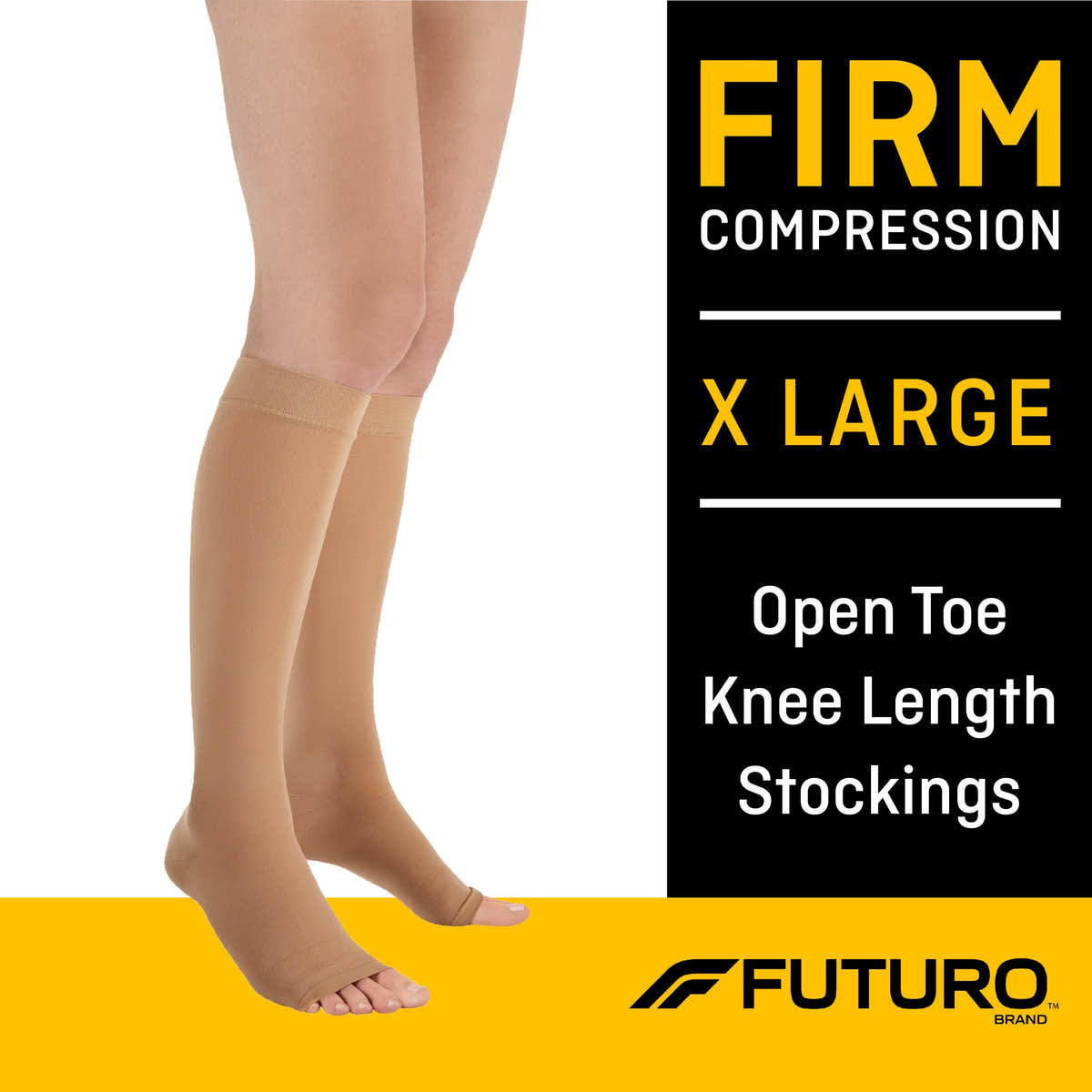
Style matters, too. Knee-high socks are the most common option for everyday use because they support the ankle and lower leg without covering the thigh. Open-toe styles can be more comfortable with certain shoes or when toes are sensitive. Wide-calf designs, soft-top bands, and zipper-free options can help improve comfort for people who find standard socks restrictive.
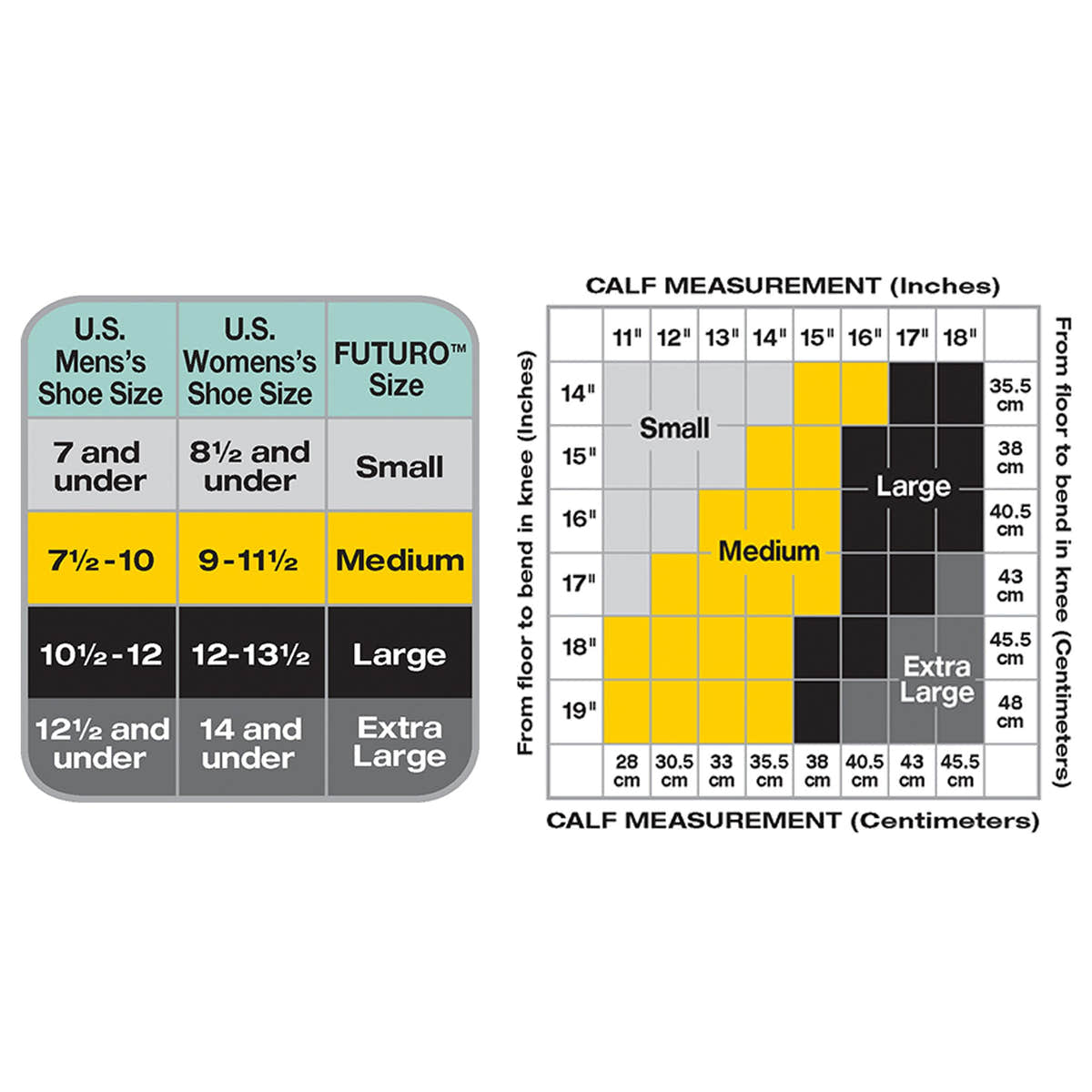
A good fit is more valuable than a higher compression number. Measure your ankle and calf early in the morning, before swelling has had time to build. Follow the sizing chart for the specific product rather than assuming your shoe size will be enough. If the sock rolls down, bunches behind the knee, digs into the skin, or feels painfully tight, the size or style may be wrong.
How to put on compression socks more easily
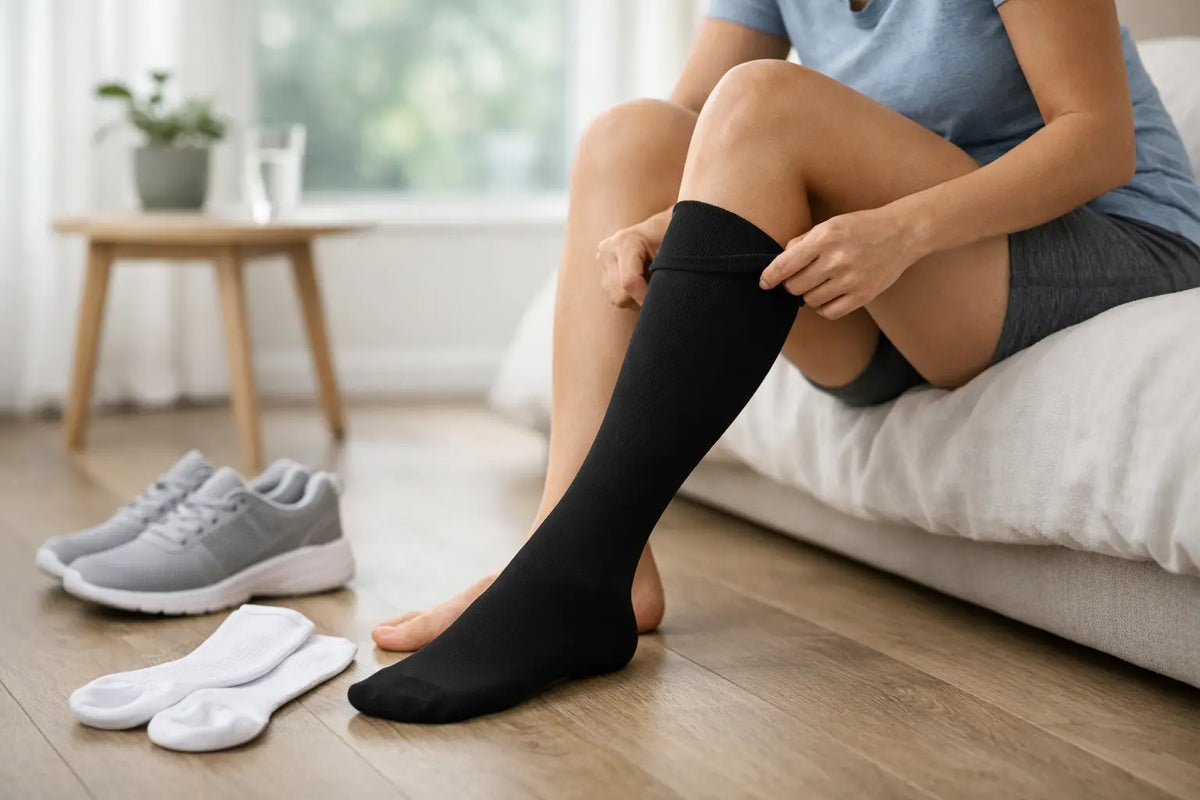
Compression socks are easiest to put on when legs are least swollen, usually first thing in the morning. Start with clean, dry skin. Turn the sock inside out down to the heel, place your foot into the foot section, position the heel correctly, then gradually pull the fabric up the leg.
Avoid grabbing the top band and pulling hard. Instead, smooth the material upward in small sections so the compression is distributed evenly. Do not leave wrinkles, folds, or a rolled cuff, as these can create uncomfortable pressure points.
If hand strength, arthritis, bending, or balance makes application difficult, a sock aid can make the task safer and less frustrating. Rubber gloves may also improve grip and help smooth the fabric without snagging it. For caregivers, choosing an easier-on style can make a daily routine more manageable than selecting the strongest compression available.
How long should you wear them each day?
For most people using compression for daily comfort, socks are worn during the day and removed before bed. Wearing them while you are up and moving gives the compression a chance to support your legs when gravity is contributing to pooling and swelling.
Your clinician may give different instructions after surgery, for a diagnosed vein condition, or for pregnancy-related swelling. Follow those directions, including any advice about nighttime use. Unless a clinician specifically tells you otherwise, do not sleep in compression socks designed for daytime wear.
Pay attention to how your legs respond over the first several days. Mild snugness is expected. Pain, tingling, numbness, increased swelling above the sock, pale or bluish toes, or skin irritation are reasons to remove the socks and seek advice from a healthcare professional.
Care that helps compression socks keep working
Compression fabric gradually loses its stretch and pressure over time, especially when worn often. Having at least two pairs makes daily use easier: one pair can be worn while the other is washed and dried.
Wash socks according to the product instructions, typically with mild detergent and cool or lukewarm water. Avoid bleach, fabric softener, and high heat, which can damage elastic fibers. Air drying is often the safest choice unless the label says otherwise.
Check the socks regularly for thinning fabric, stretched-out bands, holes, or areas that no longer feel supportive. Depending on wear frequency and care, many pairs need replacement every few months. A sock that looks fine but slides down repeatedly may have lost the compression that made it effective.
A comfortable routine starts with the right support
Compression socks work best when they fit your actual daily needs, not just the number printed on the package. Start with accurate measurements, choose a level that matches your reason for wearing them, and ask for clinical guidance when a health condition is involved. A comfortable pair that you can put on correctly and wear consistently is often the most useful place to begin.