A wheelchair can look like it will fit through a doorway, then stop short at the frame by less than an inch. That small difference can make a bathroom, bedroom, kitchen, or favorite chair difficult to access. Knowing how to measure wheelchair width before you buy helps prevent frustrating returns and supports safer, more comfortable daily mobility at home.
For many shoppers and caregivers, the key is measuring both the wheelchair and the spaces it needs to travel through. A chair that fits its user well is essential, but a chair also needs to work with doorways, hallways, ramps, vehicles, tables, and bathroom layouts.
Start With the Two Width Measurements That Matter
Wheelchair measurements are often listed in two different ways: seat width and overall width. They are not interchangeable.
Seat width is the space between the armrests or side panels where the person sits. This measurement affects comfort, positioning, and transfers. It does not tell you whether the wheelchair will fit through a doorway.
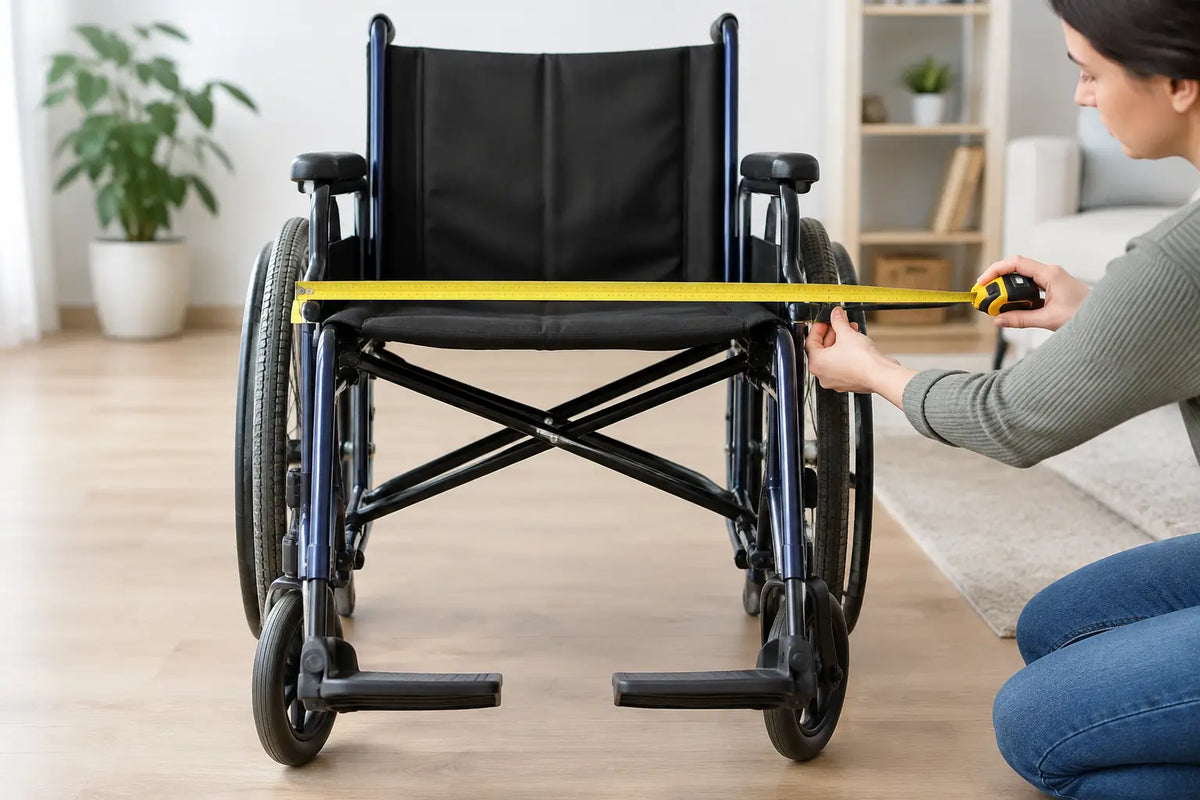
Overall width is the widest point of the fully assembled wheelchair. On many manual wheelchairs, this includes the rear wheels, hand rims, armrests, or other parts that extend beyond the seat. Overall width is the measurement to compare with doors, hallways, and other tight spaces.
A common rule of thumb is that a standard manual wheelchair is about 8 inches wider overall than its seat width. For example, an 18-inch seat wheelchair may have an overall width of about 26 inches. This varies by model, wheel size, frame style, and accessories, so always check the specifications for the exact chair rather than relying on a general formula.
Transport wheelchairs can be narrower because their smaller rear wheels do not extend as far. Power wheelchairs may be compact or considerably wider, depending on the drive system, seating system, and armrest configuration.
How to Measure Wheelchair Width Accurately
Use a tape measure and place the wheelchair on a level surface. If possible, measure it as it will be used, with the wheels installed and any frequently used accessories in place.
Measure the overall width
Measure straight across the widest part of the wheelchair, from one outside edge to the other. On a manual wheelchair, this is usually the outside of one rear wheel or hand rim to the outside of the wheel or hand rim on the other side.
Do not measure only the seat, armrests, or frame tubing. Those dimensions can make the chair appear smaller than it truly is. If the chair has removable armrests, anti-tippers, oxygen holders, or other accessories, check whether they add width in the position where they will normally be used.
For a folding wheelchair, measure it both open and folded. The open measurement tells you where it can travel. The folded measurement matters for storing it in a closet or placing it in a vehicle.
Measure the seat width
To measure seat width, measure from the inside of one armrest or side panel to the inside of the other at the widest point of the seating area. If you are selecting a wheelchair for a person, seat width should allow room for regular clothing and comfortable movement without being excessively wide.
A seat that is too narrow can cause pressure, rubbing, and poor posture. A seat that is too wide can make it harder to reach the wheels for self-propulsion and may reduce stable positioning. Because individual support needs differ, a clinician or seating specialist can be helpful when there are concerns about posture, pressure injuries, contractures, or a need for specialized cushions.
Check the turning space, not just the opening
Wheelchair width is only one part of maneuverability. A wheelchair may clear a door but still be difficult to turn into a narrow bathroom or hallway. Measure the available floor space on both sides of the doorway, especially where a person must make a sharp turn.
Power wheelchairs and scooters typically need more room to turn than a basic manual chair. Look at the product's turning radius when comparing models, then consider furniture, rugs, laundry baskets, and other everyday obstacles that may reduce usable space.
Measure Doorways, Hallways, and Other Home Spaces
When measuring a doorway, measure the clear opening, not the width of the door itself. Open the door fully and measure the narrowest usable space between the inside edges of the frame. Door hinges, trim, handles, and a partially opened door can all reduce clearance.
For dependable everyday access, aim for at least 2 inches of clearance beyond the wheelchair's overall width when traveling straight through an opening. More room is better, particularly for someone who propels independently or has limited hand strength. A chair that technically fits with less than an inch to spare may scrape hands, wheels, or door frames and can be difficult to manage safely.
Hallways should be measured at their narrowest point. Pay attention to radiators, furniture, wall decor, baseboards, and open doors. In a hallway that ends at a turn, the turning area may be more limiting than the hall width itself.
Bathrooms deserve extra attention because they often have the tightest entry and the least turning space. Measure the door opening, space beside the toilet, room in front of the sink, and clearance near the shower or tub. If a wheelchair will be used during transfers, allow room for a caregiver when needed.
Also measure frequently used spaces such as:
- The route from the bedroom to the bathroom and kitchen
- Dining tables, desks, and counters where knee clearance matters
- Ramps, porch landings, elevators, and entryways
- Vehicle doors and cargo areas if the chair will travel often
Account for Wheelchair Type and Daily Use
The right width depends on where and how the wheelchair will be used. A standard manual wheelchair may be a practical choice for home use when doorways are reasonably wide and the user needs a familiar, durable design. A transport wheelchair can be easier to store and may move through tighter spaces, but it is generally designed to be pushed by a caregiver rather than self-propelled over long distances.
A lightweight or ultralight manual wheelchair may offer a more customized fit and easier propulsion, but its overall width still depends on wheel placement and camber. Cambered wheels angle outward for stability and performance, which can increase the chair's widest point.
Power wheelchairs need especially careful planning. Their base width, footplate, armrests, and turning radius all affect access. Some compact indoor models are designed for narrower home environments, while others are better suited for outdoor terrain and may need more space.
Think about the user's routine. A chair used mainly for appointments may only need to fit in a vehicle and a few public locations. A chair used throughout the day must work around beds, bathroom doors, kitchen pathways, and personal care routines. The most useful measurement is the one that reflects real life, not just the widest doorway in the house.
Avoid These Common Measuring Mistakes
The most common mistake is comparing a doorway measurement with the wheelchair seat width. Always compare the doorway's clear opening with the wheelchair's overall width.
Another mistake is measuring an empty room without considering the way the chair enters it. A wheelchair may fit between two points but require extra room to approach, turn, and back out. This is particularly relevant in bathrooms and bedrooms with furniture near the door.
It is also easy to overlook hands on the wheels. A self-propelling user may need more clearance than the chair frame alone suggests. Even if the rear wheels pass through an opening, knuckles can hit the door frame if clearance is too tight.
Finally, do not assume all wheelchairs with the same seat width have the same overall dimensions. Product details should list the overall width, folded width when applicable, weight capacity, seat dimensions, and other specifications. Checking these details before ordering gives you a much clearer picture of how the chair will work in your space.
When a Narrower Wheelchair Is Not the Best Answer
If a doorway is tight, choosing the narrowest possible wheelchair may seem like the simple solution. But a smaller seat can compromise comfort and support if it does not fit the user properly. In some homes, modifying the environment may be the better long-term option.
Depending on the situation, solutions can include removing a door when privacy is not needed, using offset hinges to gain additional clearance, rearranging furniture, or considering a different route through the home. These changes should be evaluated carefully, especially when safe transfers, caregiver assistance, or accessibility needs are involved.
Before selecting a wheelchair, write down the chair's overall width and the clear opening of every essential doorway. A few accurate measurements can help you choose equipment that supports comfort, independence, and easier movement through the places that matter most.