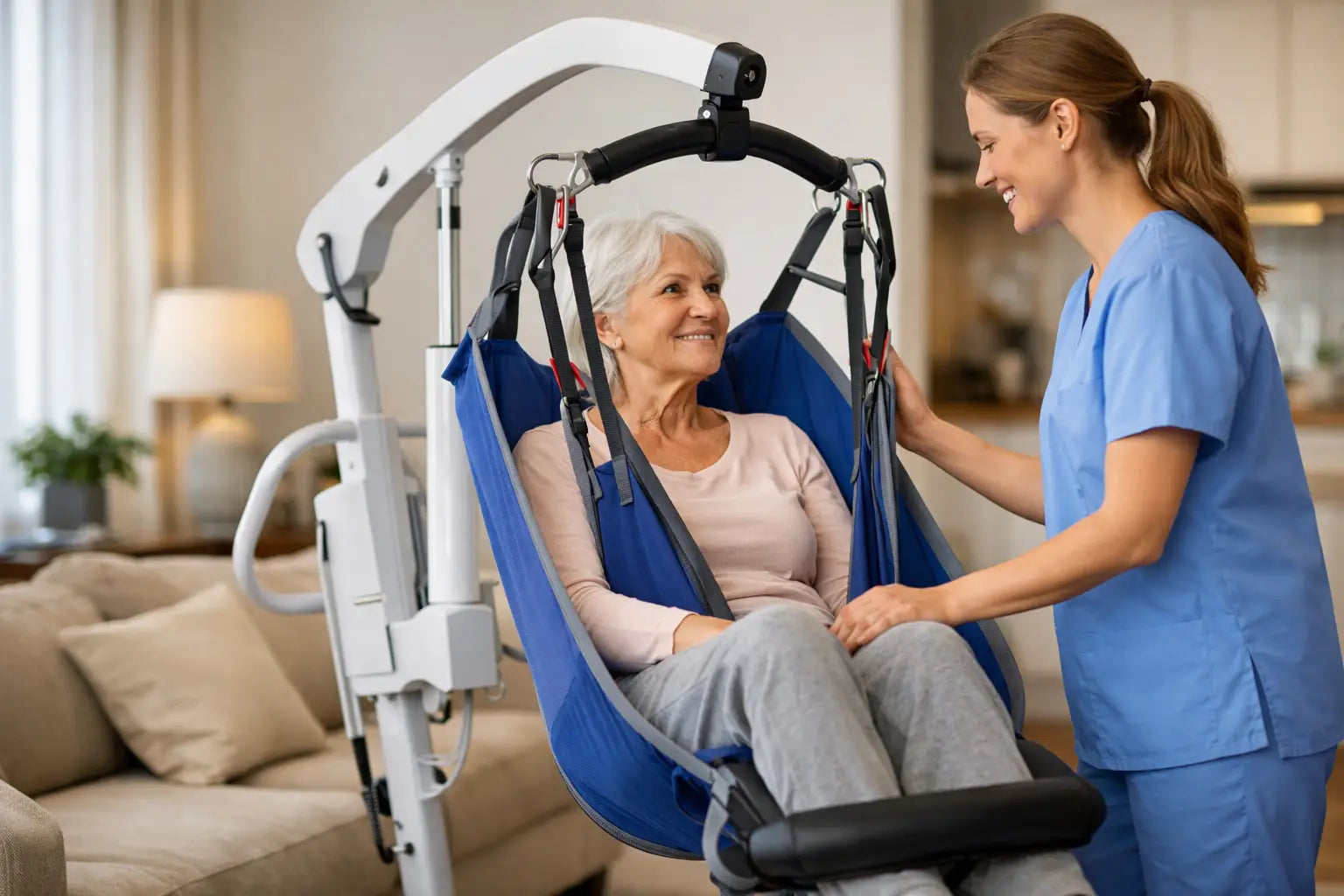
A transfer from bed to wheelchair can become the hardest part of the day when a loved one cannot safely stand, pivot, or bear weight. Patient lifts reduce the physical strain on caregivers while helping the person being moved feel more secure, supported, and dignified at home. The right setup can make routines such as getting dressed, using the bathroom, bathing, or moving to a favorite chair more manageable.
Choosing a lift is not only about weight capacity. It also depends on the person's mobility, the caregiver's ability, the rooms where transfers happen, and the type of support needed during each move. A well-matched lift should fit into daily care without creating new obstacles.
When a Patient Lift May Help at Home
A patient lift may be useful when someone needs more assistance than one caregiver can safely provide. This can happen after surgery, during rehabilitation, with progressive mobility changes, or when a condition makes standing unreliable. Repeated manual lifting can increase the chance of falls, skin injuries, shoulder strain, and back injuries for caregivers.
Not everyone who has trouble walking needs a full-body lift. A person who can bear some weight, follow directions, and hold onto a support bar may do well with a standing transfer aid. Someone who cannot stand safely, has limited trunk control, or needs complete assistance generally needs a full-body sling lift instead.
Before selecting equipment, ask the person's healthcare provider, physical therapist, or occupational therapist for transfer guidance. They can help identify the safest transfer method and recommend sling positioning, caregiver assistance, and any precautions related to surgery, pain, pressure injuries, or contractures.
Types of Patient Lifts
The most practical choice starts with understanding how each lift works. Home layouts and care needs vary, so one style is not automatically better than another.
Manual Hydraulic Lifts
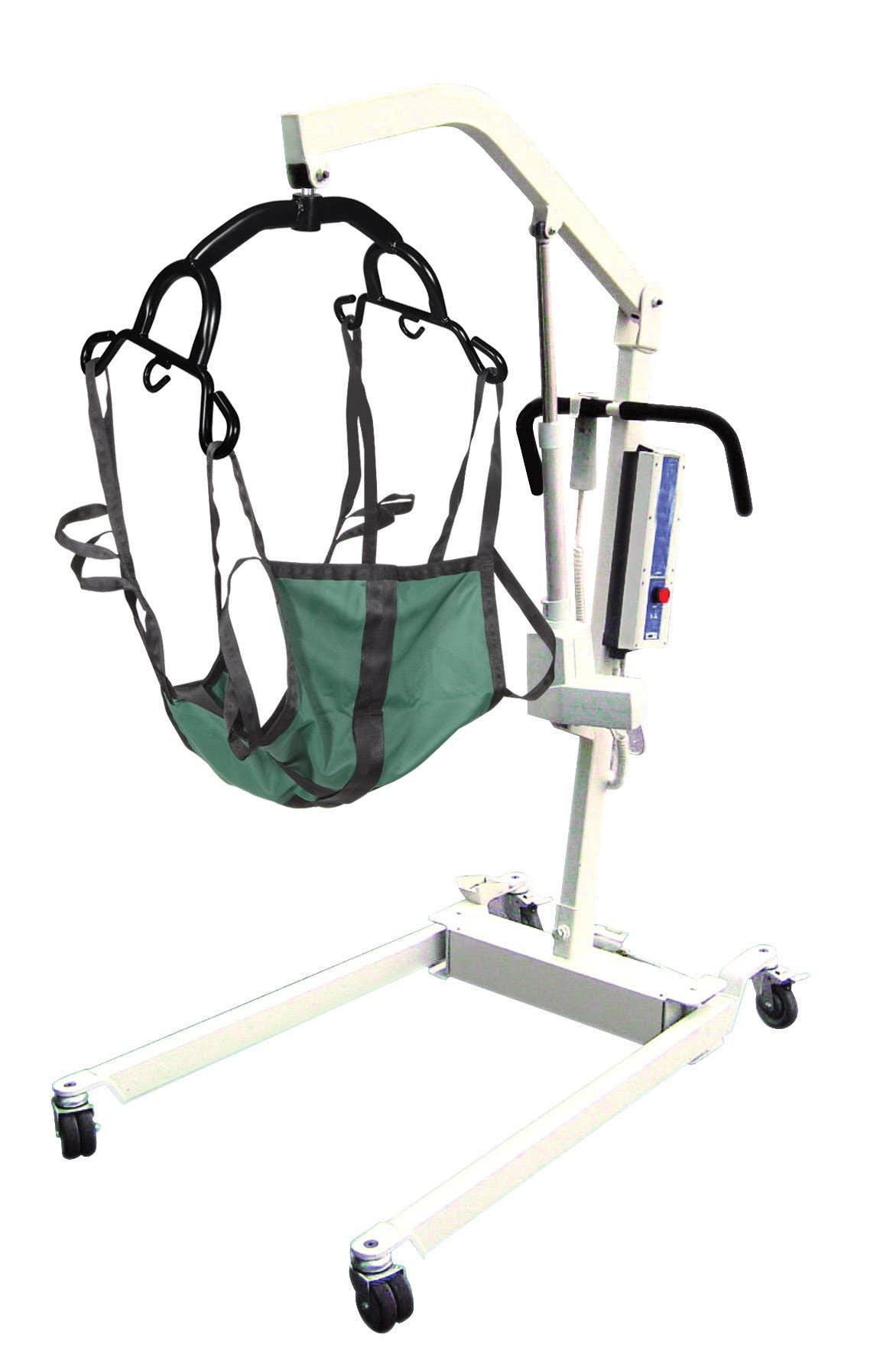
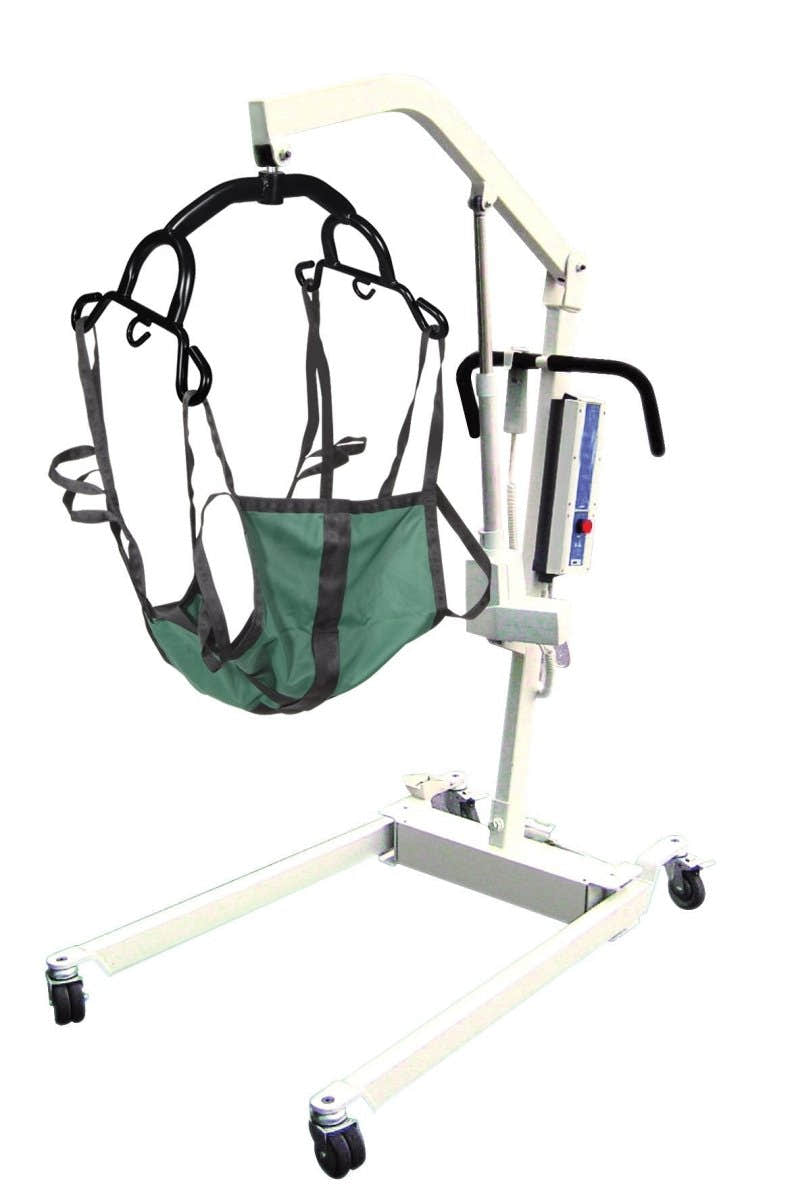
Manual hydraulic lifts use a hand pump to raise and lower a sling-supported person. They are often a dependable option for home use because they do not need charging and can be moved between rooms. The trade-off is that pumping requires physical effort, and the wide base may be difficult to position around some furniture or in a tight bathroom.
Look closely at the lift's base width, leg clearance, and turning space. A lift that works well beside a hospital bed may not fit around a standard recliner or through a narrow doorway.
Electric Patient Lifts
Electric models raise and lower the boom with a battery-powered control. For caregivers completing frequent transfers, this can reduce the effort of operating the lift and allow more attention to positioning and reassurance. Many models have an emergency stop and a manual lowering feature in case of a power issue.
Battery management is part of the routine. Follow the manufacturer's charging instructions, keep the handset accessible, and check that the battery is charged before a planned transfer. An electric lift can be especially useful when the person requires full assistance several times each day.
Sit-to-Stand Lifts
Sit-to-stand lifts, also called stand-assist lifts, are designed for people who can participate in the transfer. The person places their feet on the platform, holds the handles, and rises with assistance from the lift and support sling. This option can encourage participation and may be less bulky than a full-body sling transfer.
It is not appropriate for someone who cannot bear weight through their legs, cannot maintain a supported standing position, or cannot follow the steps of the transfer. Using a stand-assist lift for the wrong mobility level can create a serious fall risk.
Ceiling and Fixed Lifts
Ceiling lifts travel on an overhead track and can be helpful for long-term care needs, especially when floor space is limited or transfers occur in the same locations every day. They require professional planning and installation, making them a larger commitment than a portable floor lift. For many homes, a mobile lift is the more flexible starting point.
Choosing a Lift That Fits the Person and the Home
Start with the user's current abilities rather than the diagnosis alone. Can they sit upright? Do they have reliable head and trunk control? Can they bear weight? Do they become fatigued quickly or have pain when repositioned? The answers guide whether a full-body lift, stand-assist model, or another mobility aid is appropriate.
Next, confirm the weight capacity. The lift, sling, and any accessories must each support the user's weight. Do not assume that a higher lift capacity makes every sling compatible. Capacity ratings and attachment systems vary by manufacturer and model.
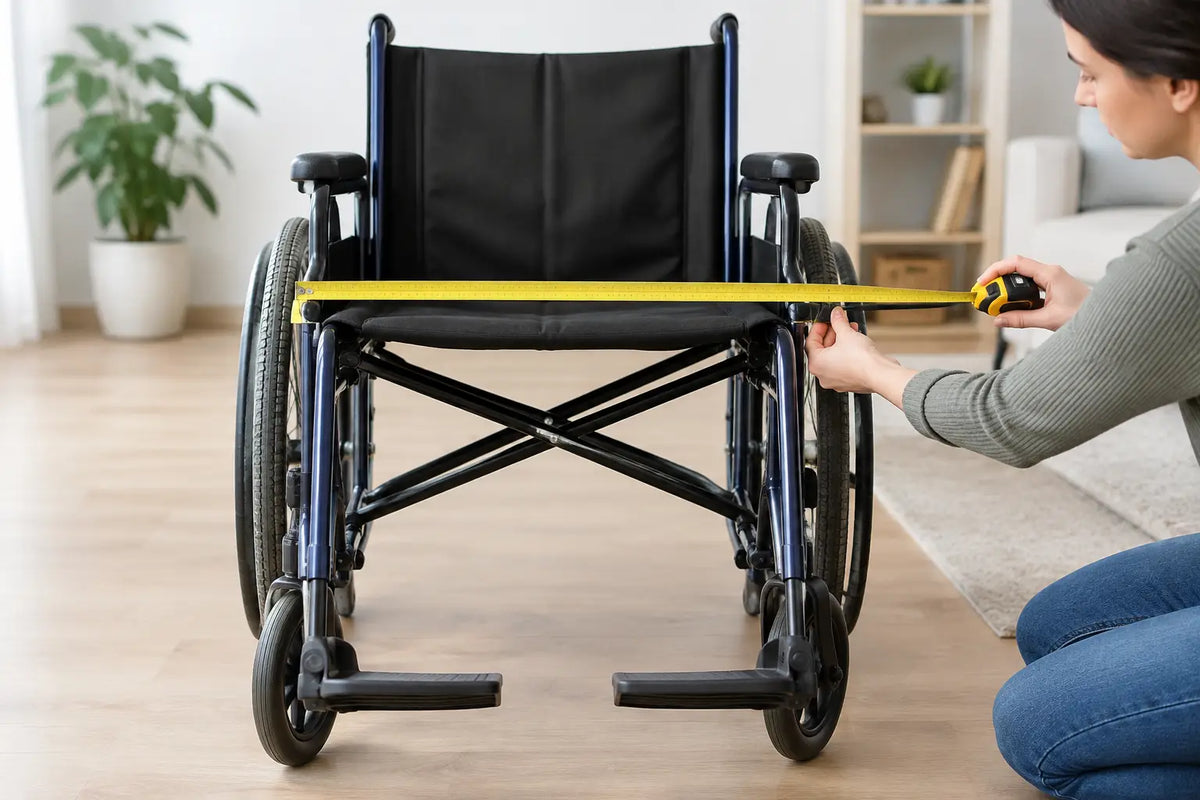
Measure the areas where transfers will happen. Check doorway widths, the clearance under the bed, the height of chairs, and the space beside the toilet or shower. Flooring matters too. Thick carpet, uneven thresholds, and crowded rooms can make a rolling lift harder to maneuver. Sometimes rearranging a bedroom or choosing a different transfer location makes the equipment safer to use.
Consider how many caregivers will be present. Some transfers require two trained adults even when a lift does the raising. One person may operate the equipment while the other supports the user's posture, protects tubing or wound dressings, and guides leg placement. Do not plan for solo use unless the care team has confirmed it is safe.
The Sling Is Part of the System
A lift cannot safely perform its job without the correct sling. Slings come in different sizes, materials, and designs for general transfers, toileting, bathing, amputee support, head support, and repositioning. The right option should support the body comfortably without pinching, slipping, or putting pressure on sensitive areas.
A general-purpose full-body sling is common for bed-to-chair transfers. A toileting sling provides more open access for bathroom routines but may offer less overall support. A mesh or quick-drying sling may be useful for bathing, while a head-support sling can help a person with limited neck or trunk control.
Sizing matters. A sling that is too small may feel restrictive and cause pressure points. One that is too large can allow the person to slide into an unsafe position. Follow the manufacturer's sizing chart, but use professional fitting guidance whenever possible. Never mix sling brands or attachment styles unless the manufacturer specifically states they are compatible.
Safe Transfer Habits for Caregivers
Training is as valuable as the equipment itself. Read the instructions for the exact lift and sling model, then practice with a qualified clinician before using it independently. The first few transfers may take extra time, and that is appropriate.
Before each transfer, inspect the sling fabric, straps, loops, clips, spreader bar, casters, and battery or hydraulic system. Stop using any equipment with fraying, cracks, bent parts, missing labels, or unusual movement. Keep the transfer path clear of rugs, cords, pet toys, and furniture.
Explain each step before moving the person. Confirm they are comfortable, their arms and legs are positioned safely, and any oxygen tubing, catheters, feeding tubes, or wound drains have enough slack. Raise only as high as needed to clear the surface, then move slowly. A lift is designed for transfers, not for leaving someone suspended while tasks are completed.
Locking the wheels depends on the manufacturer's instructions and the transfer stage. Many mobile lifts are intended to roll slightly as the person's center of gravity shifts during lifting, while beds and wheelchairs should generally be stabilized for the transfer. Follow the guidance for your model rather than relying on a general rule.
Planning for Everyday Use
A patient lift works best when it is easy to access, charge, clean, and store. Keep commonly used slings clean and dry, and follow care instructions for laundering and inspection. Have a backup plan for urgent transfers, particularly if the lift relies on a battery.
CartHealth can help simplify home care shopping by bringing mobility equipment and everyday support supplies into one place. As needs change, having dependable access to related items such as incontinence care, bed protection, personal care supplies, and nutrition products can make ongoing routines easier to manage.
The best lift is the one that supports a safer transfer without taking away comfort or confidence. With the right equipment, a properly fitted sling, and hands-on guidance from the care team, each move can become a more predictable part of home care.