
A missed dose often starts with a small problem: several prescription bottles on the counter, a changing schedule, or uncertainty about whether a medication was already taken. The right pill organizer options can turn that daily question into a quick visual check. For people managing ongoing medications, vitamins, or supplements at home, an organizer can support a clearer routine without adding unnecessary complexity.
The best choice depends less on how many pills someone takes and more on when they take them, who fills the organizer, and whether the medications need to leave the house. A compact weekly case may be enough for one daily dose. Someone taking medicines at breakfast, lunch, dinner, and bedtime may need a larger organizer with separate compartments for each time of day.
Pill organizer options by routine
Start with the medication schedule rather than the appearance of the organizer. Compartments should match the way a person actually takes medications. A product with extra sections may seem helpful, but it can become harder to fill, carry, and open if those sections are not needed.
Once-daily weekly organizers
A seven-day organizer with one compartment for each day is a familiar choice for people who take medication once daily. It provides a full week at a glance and is usually small enough to fit in a drawer, purse, or bedside area. This format works well for a morning or evening routine, particularly when the person prefers to refill supplies on the same day each week.
Look for clearly labeled days, lids that stay closed, and compartments large enough for the number and size of tablets or capsules being stored. If vision is limited, high-contrast lettering and easy-to-read labels can make a meaningful difference.
Multiple-dose daily organizers
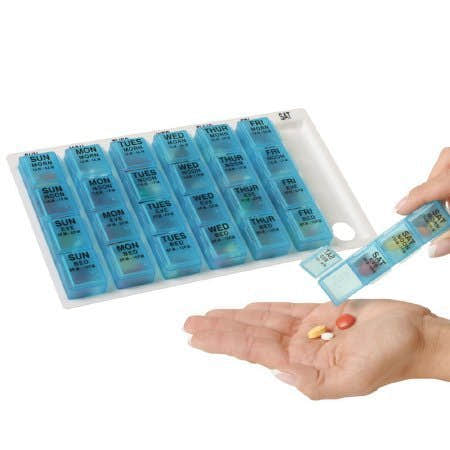
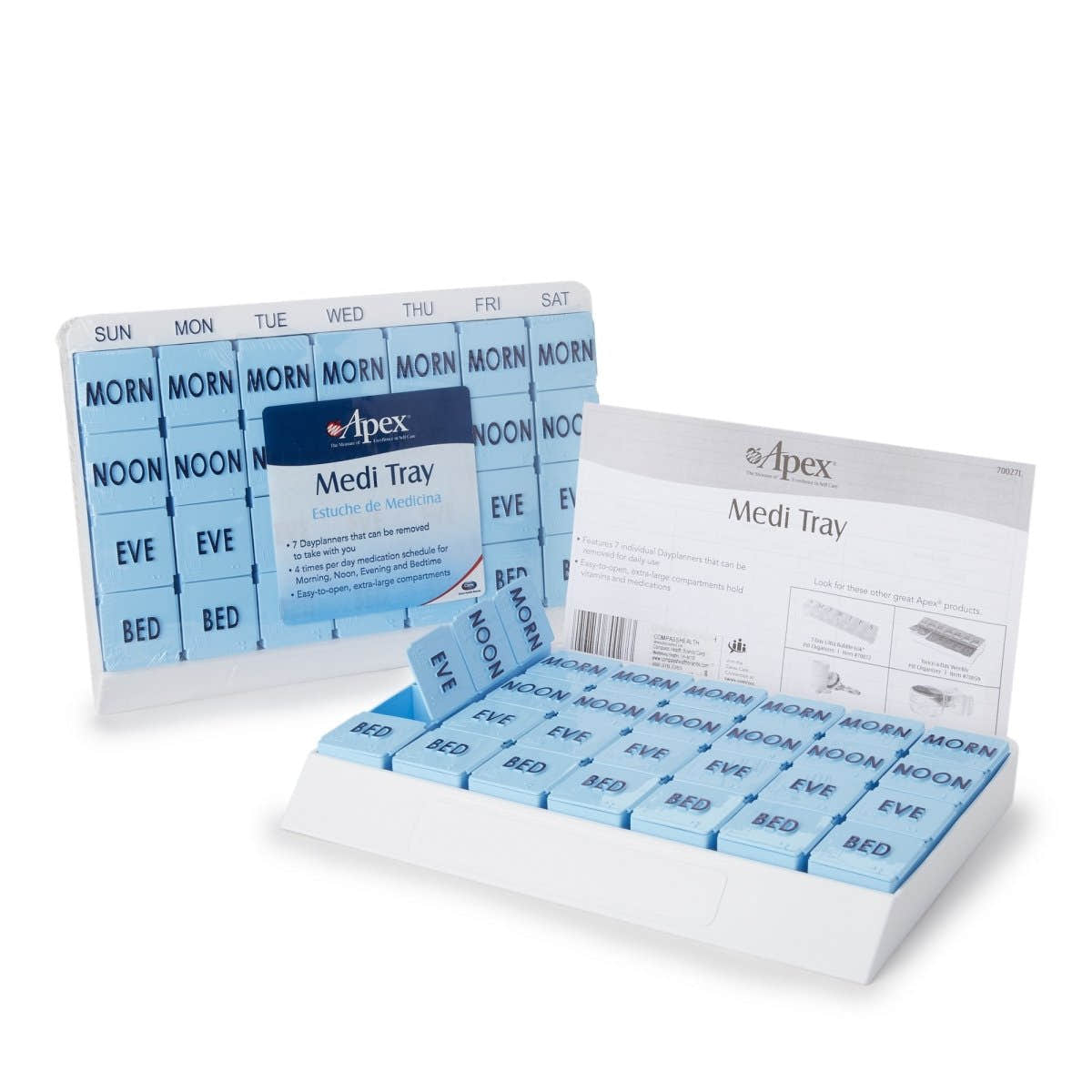
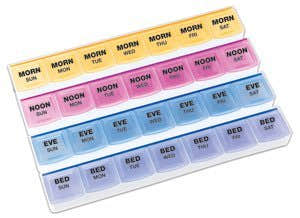
For medications taken more than once a day, a weekly organizer with morning, noon, evening, and bedtime compartments can reduce confusion between doses. These are often arranged in rows or removable daily strips. The key benefit is timing: each dose has a designated place, so an empty compartment can help confirm that it has been taken.
These organizers are useful for people with chronic conditions, caregivers supporting a family member, and anyone whose medication schedule changes throughout the day. Before choosing one, check the compartment size. Some multi-dose cases have shallow sections that may not hold larger capsules, multiple tablets, or individual packets.
Portable daily cases and travel organizers
A travel organizer is designed for medications that need to go to work, appointments, errands, or overnight stays. Some styles hold one day of doses, while others have removable day-by-day containers. A secure closure matters here, since a case carried in a bag can be bumped or turned upside down.
Portability brings a trade-off. Smaller cases are easier to carry but may not fit a full day of larger medications. For air travel or extended trips, many people also keep prescription medications in their original labeled containers when appropriate. A pharmacist can help answer questions about safe storage and travel planning for a specific medication.
Easy-open and accessibility-focused organizers
Arthritis, limited hand strength, tremors, and reduced dexterity can make a standard snap lid frustrating. Easy-open organizers may use larger tabs, push-button releases, sliding lids, or individual containers that are easier to grasp. The right design should be manageable for the person taking the medication, not only the caregiver filling it.
An easy-open option should still close securely. Test the lid before relying on it for a week of medication, especially if it will be kept near children, pets, or in a bag. If child-resistant packaging is needed, ask a pharmacist or healthcare provider about the safest setup for the household.
How to compare pill organizer options
The most useful organizer is one that makes the next dose obvious. When comparing products, focus on the features that affect daily use rather than choosing solely by color or number of compartments.
Consider these practical details:
- Compartment capacity: Count the largest pills, capsules, and supplements taken at one time. A case can look spacious but become crowded quickly.
- Labels and visibility: Large print, distinct time-of-day labels, and a clear or translucent lid can make it easier to verify doses.
- Closure style: Snap lids, sliding covers, and button releases each feel different. Choose a closure that is secure but comfortable to open.
- Removable sections: Detachable daily containers are convenient for travel and caregiver support, though small pieces can be easier to misplace.
- Cleaning needs: Smooth interiors and simple shapes are generally easier to wipe clean between refills.
- Storage location: Decide whether the organizer will stay on a counter, fit in a drawer, sit beside a bed, or travel outside the home.
Setting up an organizer safely at home
Fill the organizer when you are alert and have enough time to work without interruptions. Many households choose a consistent refill day, such as Sunday evening, and place all current medication bottles in one area before beginning. Read each label carefully and fill one medication at a time. Putting bottles away after each medication is added can help prevent mix-ups.
Use the medication label as the source of truth. Do not rely on tablet color or shape alone, since manufacturers can change how a medication looks. If two prescriptions seem similar, or if directions have changed since the last refill, pause and contact the pharmacy before loading the organizer.
For caregivers, a written medication list can support the organizer routine. Include the medication name, strength, dose, timing, and prescribing provider. Keep the list updated after appointments or hospital visits. This can be helpful when another family member needs to step in, when preparing for an emergency, or when speaking with a healthcare professional.
It is also wise to keep as-needed medications separate from regularly scheduled doses unless a healthcare provider specifically recommends otherwise. Pain relievers, nausea medications, and other medicines taken only when needed can create confusion if placed in a daily compartment ahead of time.
When an organizer needs more support
A pill organizer is a useful tool, but it does not replace medication instructions, professional guidance, or a reminder system. If doses are still being missed, pair the organizer with a phone alarm, calendar reminder, or daily routine such as breakfast or brushing teeth. For a caregiver, a simple check-in call can be more effective than adding a more complicated organizer.
If someone is frequently unsure whether medication was taken, has trouble reading labels, experiences side effects, or has had recent medication changes, speak with a pharmacist or healthcare provider. The safest solution may involve simplifying the schedule, using pharmacy packaging services, or arranging additional support.
CartHealth helps make home health routines easier to manage by offering everyday care supplies in one convenient place. When selecting an organizer, choose the format that fits the real routine, then keep the setup simple enough to use consistently. A clear compartment and a dependable refill habit can make each day feel more manageable.