A feeding tube that suddenly will not flush can turn a routine feeding into a stressful moment. So, can feeding tubes clog easily? They can, particularly when formula, medication residue, or stomach contents build up inside a narrow tube. The good news is that many clogs can be prevented with a consistent care routine and the right supplies at home.
A tube should never be forced. If flushing meets strong resistance, stopping early and contacting the prescribing clinician, home health nurse, or tube-feeding provider can help protect both the tube and the person using it.
Why feeding tubes can clog
Feeding tubes are designed to deliver nutrition, fluids, and certain medications directly into the stomach or small intestine. Their small internal opening makes them useful for care, but it also means dried formula or crushed medication can block flow more quickly than many caregivers expect.
The likelihood of a clog depends on the tube type and size. Smaller tubes, including many nasal and jejunal tubes, may clog more readily than larger gastric tubes. A tube placed into the small intestine also has specific feeding and flushing instructions that should be followed closely. What works for one tube may not be appropriate for another.
Clogs commonly develop when formula is left sitting in the tube, a tube is not flushed often enough, or medications are not prepared correctly. A kinked tube, a closed clamp, or a connector problem can also feel like a clog, so check these simple causes before assuming the tube is blocked.
Common causes of a blocked feeding tube
Formula residue is a frequent culprit. Enteral formula can dry inside the tube after a feeding, especially if the tube is not flushed before and after use. Continuous feedings may also require scheduled flushes, based on the care plan.
Medication administration is another common source of trouble. Not every tablet can be crushed, and some medications should not be crushed at all. Extended-release, delayed-release, enteric-coated, sublingual, and certain hazardous medications need special handling. Mixing several crushed medications together can create a thick mixture that sticks to the tube wall. In many cases, liquid medication is easier to administer, but some liquids can also be too thick or contain ingredients that require extra flushing.
Other possible causes include using the wrong syringe size, allowing the tube to kink under clothing or bedding, and failing to flush between formula and medication. Dehydration can also contribute to thicker secretions and residue, although fluid needs should always be guided by the person's clinical care plan.
How to prevent feeding tube clogs at home
The most effective approach is simple: flush routinely, give medications one at a time, and use only products approved for tube feeding. Your care team should provide the exact amount and type of water to use, along with a schedule that fits the feeding method and the individual's medical needs.
Follow the prescribed flushing schedule
Many care plans call for flushing before and after feedings and medications. For continuous feedings, scheduled water flushes are often used throughout the day. The exact volume may vary significantly for children, adults with fluid restrictions, and people with kidney or heart conditions, so avoid copying someone else's routine.
Use the water type recommended by the care team. Depending on the person's health status and local water safety, this may be tap water, filtered water, bottled water, or sterile water. Keep a clean enteral syringe on hand and replace it according to the instructions from the supplier or clinician.
Give medications separately
When medication is approved for tube administration, prepare and administer each medication separately. Flush between medications and again after the final dose. This helps prevent interactions inside the tube and makes it easier to identify which medication may be causing a problem.
Ask a pharmacist or prescriber before crushing any medication. They can confirm whether a liquid version is available, whether a tablet can be safely crushed, and how much water should be used to dissolve it. A medication that is poorly dissolved can leave particles behind even if it appears smooth at first.
Keep formula handling clean and timely
Use formula according to its storage and hang-time instructions. Formula that has been left out too long may pose a food safety concern and can become more difficult to flush from feeding equipment. Wipe connectors as directed, recap them when not in use, and keep tubing from bending sharply.
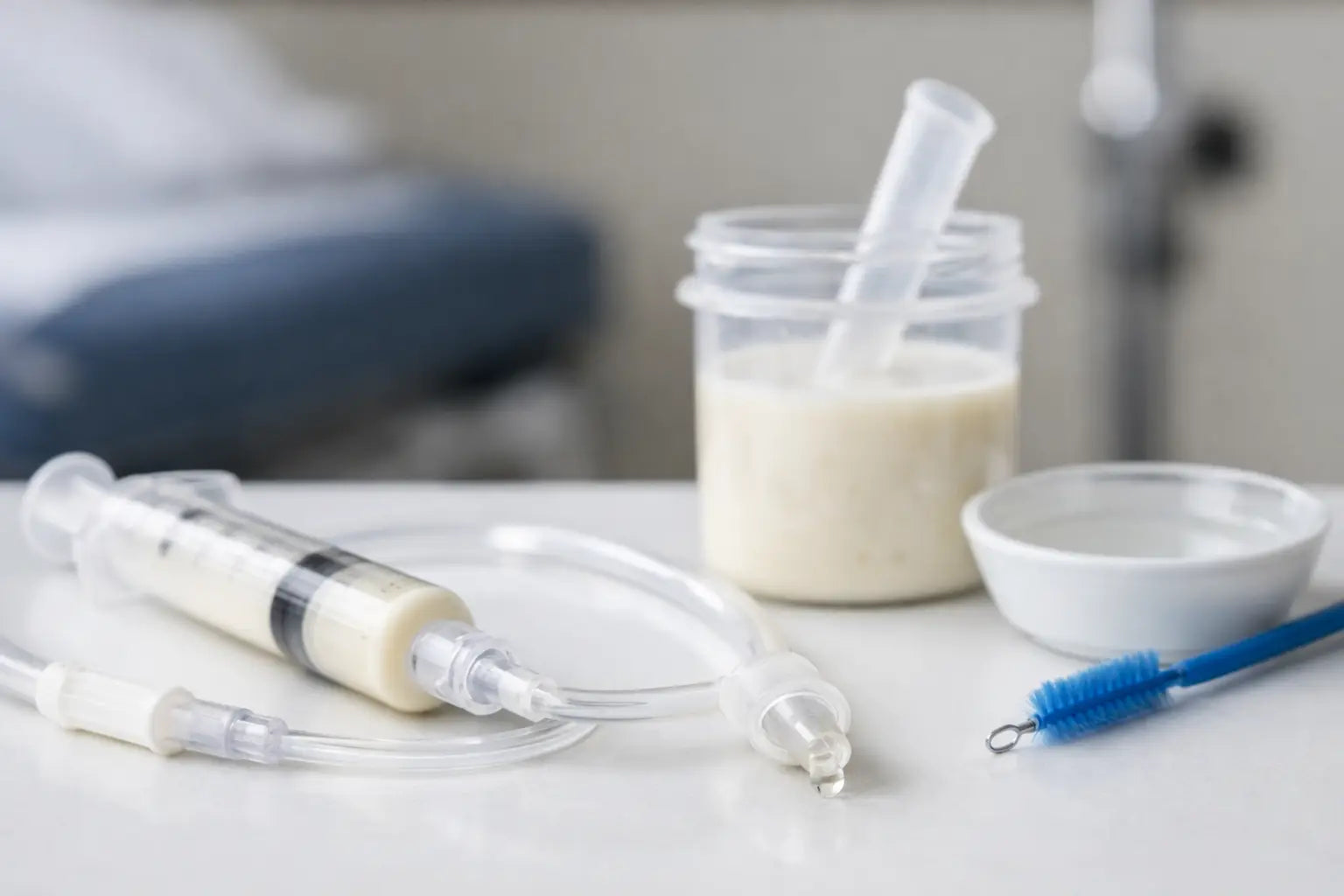
It is also helpful to keep a small home-care station stocked with enteral syringes, clean water as directed, formula, extension sets if used, and a written copy of the feeding and medication schedule. Having these supplies together makes it less likely that a flush will be skipped during a busy day.
What to do if a feeding tube seems clogged
First, stay calm and look for an obvious issue. Make sure the clamp is open, the tubing is not bent or compressed, and the extension set or connector is properly attached. If the tube is visibly damaged, leaking, or pulled out of position, do not use it and contact the care team promptly.
If the tube appears intact, follow the unclogging steps provided by the clinician. A common first step is a gentle attempt to flush with the prescribed water using an enteral syringe. Never push hard. Excess pressure can damage the tube or cause a connection to separate.
Do not use a wire, toothpick, sharp object, or excessive force to clear a tube. Home remedies such as soda, juice, or acidic drinks are not appropriate unless the treating clinician specifically instructs you to use a particular product. These liquids may worsen some clogs, affect formula or medication residue, or create other problems for the tube and the person receiving care.
If gentle flushing does not work, call the healthcare professional responsible for tube management. They may recommend a specific declogging method, a commercially available enzyme-based product, or an in-person evaluation. Do not attempt to replace a tube unless you have been trained and explicitly instructed to do so.
When to seek urgent medical help
A clog alone may not always be an emergency, but the situation can become urgent if it interrupts essential nutrition, hydration, or medication. Contact the care team right away if the person cannot receive critical medications or has no alternative way to take fluids and nutrition.
Seek urgent medical attention for trouble breathing, severe abdominal pain or swelling, repeated vomiting, fever, bleeding around the tube site, significant leaking, new confusion, or signs that the tube has moved. For a nasal tube, coughing, choking, or a noticeable change in external tube length can be signs that placement needs to be checked before using it again.
For a gastrostomy or jejunostomy tube, a tube that falls out requires prompt guidance because the opening can begin to narrow. Cover the site as instructed by the care team and seek help without delay. The right next step depends on how long the tube has been in place and the type of device used.
Supplies that make daily tube care easier
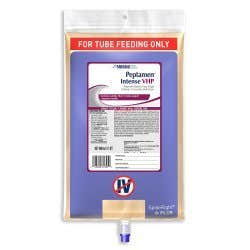
Reliable routine care is easier when essential enteral supplies are available before they are needed. Many households keep extra enteral syringes in the correct size, approved formula, feeding bags or pump supplies when prescribed, and clean storage for medications and accessories. A dedicated medication crusher should only be used when a pharmacist has confirmed crushing is safe.
For caregivers managing recurring needs, ordering supplies before the last box is opened can prevent rushed substitutions. CartHealth offers home health categories that can help families organize recurring care purchases alongside other everyday needs, from nutritional support to patient care essentials.
A feeding tube clog is frustrating, but it is often a signal to review the flushing and medication routine rather than a sign that anyone has failed. Keep the care plan nearby, use gentle technique, and ask for help early when a tube will not flush. That combination can make tube feeding at home feel more manageable and safer day to day.