A dressing that looks clean may still be due for a change, while another that becomes wet or loose needs attention sooner. Knowing how often to change a wound dressing helps protect healing skin, manage drainage, and avoid unnecessary disruption to the wound. The right schedule depends on the wound, the dressing type, and the instructions from the clinician managing the care.
How Often to Change a Wound Dressing
There is no single schedule that fits every wound. Some simple wounds need a fresh dressing every day. Others can safely stay covered for several days when an advanced dressing is used and remains clean, dry, and securely in place.
For a new incision, a minor cut, a pressure injury, a surgical wound, or a chronic wound such as a diabetic foot ulcer, follow the instructions provided by the surgeon, wound clinic, nurse, or other healthcare professional. Those instructions should take priority over general guidance, especially after surgery or when infection, poor circulation, diabetes, or reduced sensation are involved.
A dressing generally needs changing right away if it is soaked through, visibly dirty, loose around the edges, wet after bathing, or contaminated by urine or stool. Do not wait for the next scheduled change when the dressing can no longer keep the wound protected.
The Dressing Type Makes a Difference
Different wound dressings are designed for different levels of drainage and different stages of healing. Changing a dressing more often than necessary can dry out or disturb fragile new tissue. Leaving it on too long can allow moisture, bacteria, or drainage to build up. The goal is to maintain a clean, protected wound environment without repeatedly disturbing it.
Gauze dressings
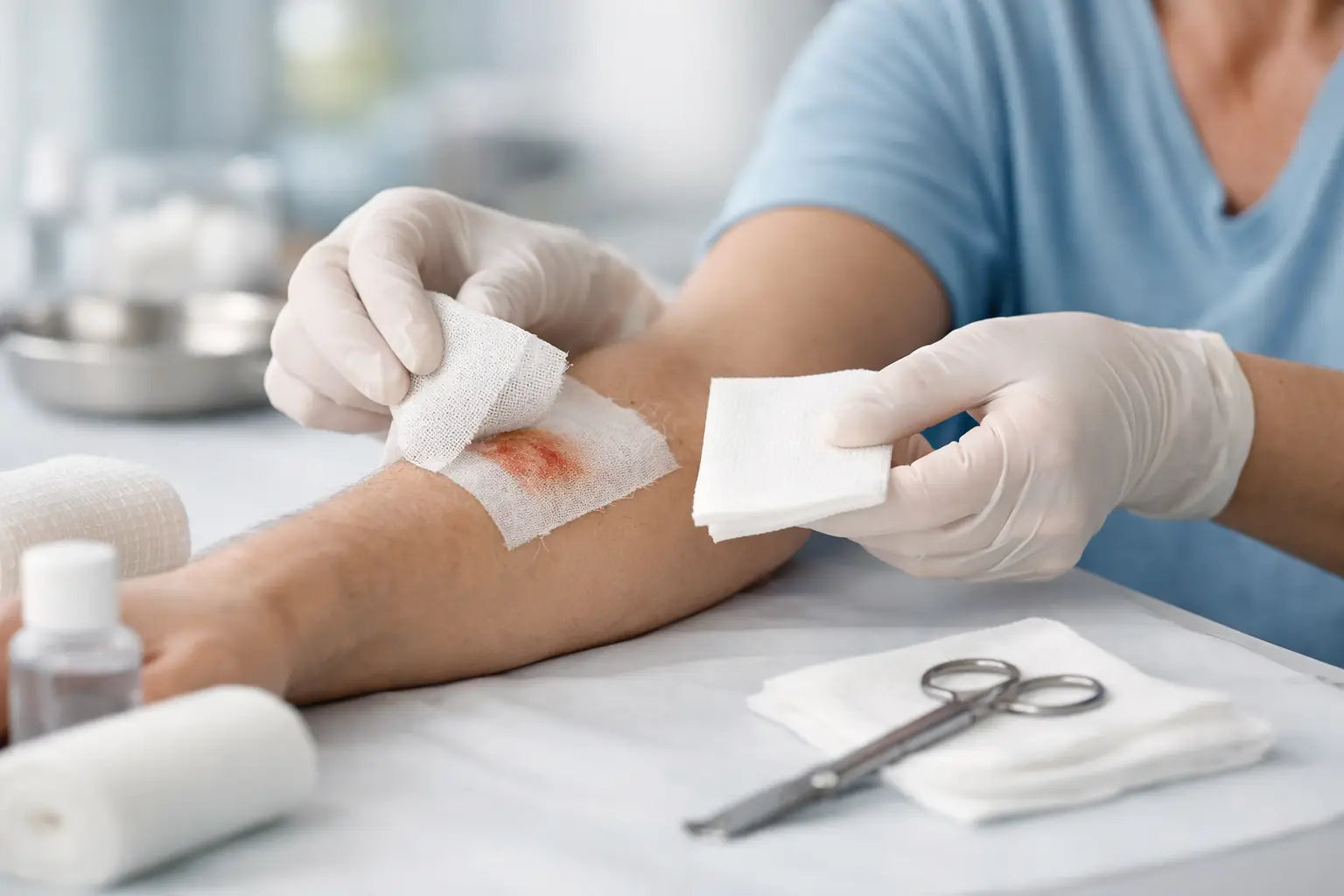
Plain gauze is often changed once or twice daily, or whenever it becomes wet, dirty, or saturated. It may be used as a cover dressing or as directed for wounds that need frequent monitoring. Because gauze can dry out and stick to the wound, it is especially important to follow the care plan for removal and cleaning.
Foam dressings
Foam dressings absorb moderate to heavy drainage and may stay in place for several days, depending on the product and the amount of fluid. Change the dressing sooner if drainage reaches the edge, leaks through, or causes the surrounding skin to look overly moist or pale.
Hydrocolloid and film dressings
These dressings are often used for low-drainage wounds or to protect vulnerable skin. Depending on the wound and product instructions, they may remain in place for several days. A small amount of gel or odor can occur with some hydrocolloid products as they absorb wound fluid, but a strong, worsening odor or new pain should be assessed by a clinician.
Alginate, hydrofiber, and antimicrobial dressings
Highly absorbent dressings, including alginate and hydrofiber options, are often selected for wounds with more drainage. Antimicrobial dressings may be recommended when bacterial burden is a concern. Wear time varies widely, so use the specific directions from the product label and the wound care provider. These products should not be chosen or continued solely because they are available at home.
What Can Make a Dressing Need Changing Sooner?
The condition of the dressing matters as much as the calendar. Check it at least daily unless your clinician has told you otherwise. You are looking for changes in drainage, odor, fit, and the skin around the dressing.
Change the dressing promptly if you notice any of the following:
- Drainage has soaked through the outer layer or is leaking from the edges.
- The dressing has lifted, wrinkled, or no longer seals or covers the wound correctly.
- It becomes wet from a shower, sweat, incontinence, or another source of moisture.
- The dressing is soiled, has visible debris, or has been exposed to stool or urine.
- The skin around the wound is becoming irritated because moisture is trapped under the dressing.
A Safe Routine for Changing Dressings at Home
Before beginning, gather the supplies recommended in the care plan. This may include the prescribed dressing, wound cleanser or saline, clean gloves, skin barrier products, tape or a retention bandage, and a disposal bag. A clean, organized workspace reduces the chance of touching the new dressing with unclean hands.
Wash your hands thoroughly with soap and water before and after wound care. Put on clean gloves if directed, then gently remove the old dressing. If it sticks, do not pull forcefully. Follow the provider's instructions, which may include moistening the dressing to make removal easier.
Look at the wound before applying a new cover. Note whether drainage has increased or changed color, whether the edges look more open, and whether the surrounding skin is red, swollen, or irritated. Clean the wound only as directed. Hydrogen peroxide, rubbing alcohol, and harsh antiseptics can damage healing tissue unless a clinician specifically tells you to use them.
Apply the new dressing without stretching the skin or placing tape directly over fragile areas when possible. The dressing should cover the wound and remain secure, but it should not be so tight that it causes discomfort, numbness, or swelling. Record the date, time, drainage amount, and any changes if a caregiver team or wound clinic is monitoring progress.
When to Call a Healthcare Professional
Some changes should not be handled with a new dressing alone. Contact the wound care provider promptly if redness is spreading, warmth or swelling is increasing, pain is getting worse, or drainage becomes thicker, cloudy, green, or foul-smelling. Fever, chills, red streaks moving away from the wound, or a sudden decline in how the person feels require urgent medical attention.
People with diabetes, peripheral artery disease, immune suppression, limited mobility, or poor circulation should be especially cautious. A small wound can become serious quickly when sensation is reduced or blood flow is limited. For a diabetic foot wound, a pressure injury, a deep puncture, an animal or human bite, or a surgical incision with new drainage, contact a clinician rather than relying on a general dressing schedule.
Keep the Right Supplies Ready
Home wound care is less stressful when replacement supplies are available before the current dressing runs out. Keep the dressing size and type recommended by the care team, along with gentle cleansing supplies, gloves, tape, and skin-protection products if needed. Reordering before the last few dressings are used can help prevent substitutions that do not match the care plan.
CartHealth offers a convenient way to shop for commonly needed wound care supplies alongside other home health essentials. Still, the product should support the clinical plan, not replace it. If the dressing type, change frequency, or wound appearance is unclear, ask the clinician who knows the wound before making a change.
A reliable routine is simple: follow the prescribed schedule, inspect the dressing every day, and change it sooner whenever it is wet, soiled, loose, or saturated. When the wound gives you a reason to worry, a timely call to a healthcare professional is often the most useful part of wound care.