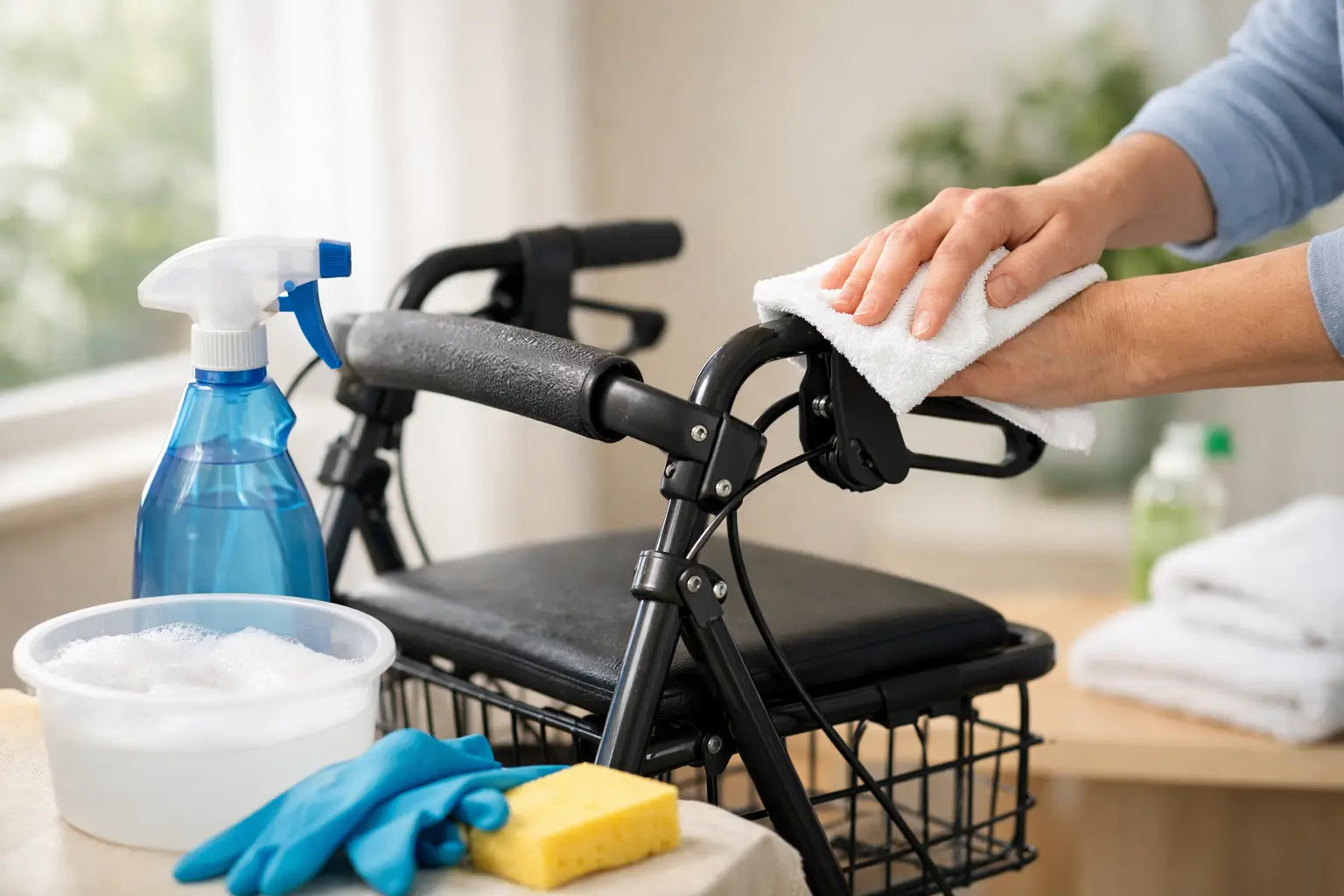
A rollator goes everywhere its user goes: across kitchen floors, sidewalks, parking lots, waiting rooms, and often close to meals or medications. Learning how to clean a rollator helps keep the hand grips, seat, brakes, and wheels more comfortable to use while giving you a chance to spot loose parts or wear that may affect safe mobility.
Most rollators only need a light cleaning once a week and a more thorough check every month. If the rollator has been used outdoors in rain, mud, snow, or a high-traffic medical setting, clean it sooner. The goal is not to soak every part. It is to remove dirt without getting excess moisture into brake cables, bearings, joints, or accessories.
What You Need to Clean a Rollator
Gather a few basic household supplies before you start: a soft microfiber cloth, mild dish soap, warm water, a small bowl or spray bottle, a soft-bristled brush, and a dry towel. Disinfecting wipes may be useful for hand grips and other high-touch areas, as long as they are compatible with the rollator's finish.
Avoid harsh powders, steel wool, solvent-based cleaners, and strong bleach solutions. These can damage paint, make plastic parts brittle, dry out foam grips, or leave residue on the frame. Do not use a hose, pressure washer, or a bucket of water to rinse the rollator. Water can work its way into moving components and create problems that are not obvious right away.
If you have the rollator's owner manual, check it before using a disinfectant or lubricant. Materials vary by model, particularly on padded seats, storage bags, brake handles, and wheels.
How to Clean a Rollator Step by Step
Choose a dry, well-lit area with enough room to open the rollator fully. Set the parking brakes before you begin. If the rollator folds, open it and make sure the frame is locked into its normal position so you can reach the hinges and crossbar safely.
Remove bags and personal items first
Take off the storage bag, basket, cup holder, cane holder, tray, or other removable accessories. Empty pockets and check for items that may have slipped beneath the seat. Crumbs, tissues, medication packaging, and small personal items can collect in places that are easy to overlook.
Many fabric bags can be wiped with a damp cloth and mild soap. Some are washable, but do not assume they can go into a washing machine or dryer. Check the care label or product instructions. If a bag is not removable, wipe it gently and allow it to air-dry completely before placing belongings inside.
Wipe down the frame and seat
Mix a small amount of mild dish soap with warm water. Dampen a cloth until it is moist, not dripping, then wipe the metal frame from top to bottom. Pay attention to the areas around folding joints, the crossbar, and the underside of the seat, where dust and splashes can build up.
Clean the seat with a separate damp cloth. A padded vinyl or plastic seat usually responds well to mild soap and water, followed by a dry towel. If the seat has tears, cracks, or peeling material, avoid saturating it. Moisture can reach the inner padding and make the damage worse.
Dry the frame and seat right away. This step matters most around bolts, screws, folding mechanisms, and brake hardware. A clean, dry frame is easier to inspect than one covered in cleaner or moisture.
Clean hand grips and brake handles
Hand grips collect skin oils, lotion, food residue, and everyday germs. Wipe them carefully with a lightly soapy cloth or an approved disinfecting wipe. Follow with a clean damp cloth if the product directions call for rinsing, then dry thoroughly.
Do the same for brake handles and parking brake levers. Do not spray cleaner directly onto the handles, since liquid can run into the cable housing or pivot point. If grime is caught around the handle base, use a soft brush or a cotton swab that is only slightly damp.
Check that both brake handles move freely after cleaning. Squeeze and release each one several times. If a brake sticks, feels loose, or does not engage when the parking brake is set, stop using the rollator until the issue is corrected.
Brush dirt from the wheels
The wheels take the most abuse, especially when a rollator is used outside. Turn the rollator on its side only if you can do so safely without straining your back. If needed, ask another person to help hold it steady. Never rest the rollator in a position where it could fall on someone.
Use a soft brush or dry cloth to remove hair, string, grass, mud, and debris from the tires and around the wheel forks. For sticky dirt, use a cloth dampened with soapy water. Clean the wheel surface, spokes if present, and the area where each wheel connects to the frame.
Try to keep water away from the wheel bearings. Do not pour water over the wheels or spray into the axle area. Once the visible dirt is gone, dry the wheels and rollator frame completely.
Wipe the folding mechanism with care
Folding joints and latches can trap dust, but they also contain moving hardware that should not be soaked. Wipe around these areas with a nearly dry cloth. Use a soft brush to lift away dry debris from narrow spaces.
Open and close the rollator slowly once or twice after cleaning. It should fold and unfold without sticking, scraping, or requiring excessive force. If the mechanism feels rough, consult the owner manual or contact a qualified mobility equipment provider before adding any lubricant. The wrong product can attract more dirt or affect plastic components.
Disinfecting a Rollator After Illness or Shared Use
Routine cleaning removes visible dirt. Disinfecting may be appropriate after an illness, when the rollator is shared by more than one person, or when it has been exposed to bodily fluids. Focus on high-touch surfaces such as grips, brake handles, seat edges, and frequently handled accessories.
Use a disinfectant labeled for the material you are treating, and follow the label's contact-time directions. A wipe that is immediately dried away may not disinfect as intended. At the same time, avoid leaving liquid sitting on the rollator's frame or hardware. Wipe any excess moisture after the required contact time and let all surfaces air-dry.
For urine, stool, blood, or vomit, wear disposable gloves and clean the affected area first before disinfecting. If fabric, foam, or a damaged seat surface cannot be cleaned thoroughly, replacing that accessory may be the safer choice.
Check Safety Features While You Clean
Cleaning day is also a practical maintenance check. Look closely at the parts that support daily use:
- Make sure both wheels roll straight and do not wobble, drag, or catch.
- Test the hand brakes and parking brakes on a level surface.
- Check the frame for cracks, bent tubing, rust, or loose screws.
- Inspect the seat, backrest, grips, and storage bag for tears or worn material.
- Confirm that folding locks, height-adjustment knobs, and accessory mounts stay secure.
How Often Should You Clean a Rollator?
For most home users, wipe the grips, seat, and frame weekly. Clean the wheels whenever you see dirt or debris, and give the full rollator a closer inspection once a month. A caregiver may need to clean it more often if it is used in community settings, around young children, or by someone with increased infection-control needs.
Seasonal conditions make a difference. Road salt, sand, wet leaves, and mud should be removed promptly because they can scratch finishes and collect around wheel assemblies. In dry indoor settings, a quick wipe may be all that is needed between deeper cleanings.
A clean rollator is easier to hold, easier to fold, and easier to trust. Keeping a cloth and mild cleaner nearby makes the task manageable, while regular checks help ensure a small maintenance concern does not become an interruption to everyday independence.