A trip from the bedroom to a medical appointment can feel very different depending on the chair you bring. When comparing a transport chair vs wheelchair, the main question is not which one is better overall. It is which one gives the user the right level of independence, comfort, and support for the places they need to go.
A transport chair is designed to be pushed by a caregiver. A standard manual wheelchair has larger rear wheels that allow many users to move themselves. That simple difference affects everything from weight and storage to safety on ramps and how useful the chair will be day after day.
Transport Chair vs Wheelchair at a Glance
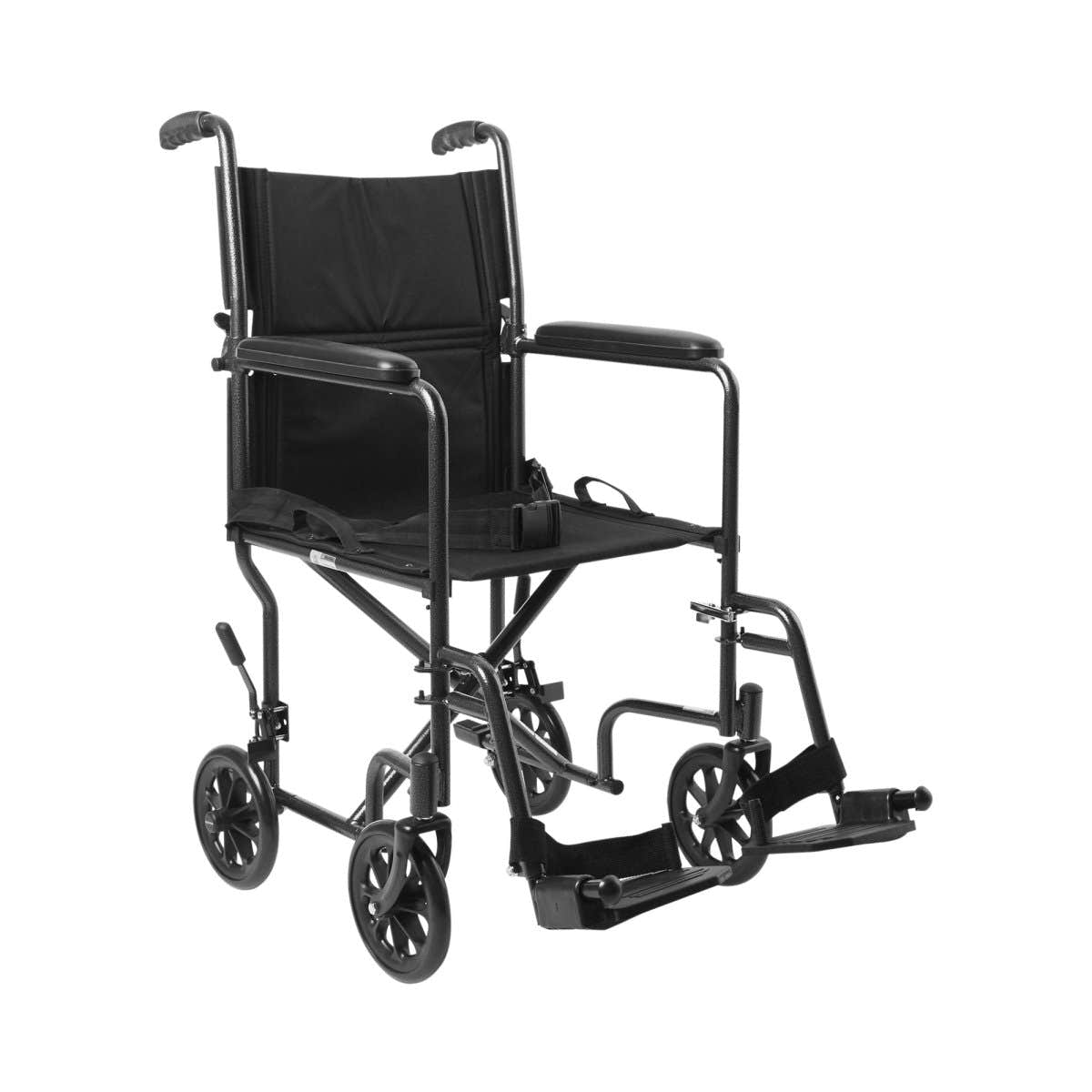
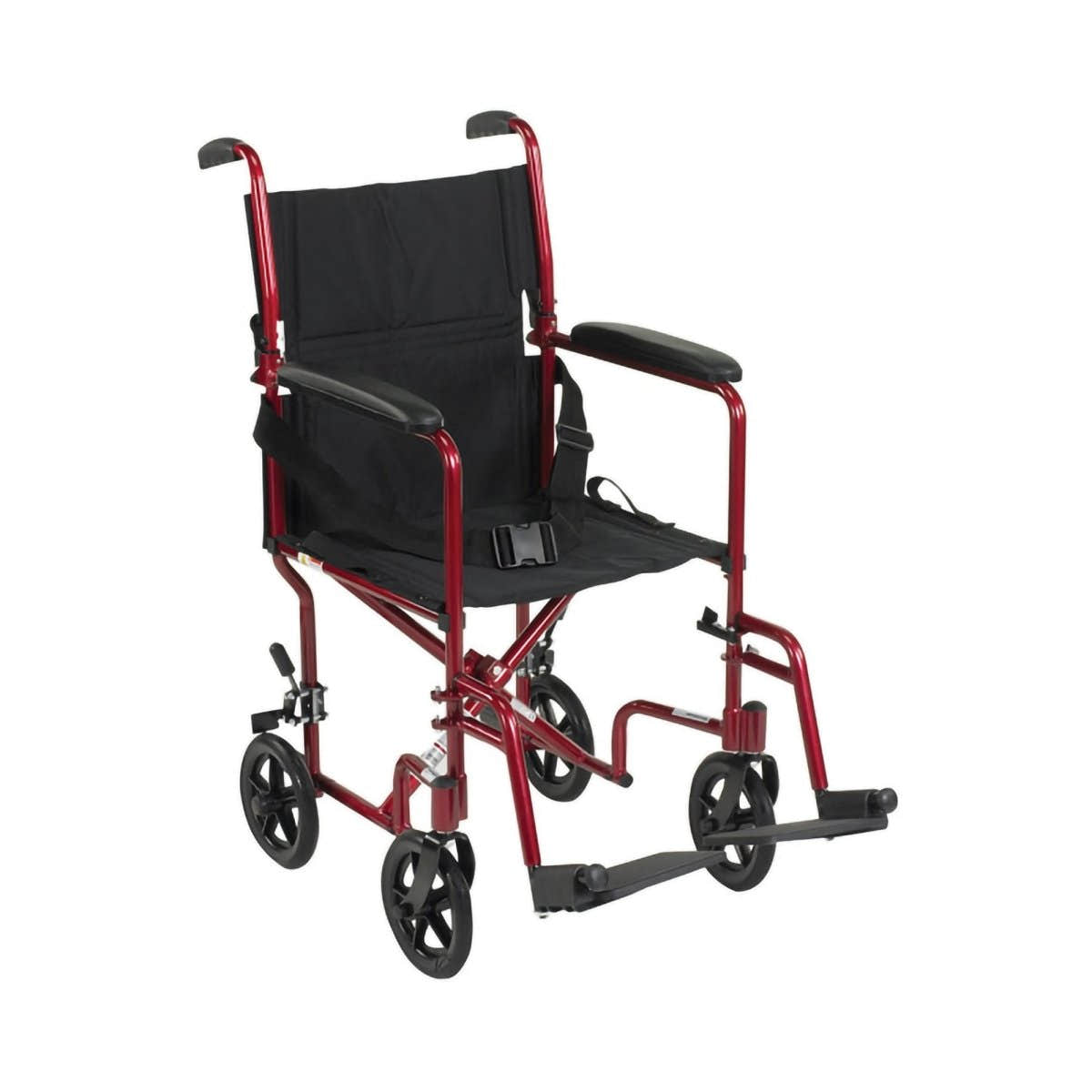
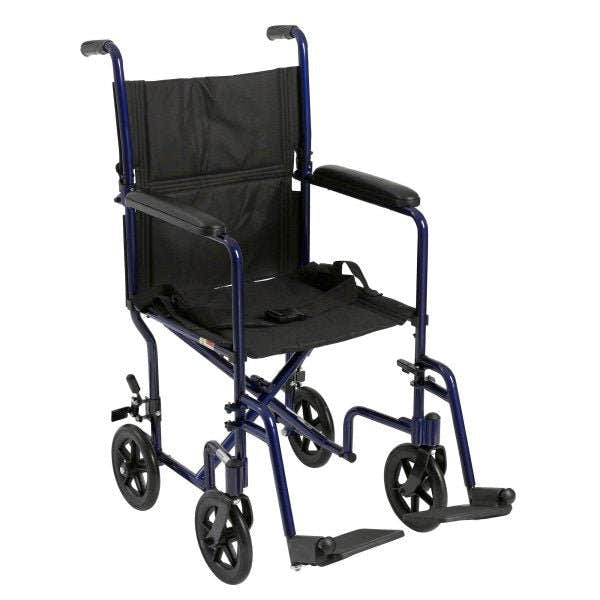
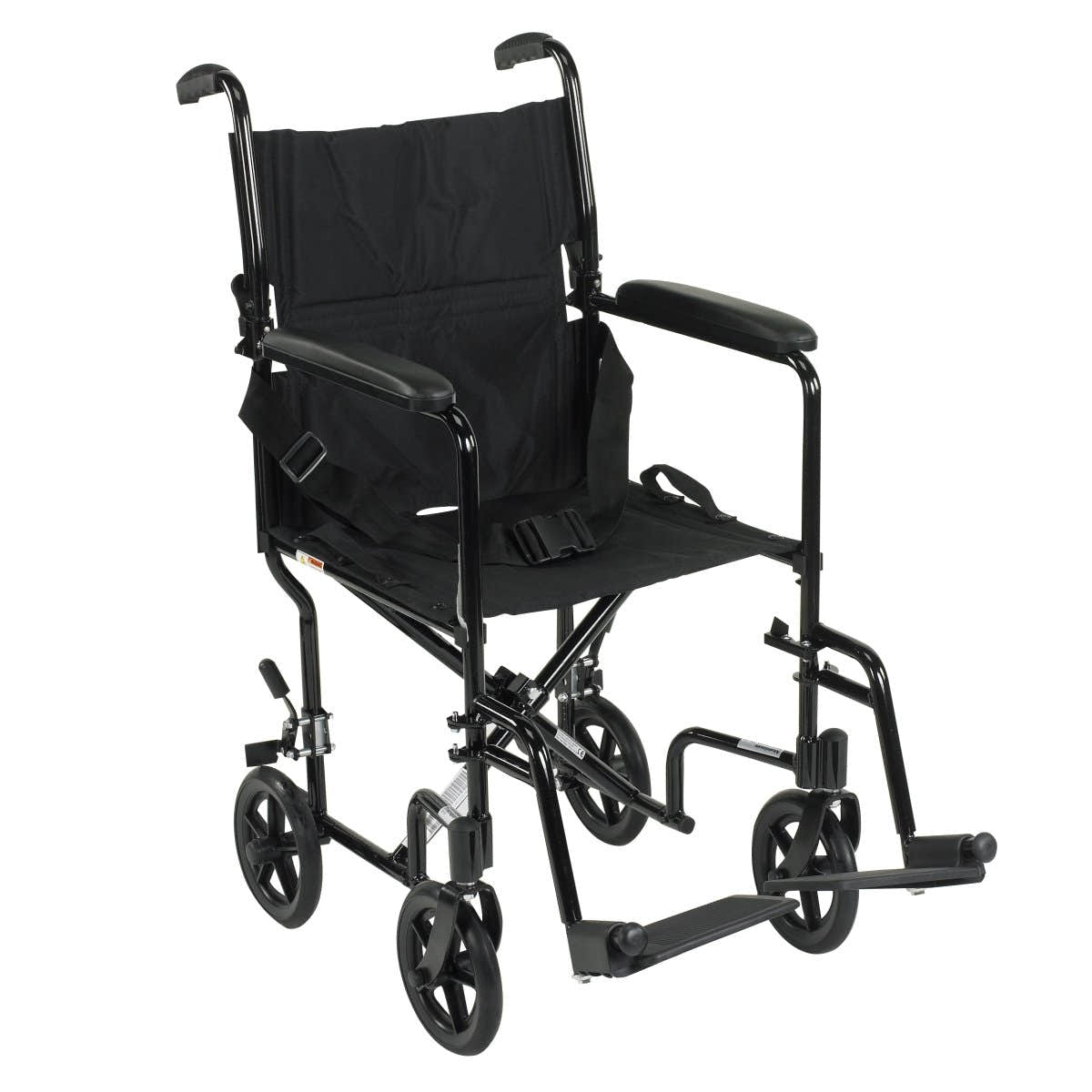
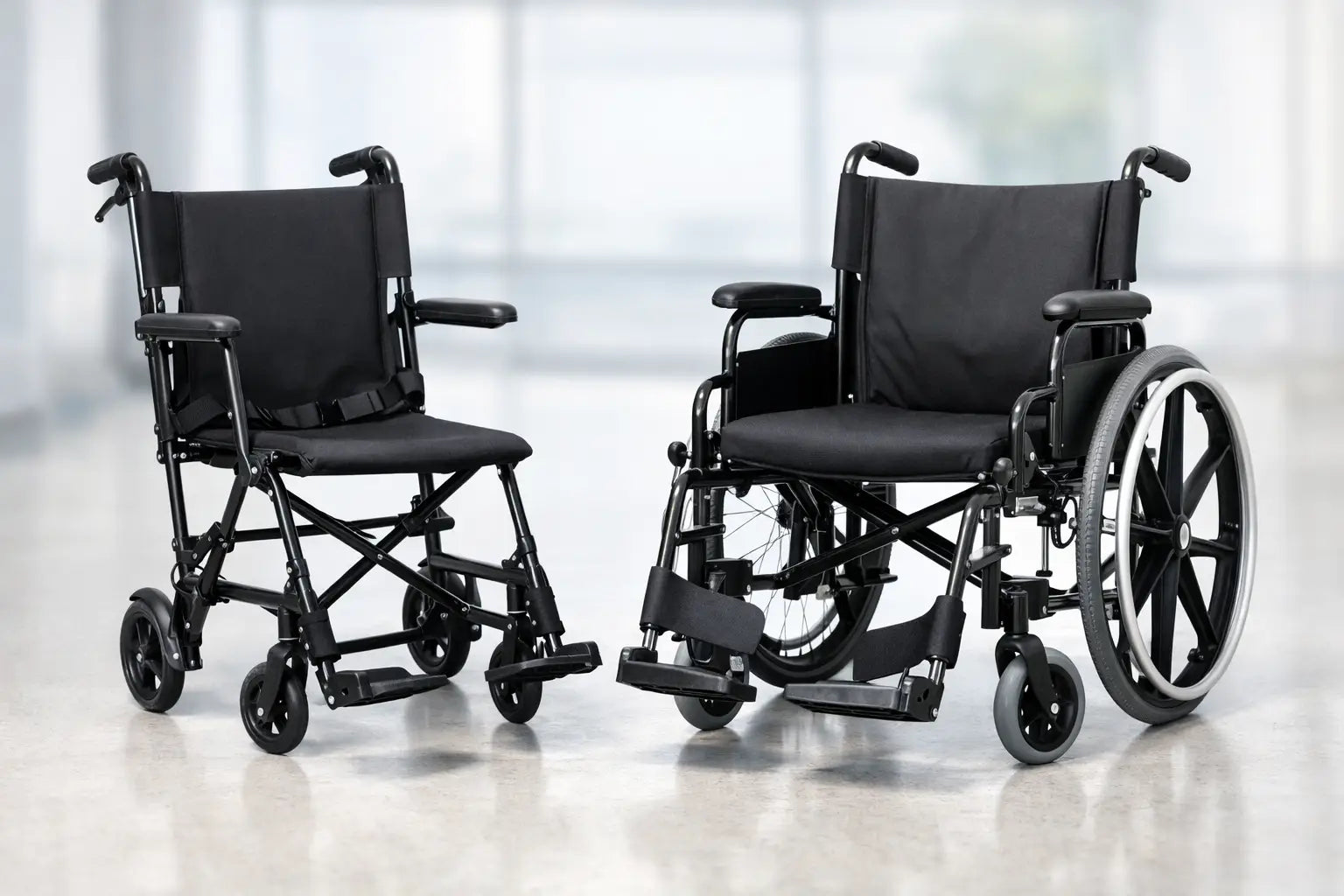
Transport chairs, sometimes called companion chairs, have four smaller wheels. They are generally lighter than standard wheelchairs, fold compactly, and fit more easily in a car trunk. Since the rear wheels are small, the person sitting in the chair cannot typically propel it independently. A family member, friend, or caregiver must push from behind.
Manual wheelchairs usually have large rear wheels with hand rims. The user can grip the hand rims to move forward, turn, and position the chair, although some people still need assistance for longer distances, steep inclines, or uneven surfaces. They are often heavier and take up more room than transport chairs, but they can provide more freedom for someone who has the strength and coordination to self-propel.
Neither option replaces the other in every situation. Some households keep a lightweight transport chair for appointments and travel while using a manual wheelchair at home or for daily community mobility.
When a Transport Chair Makes More Sense
A transport chair is often the practical choice when a caregiver will always be available to push. It works especially well for short outings, discharge from a hospital or rehabilitation stay, doctor visits, airports, restaurants, and events where walking may be tiring or unsafe.
Its lighter frame can make a meaningful difference for caregivers. Lifting a bulky mobility device in and out of a vehicle several times a week can be difficult, especially for an older spouse or adult child managing other care tasks. Many transport chairs are built for easy folding and have a compact profile for storage in a closet, vehicle, or entryway.
Transport chairs can also be a good fit for a person recovering from surgery, illness, or an injury who only needs temporary seated mobility. If the expected need is a few weeks of supported trips rather than independent movement throughout the day, a lighter chair may be easier to manage.
The trade-off is clear: the user gives up the ability to move the chair alone. That can be frustrating for someone who wants to reposition at a table, move across a room, or travel independently through a building. Before choosing a transport chair, consider whether someone will reliably be nearby whenever it is used.
When a Manual Wheelchair Is the Better Choice
A standard manual wheelchair is usually the stronger option for a person who needs regular mobility and can safely propel themselves. The larger rear wheels help the user move through the home, navigate halls, approach counters, and travel around a community setting without waiting for someone to push.
This independence can matter as much emotionally as it does practically. A wheelchair user may be able to choose when to go outside, move closer to a conversation, or reach another room without calling for help. For long-term mobility needs, that control can support a more active daily routine.
Manual wheelchairs also tend to handle more varied surfaces than many compact transport chairs. Larger wheels can be easier to roll over doorway thresholds, low-pile carpet, sidewalk seams, and minor outdoor irregularities. They are not automatically appropriate for rough terrain, but they generally offer more capability than small transport wheels.
The compromise is size and weight. A standard wheelchair may be harder to lift into a compact car and less convenient in narrow spaces. If portability is a top priority, look closely at the chair's folded dimensions and product weight rather than assuming every folding wheelchair will be easy to transport.
Key Features to Compare Before Buying
Chair type is only the first decision. The right fit depends on the user, caregiver, home layout, and typical transportation. Review the product specifications carefully, particularly if the chair will be used every day.
Weight capacity and seat width
Start with the chair's stated weight capacity. Do not choose based only on the user's current weight if clothing, blankets, supplies, or future changes may affect the fit. A chair should offer stable, comfortable support within its listed capacity.
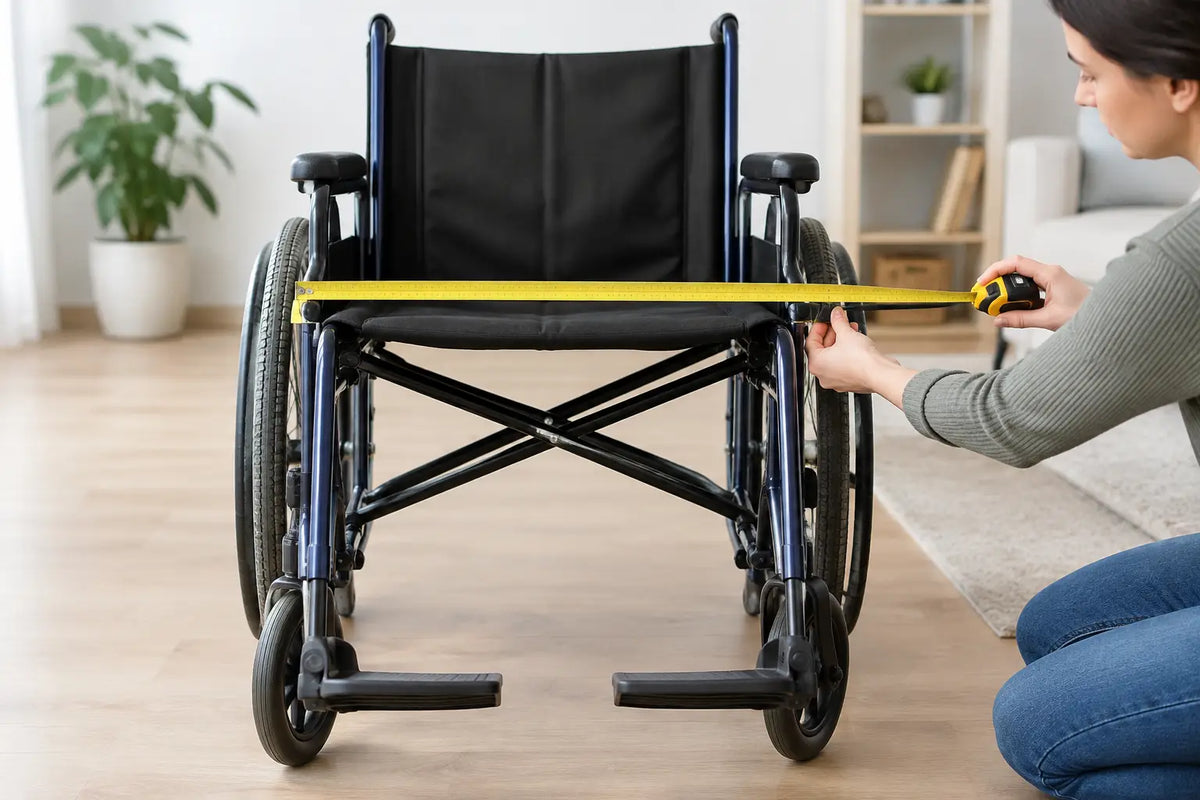
Seat width matters just as much. A seat that is too narrow can cause pressure and discomfort, while an overly wide seat can make it difficult to maintain an upright, supported position. Measure the user's hips while seated and allow room for normal clothing. For anyone with significant positioning needs or a history of skin breakdown, guidance from a clinician or seating specialist may be appropriate.
Chair weight and folded size
For a transport chair, a few pounds can affect whether a caregiver can use it safely. Check the frame weight, whether footrests detach or swing away, and the size of the chair once folded. Measure the vehicle trunk or cargo area if storage is a concern.
For a manual wheelchair, consider both the chair weight and how frequently it will be loaded into a vehicle. A self-propelling chair that stays in the home has different requirements from one that must travel to appointments several times each week.
Footrests, armrests, and transfers
Swing-away or removable footrests make it easier for the user to get close to a bed, toilet, car seat, or dining table. They can also make caregiver-assisted transfers less awkward. Desk-length armrests may allow closer access to tables, while full-length armrests can provide more support when standing or repositioning.
If the person will transfer in and out of the chair, make sure the wheelchair brakes are easy to reach and hold securely. A chair should always be locked before a transfer, unless a trained care professional has provided different instructions for a specific situation.
Brakes and caregiver control
Standard wheel locks on a manual wheelchair are important for transfers and stationary use. Transport chairs may also include caregiver hand brakes or locking loop brakes. These can be especially helpful on ramps, slopes, and uneven parking areas because they give the person pushing more control.
Never assume a lightweight chair is safe on every incline. A caregiver should maintain a firm grip, move slowly, and follow the chair manufacturer's directions for curbs, ramps, and folding components.
Consider the Home, Not Just the Appointment
A chair can look ideal online and still be difficult to use in a particular home. Measure narrow doorways, bathroom entrances, hallways, and turns around furniture. Consider where the chair will be parked and whether the user can reach commonly used rooms without encountering steps or tight corners.
For home use, think beyond the floor plan. Is there a threshold at the front door? A steep ramp from the garage? Thick carpeting? A small bathroom where a full-size wheelchair cannot turn? These details may point toward one chair type, or they may show that a chair alone is not enough without additional accessibility support.
Caregivers should also be realistic about the physical demands of pushing. A transport chair is light to lift, but the person pushing still needs to manage the user's weight on inclines and over surfaces. A manual wheelchair can encourage independence, but only if the user has the upper-body strength, hand function, and endurance to operate it safely.
Choosing for Short-Term Recovery vs Long-Term Use
For short-term recovery, convenience often leads the decision. A transport chair may be a sensible option when the user is expected to return to walking but needs help getting through appointments, longer hallways, or crowded public spaces. It is compact, straightforward, and easy to keep in a vehicle.
For long-term use, independence and fit deserve more weight. A manual wheelchair may be more useful for someone who will rely on seated mobility throughout the day. A basic chair can work well for some users, while others may need specialized cushioning, adjustable components, or a different mobility solution based on their clinical needs.
If the person's needs are changing quickly after surgery, hospitalization, or a new diagnosis, avoid treating one purchase as a permanent answer. Reassess comfort, transfer safety, and daily use as recovery progresses or care needs evolve.
The Best Choice Supports Everyday Movement
Choose a transport chair when portability and caregiver-pushed outings are the priority. Choose a manual wheelchair when the user needs the opportunity to self-propel and move more independently. In either case, the safest chair is one that fits the user, works in the home and vehicle, and can be handled confidently by everyone involved in care.
A few careful measurements and an honest look at the user's routine can turn a mobility purchase from a short-term workaround into dependable support for everyday life.