
A wet tile floor, a low toilet, and one missed step can turn an ordinary bathroom routine into a real safety problem. That is why bathroom safety aids for elderly adults are not just helpful extras - they are often the difference between managing independently and needing hands-on help.
For many families, the bathroom is the first room that needs practical updates after a fall, surgery, or change in mobility. The right setup can support balance, reduce strain, and make bathing and toileting feel less stressful. It can also help caregivers by making transfers and daily assistance more manageable.
Why bathroom safety aids for elderly adults matter
Bathrooms combine several risk factors in one small space. Floors get slippery fast. Tubs and showers have raised edges. Toilets sit lower than most chairs. Even someone who does well in other parts of the home may struggle here because the movements are more demanding - standing from a seated position, stepping over a tub wall, turning in a tight area, and reaching while wet.
That does not mean every older adult needs a full bathroom remodel. In many cases, a few well-chosen products can make a meaningful difference right away. The key is matching the aid to the person’s actual needs rather than buying a long list of equipment all at once.
A senior with mild balance issues may only need a grab bar and a non-slip bath mat. Someone recovering from hip surgery may need a raised toilet seat and a shower chair. An older adult with arthritis may benefit from products that reduce bending, twisting, and gripping force. Safety works best when it is specific.
Start with the highest-risk areas
Most bathroom accidents happen around three zones: the toilet, the shower or tub, and the path in and out of the room. If you are choosing where to begin, start there.
The toilet area often becomes difficult earlier than families expect. A standard toilet can be too low for someone with weak leg strength, joint pain, or limited range of motion. Raised toilet seats add height, which reduces the effort needed to sit down and stand up. Some include locking mechanisms for a more secure fit, while others come with armrests for extra support. The trade-off is that not every bathroom has enough space for wider models, so measuring first matters.
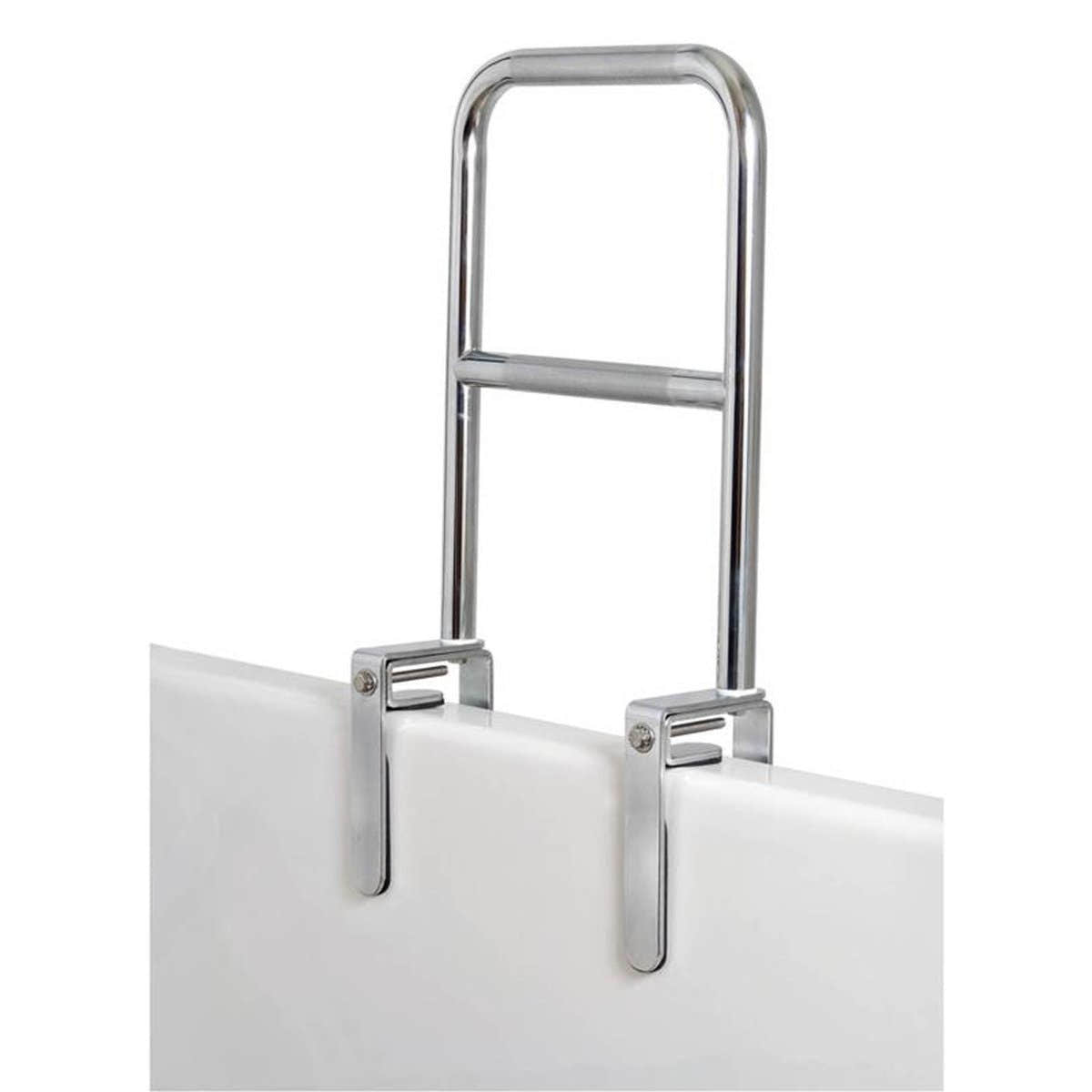
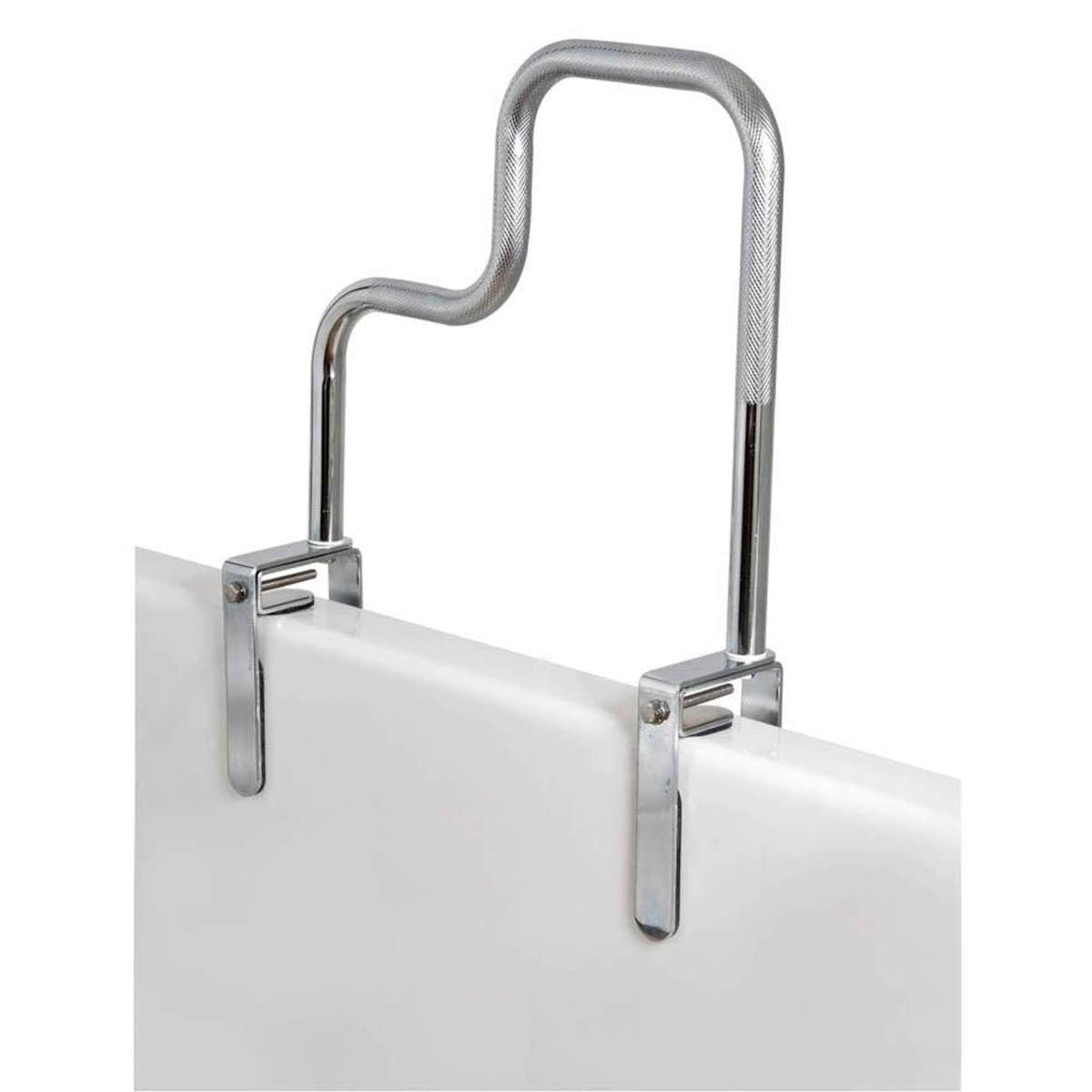
Around the shower and tub, stability is the main concern. Grab bars give users a fixed point of support when stepping in, standing, lowering down, or changing position. They are more dependable than towel bars or sink edges, which are not designed to bear weight. Placement matters as much as the product itself. A bar near the tub entry helps with stepping in, while another inside the bathing area supports standing and turning.
The path to the bathroom deserves attention too. Good lighting, clutter-free walkways, and secure flooring all support safer movement. A bathroom safety product cannot fully compensate for loose rugs or poor visibility at night.
The most useful bathroom safety aids for elderly users
Some products solve very specific problems, while others work for a wide range of needs. In most homes, a few categories do most of the heavy lifting.
Grab bars and support rails
Grab bars are often the first upgrade because they provide immediate support without changing the entire bathroom layout. They can be installed near toilets, inside showers, and beside tubs. Wall-mounted models tend to offer the best stability when properly installed. Suction styles may appeal to renters or families who want a quick setup, but they are not ideal for full weight-bearing support unless clearly rated and used exactly as directed.
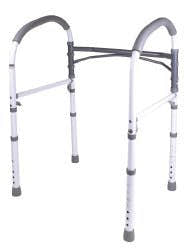
Toilet safety rails are another useful option. These frame the toilet area and give users arm support when sitting down or standing up. They are especially helpful for people who push up with their hands due to poor leg strength or painful knees.
Raised toilet seats and bedside commode options
Raised toilet seats reduce how far a person has to lower themselves. That can make a major difference after surgery, during rehab, or for anyone with reduced lower-body strength. Some attach directly to the toilet, while others combine height with side arms.
In homes where the bathroom is far from the bedroom, or nighttime urgency is a concern, a bedside commode may also help reduce fall risk. It is not a substitute for making the bathroom safer, but for some users it is the safer overnight option.
Shower chairs, bath benches, and transfer benches
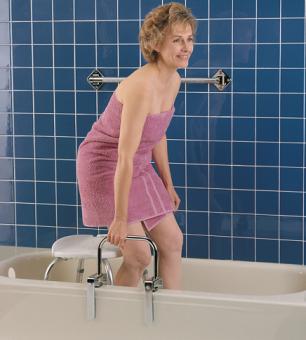
Standing in a shower can be tiring and risky, especially when fatigue, dizziness, or weakness is part of the picture. A shower chair allows the user to sit while bathing, conserving energy and improving stability. Bath benches serve a similar purpose, and transfer benches add more support for people who cannot safely step over a tub wall.
Transfer benches are especially useful after joint replacement or for users with significant mobility limits. One side of the bench sits outside the tub and the other inside, allowing the person to sit first and then move across. They take up more space than a standard shower chair, so bathroom layout matters.
Handheld shower heads and bathing accessories
A handheld shower head makes seated bathing easier and more controlled. It helps users rinse without twisting or standing, and it can also make caregiver-assisted bathing simpler. Small accessories can matter too - long-handled sponges, soap holders, and easy-to-reach storage reduce awkward movements that can lead to slips.
Non-slip mats and adhesive strips
Wet surfaces are a major issue, but not every bath mat improves safety. Mats need a secure grip and a flat, stable surface. Loose or curled edges can create a trip hazard instead of preventing one. Adhesive anti-slip strips inside the tub or shower can add traction where it is needed most.
This is one area where simpler is often better. The goal is stable footing, not extra layers on the floor.
Choosing the right bathroom setup
The best product is the one a person will actually use every day. That is why fit, comfort, and ease of setup matter as much as the product category.
Weight capacity should always be checked first, especially for stools, benches, commodes, and toilet frames. Adjustable height is also valuable because a few inches can make a big difference in comfort and safety. If a product is difficult to clean, heavy to move, or awkward in a small bathroom, it may end up unused.
It also helps to think in terms of daily routines. Does the person struggle getting on and off the toilet, or only when stepping into the tub? Do they tire quickly in the shower? Are nighttime bathroom trips the biggest concern? Matching the product to the moment of difficulty leads to better results than buying based on general fear.
Caregivers should consider their own role too. If hands-on assistance is common, products that improve positioning and reduce lifting strain can benefit both people. A transfer bench, for example, may feel like a bigger purchase up front, but it can make bathing much safer than repeated unsupported tub transfers.
When simple upgrades are enough - and when they are not
Not every bathroom needs major equipment. For some older adults, improved lighting, a grab bar, and a shower chair are enough to restore confidence. For others, repeated falls, severe weakness, or advanced mobility loss may point to a need for broader home safety planning.
If someone is holding onto unstable surfaces, avoiding bathing, or needing more physical help each week, that is usually a sign to reassess. Sometimes the issue is not just one product but the whole setup. A narrow bathroom, a high tub wall, or a poorly placed vanity can limit what standard aids can do.
That is where a broader home care approach becomes useful. Families often need more than one category of support at the same time - mobility aids, incontinence products, patient care supplies, and bathroom safety equipment often go together. For shoppers trying to simplify home care, a retailer like CartHealth can be helpful because it brings those everyday needs into one place instead of sending caregivers to multiple stores.
Common mistakes to avoid
One common mistake is assuming any support product is better than none. In reality, the wrong fit can create new risks. A loose raised toilet seat, a shower chair that is too low, or a mat that slides can make the bathroom less safe.
Another mistake is waiting until after a serious fall to make changes. Bathroom safety usually works best as prevention, not reaction. Small updates made early are often easier, less stressful, and less expensive than making urgent changes after an injury.
It is also worth avoiding products that are hard for the user to accept. If something feels unstable, embarrassing, or too complicated, it may not become part of the routine. The most effective setup is one that supports dignity as well as safety.
A safer bathroom does not need to look institutional, and it does not need to happen all at once. Start with the hardest task in the room, solve that problem well, and build from there.